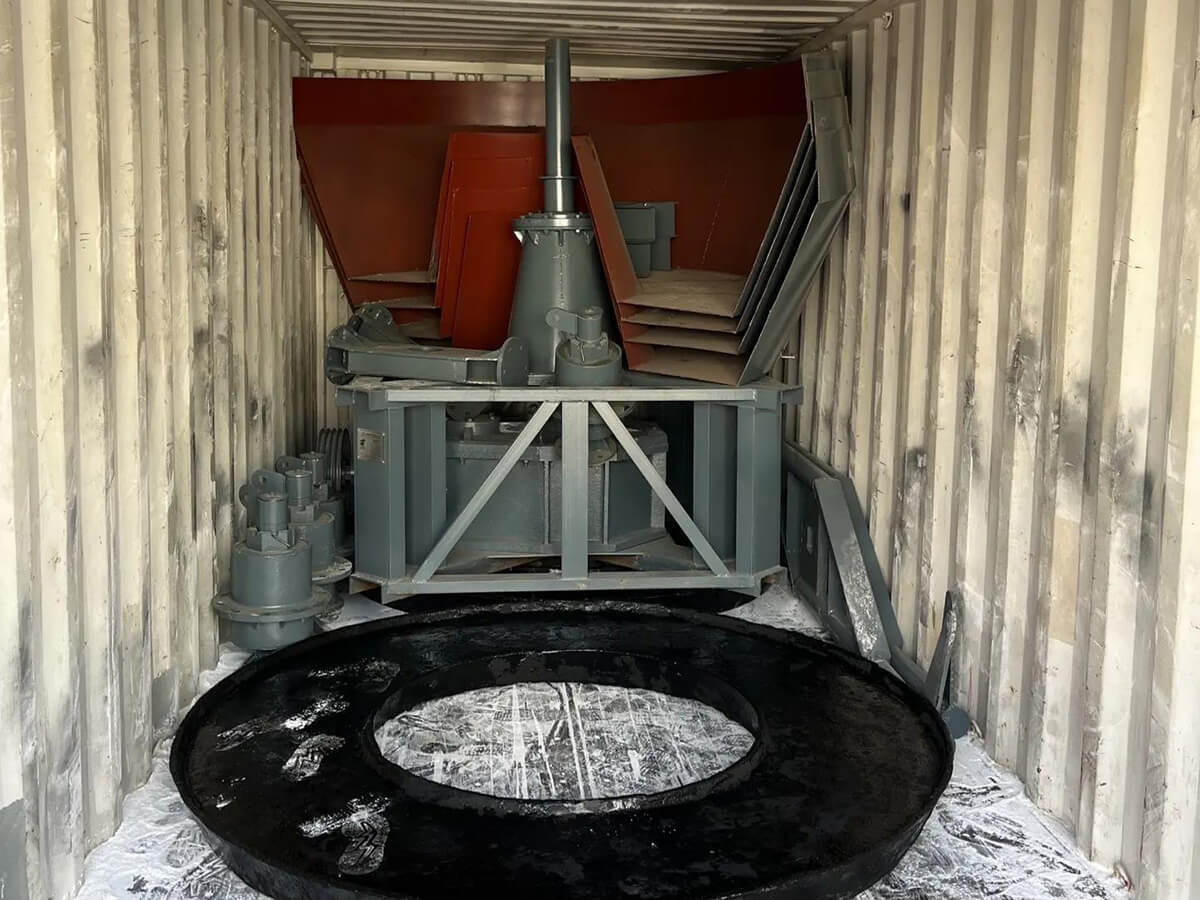
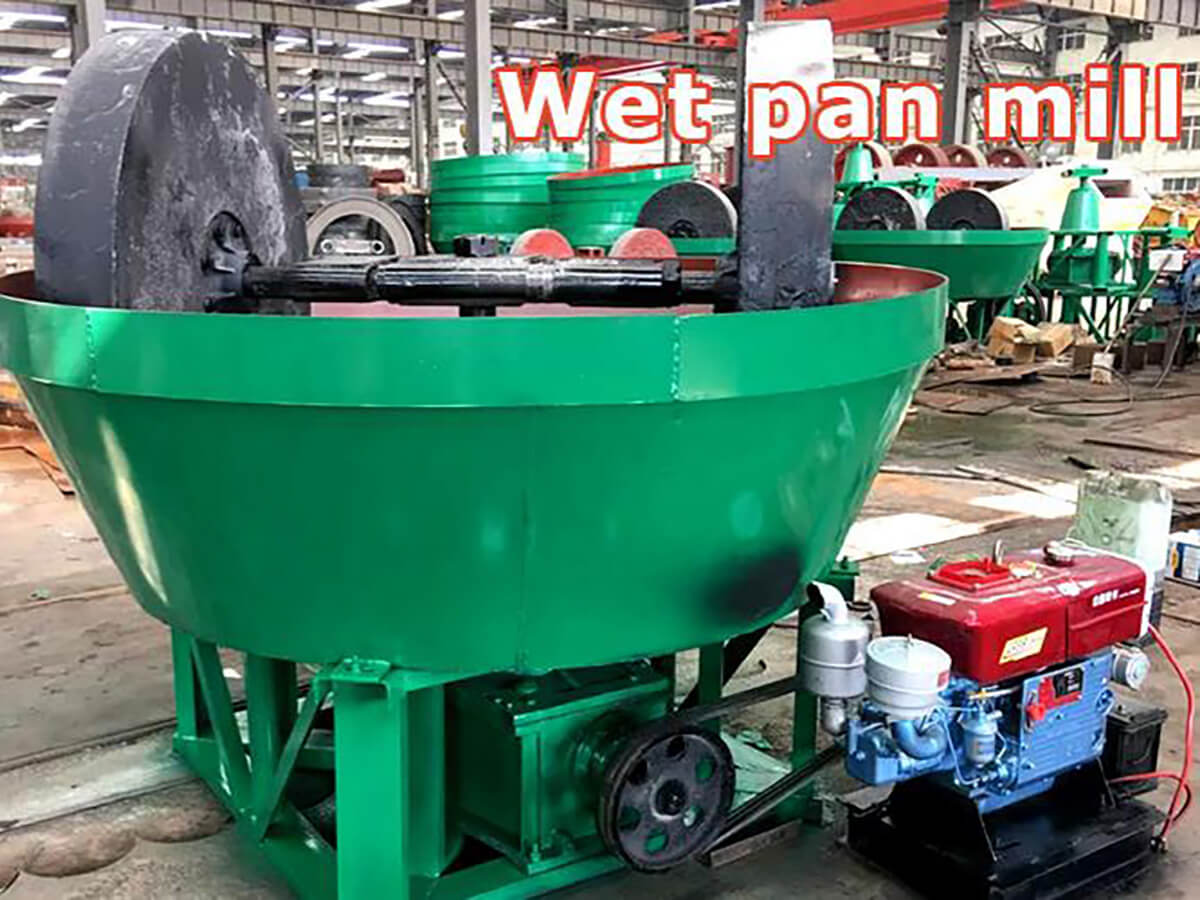
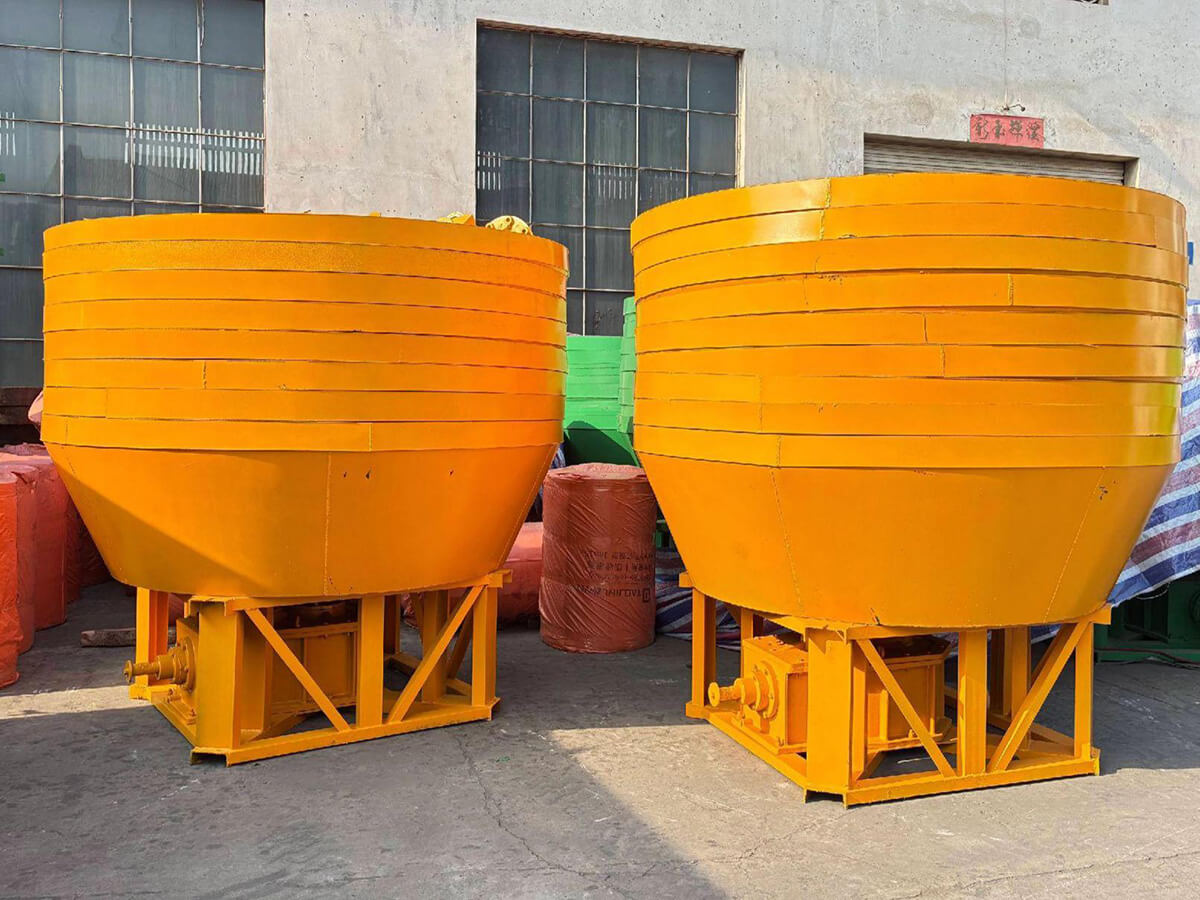
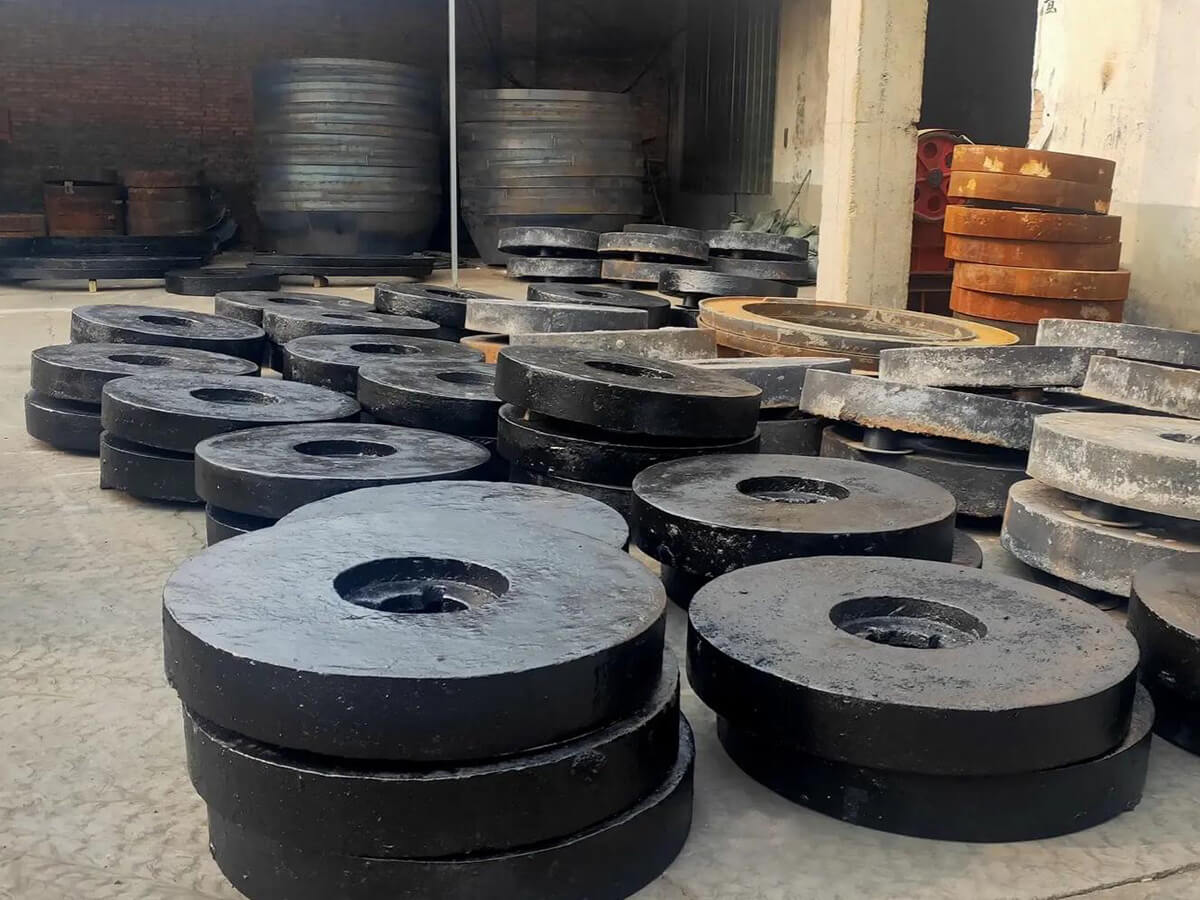

A wet pan mill is a type of wet grinding equipment widely used in the beneficiation process of metal ores such as gold, iron, and copper mines. It is also commonly used for material crushing and mixing in industries such as non-metallic minerals, building materials, and chemicals. Developed from the traditional stone mill by incorporating modern mechanical technology, it features a simple structure, low investment, high efficiency, and convenient maintenance, making it particularly suitable for small and medium-sized beneficiation plants and remote areas.
Working Principle
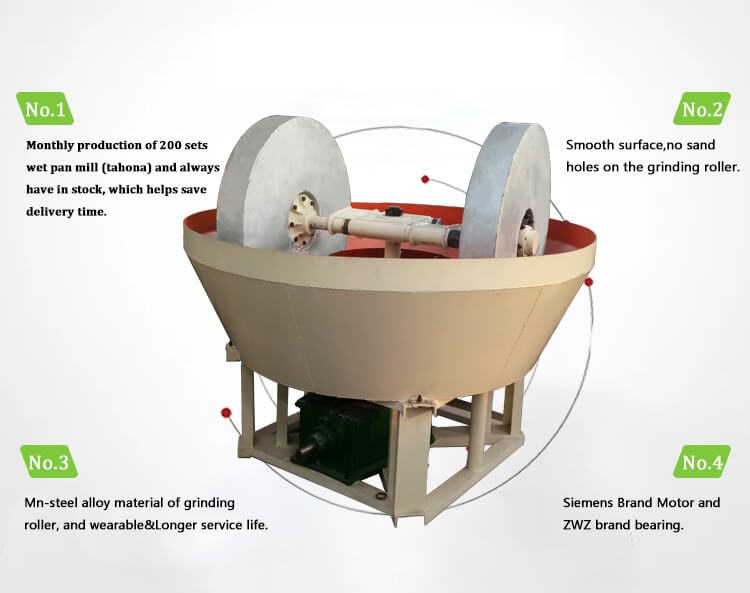
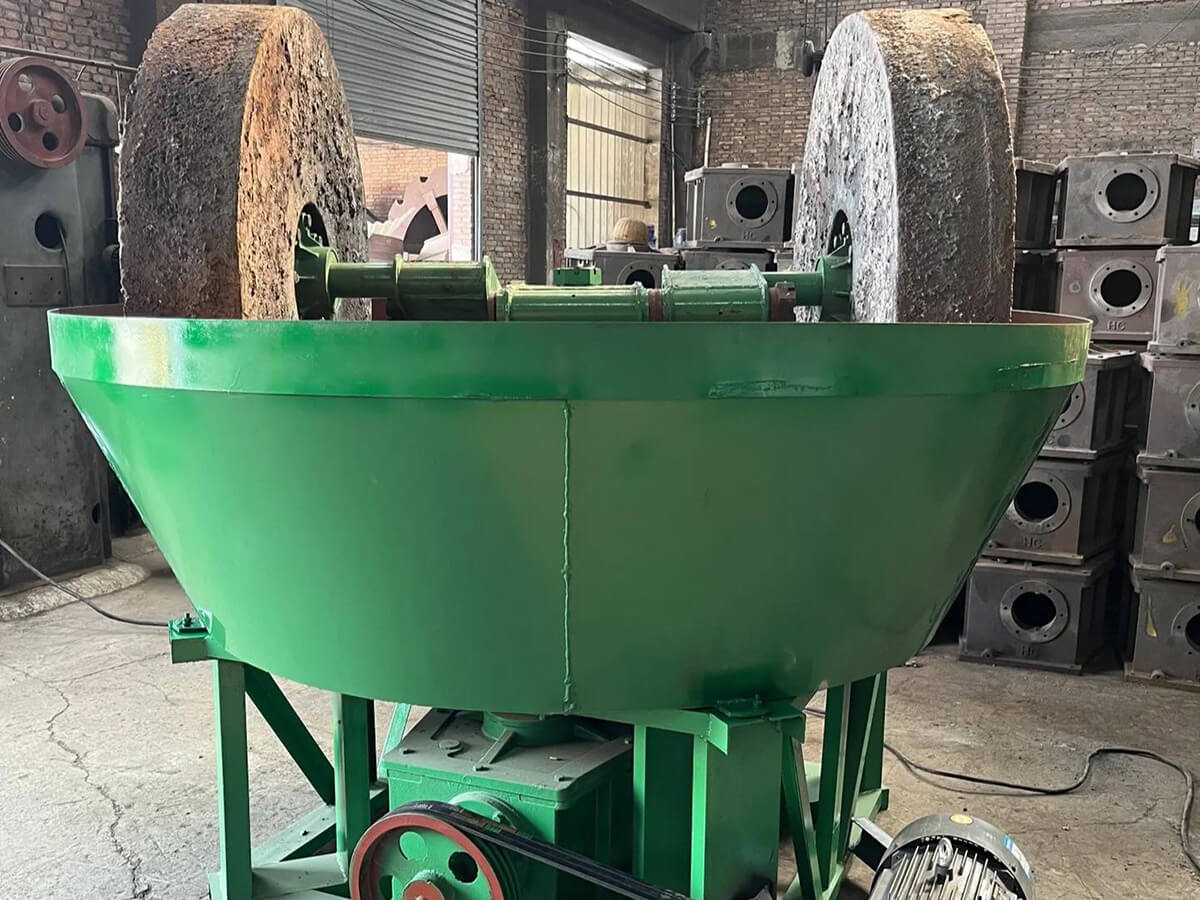
A wet grinding mill achieves material crushing and mixing through the combined motion of the grinding wheels and the grinding disc. During operation, an electric motor drives a reducer, which in turn rotates the large vertical and horizontal shafts. Power is then transmitted to the grinding wheels via tie rods, causing them to both revolve and rotate on the grinding disc, forming a three-dimensional composite motion trajectory.
Under the pressure and friction of the grinding wheels, the ore is repeatedly squeezed, kneaded, and ground. Simultaneously, a suitable amount of water (typically 30%-40% of the total material volume) is added to form a slurry, achieving wet grinding. Fine particles are discharged from the overflow outlet with the water flow, while coarse particles continue to be ground until the desired fineness is achieved.
This process not only effectively dissociates mineral monomers but also uniformly mixes the materials, improving the efficiency of subsequent flotation or leaching.
Product Structure
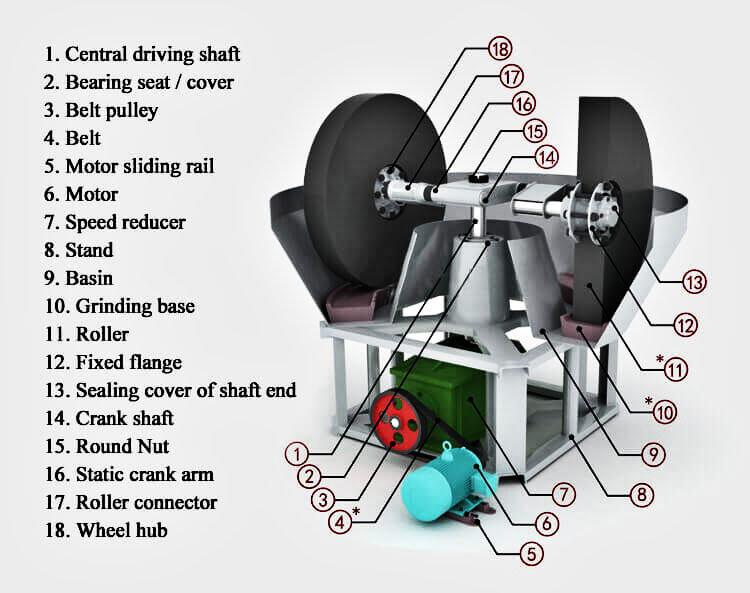
The wet grinding mill mainly consists of the following core components:
- Power unit: Includes a motor and reducer, providing driving force;
- Frame: Supports the entire machine structure, ensuring stable operation.
- Water basin (grinding chamber): Holds materials and water, creating a closed grinding environment;
- Grinding roller: Made of solid steel or wear-resistant alloy, it crushes materials using its own weight and friction;
- Grinding disc: Fixed and works with the grinding roller to complete the grinding process.
- Large vertical and horizontal shafts: Transmit power to the grinding rollers;
- Tie bar/connecting bar: Connects the horizontal shaft and the grinding rollers, enabling torque transmission.
- Control system: Some high-end models are equipped with PLC control for automated operation.
Product Advantages
- Energy-efficient and high-performance: Compared to ball mills, wet grinding mills reduce energy consumption by approximately 35%, and gold recovery rates can be increased to over 85%.
- Low investment and quick returns: Compact structure, small footprint, and convenient installation and maintenance, making it particularly suitable for small and medium-sized mineral processing enterprises.
- Environmentally friendly and low-noise: The fully enclosed design, combined with water curtain dust removal, results in near-zero dust emissions and noise levels below 75dB, meeting green mining standards.
- High adaptability: Capable of handling complex ores with high mud content and varying hardness, adapting to different working conditions by adjusting water volume and grinding pressure;
- High resource utilization: Can be used for tailings reprocessing, preventing mineral powder loss, and improving comprehensive resource utilization.
- Easy operation: Supports manual or automatic control, with some equipment equipped with variable frequency speed control and real-time monitoring functions.