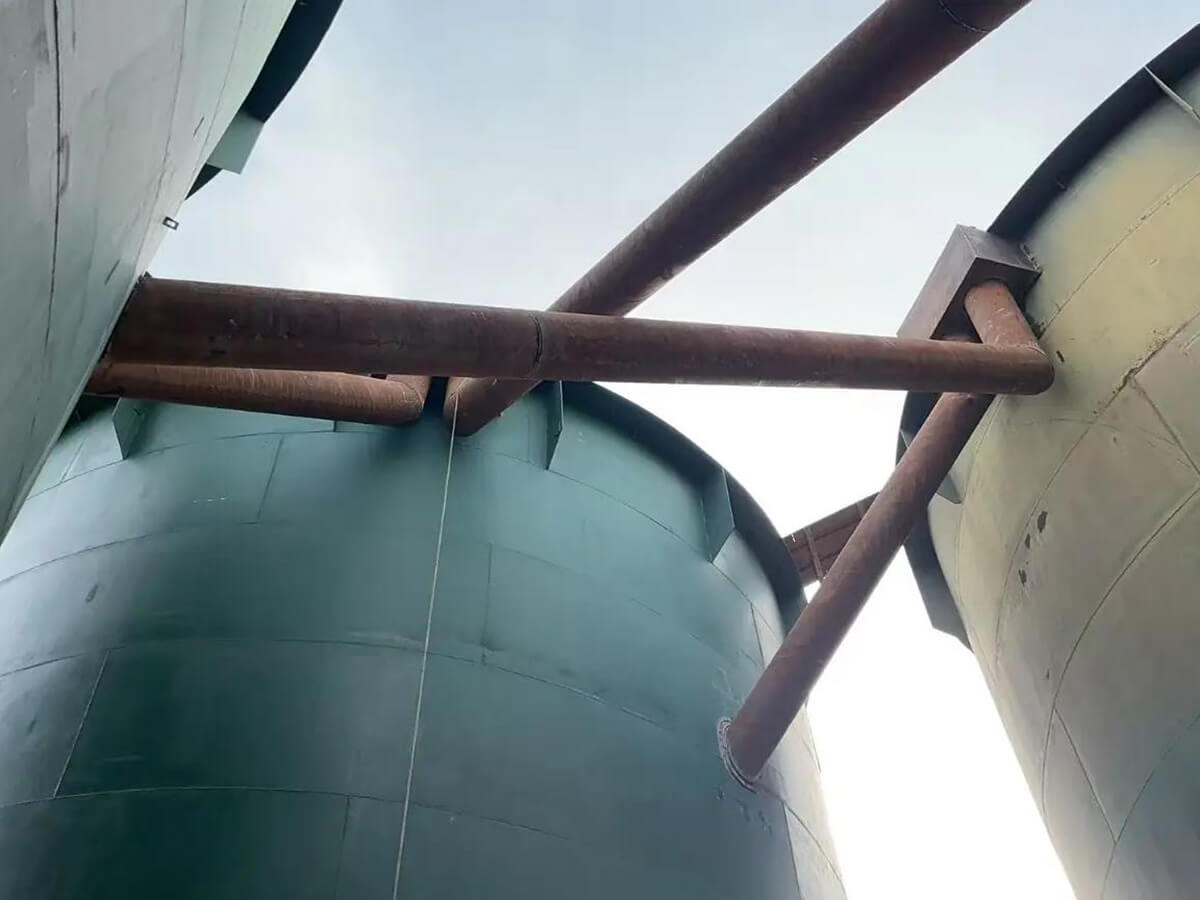
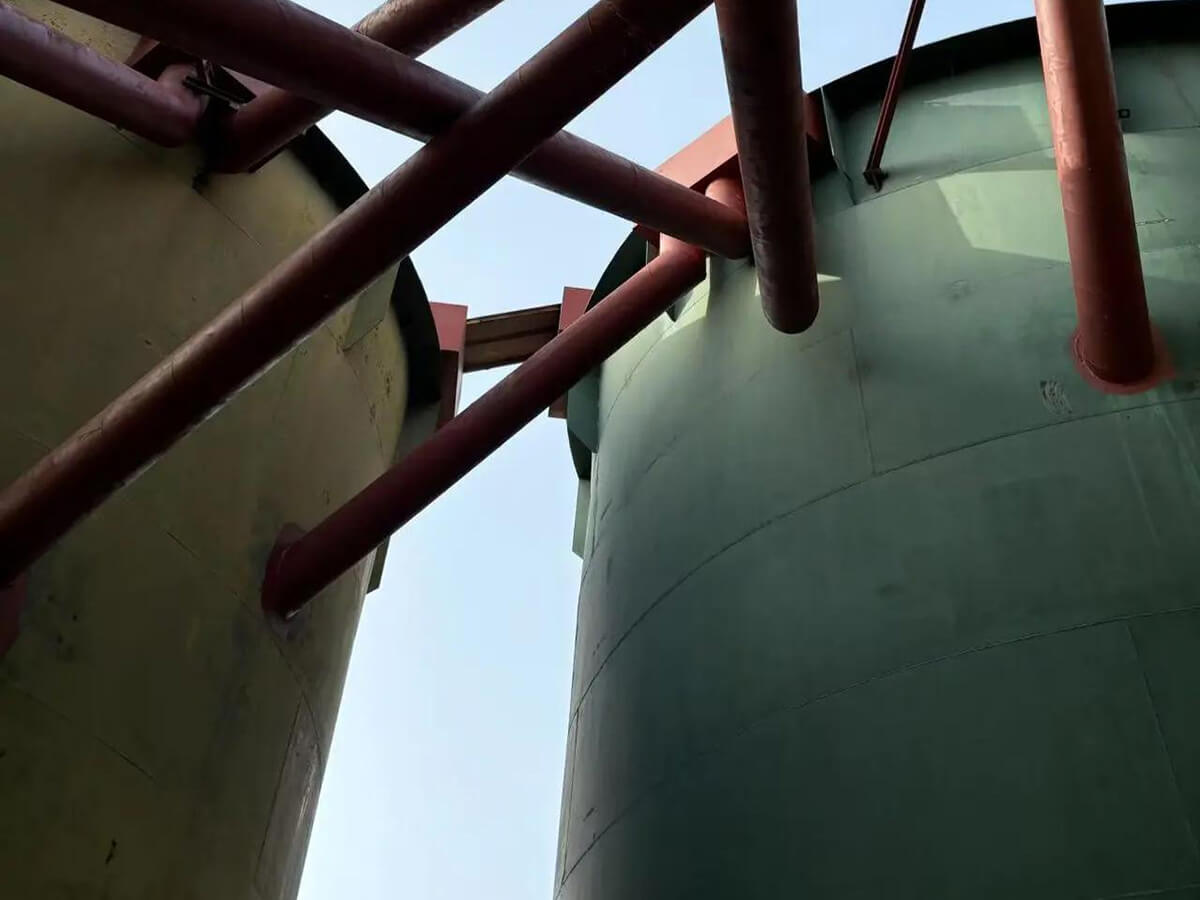
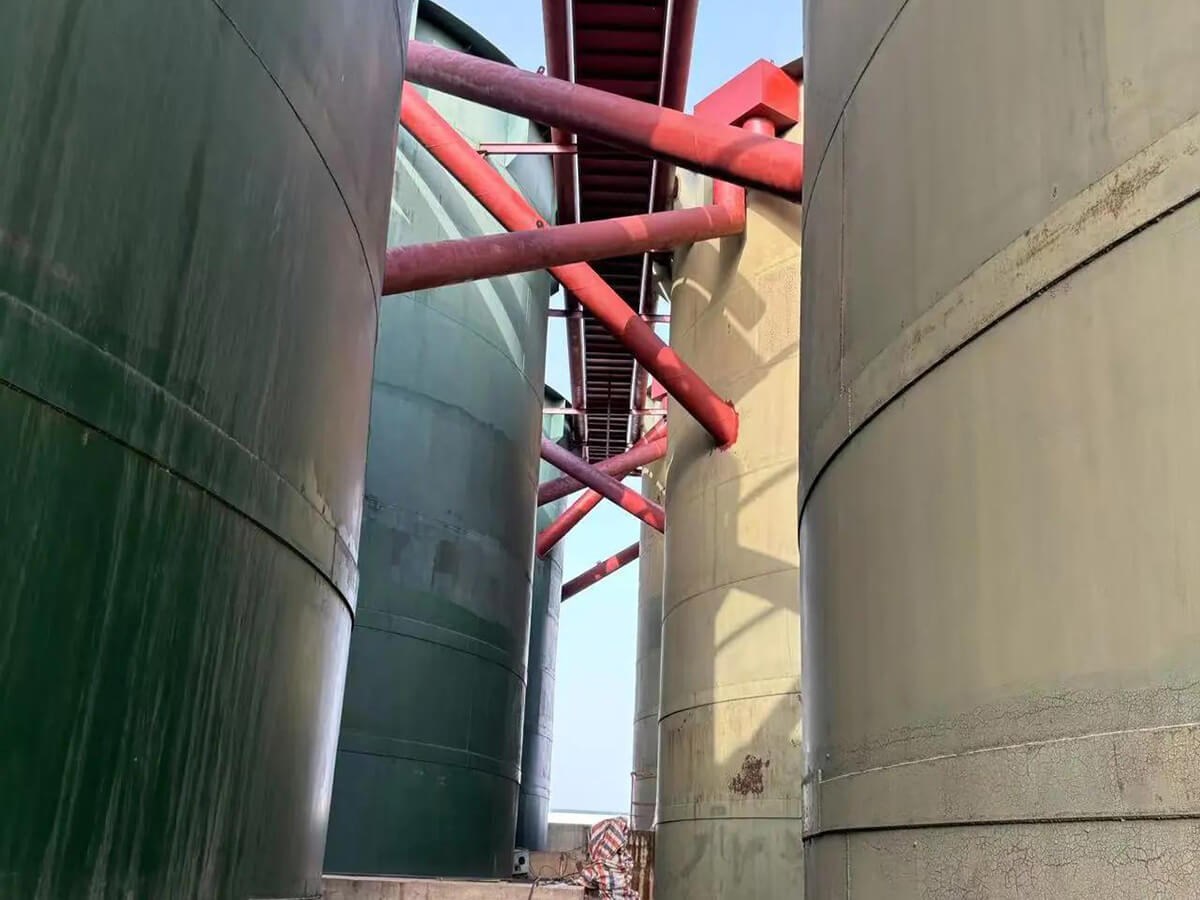

The double-impeller leaching agitator is a high-efficiency and energy-saving mixing device specifically designed for cyanide leaching processes of gold and other precious metals. It is widely used in CIP (carbon-in-pulp) and CIL (carbon-in-leaching) gold beneficiation processes. Compared with traditional single-impeller agitators, its upper and lower double-impeller structure significantly improves the uniformity of slurry mixing and oxygen dispersion, while reducing energy consumption and activated carbon wear. It is one of the core pieces of equipment in modern gold ore leaching operations.
Working Principle
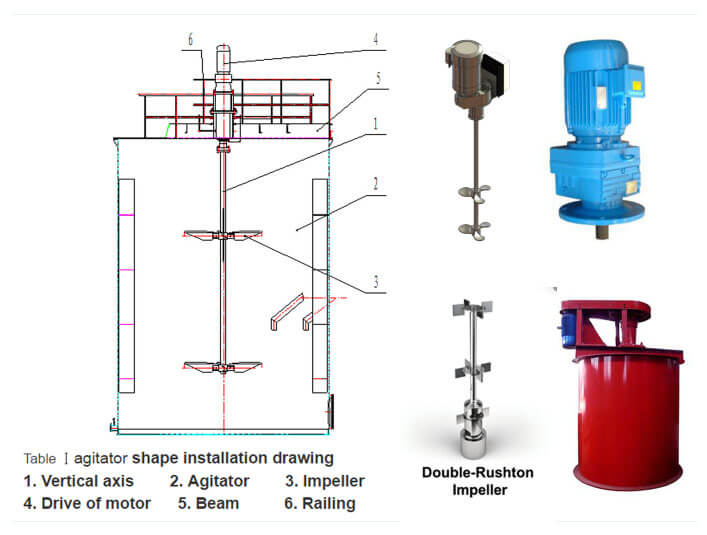
The dual-impeller leaching mixing tank achieves efficient circulation and uniform mixing of the ore slurry through the synergistic action of the upper and lower impellers. During operation, a motor drives the vertical shaft, rotating both impellers. The ore slurry flows from top to bottom in the central region, spreading through the surrounding damping plates to form a stable vortex.
Air enters the tank through air inlets at the bottom or around the hollow shaft. Under the shearing action of the impellers, it is broken into tiny bubbles and evenly dispersed in the ore slurry, increasing dissolved oxygen content and promoting the cyanidation reaction.
This process not only ensures the stability of the ore slurry suspension but also optimizes the gas-liquid-solid three-phase contact efficiency, thereby improving the gold leaching rate and carbon adsorption rate.
Product Structure
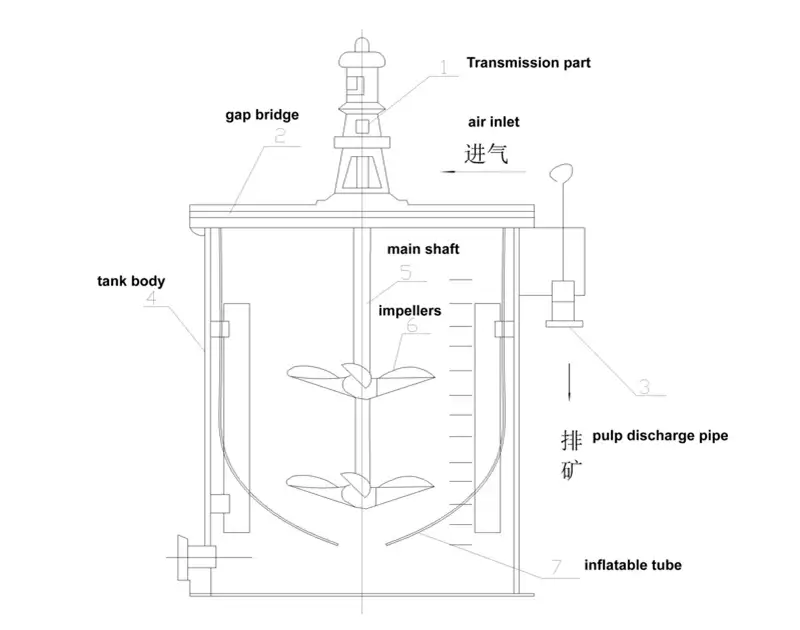
The double-impeller leaching mixing tank mainly consists of the following parts:
- Transmission system: Includes a motor, reducer, and coupling, providing power and regulating speed.
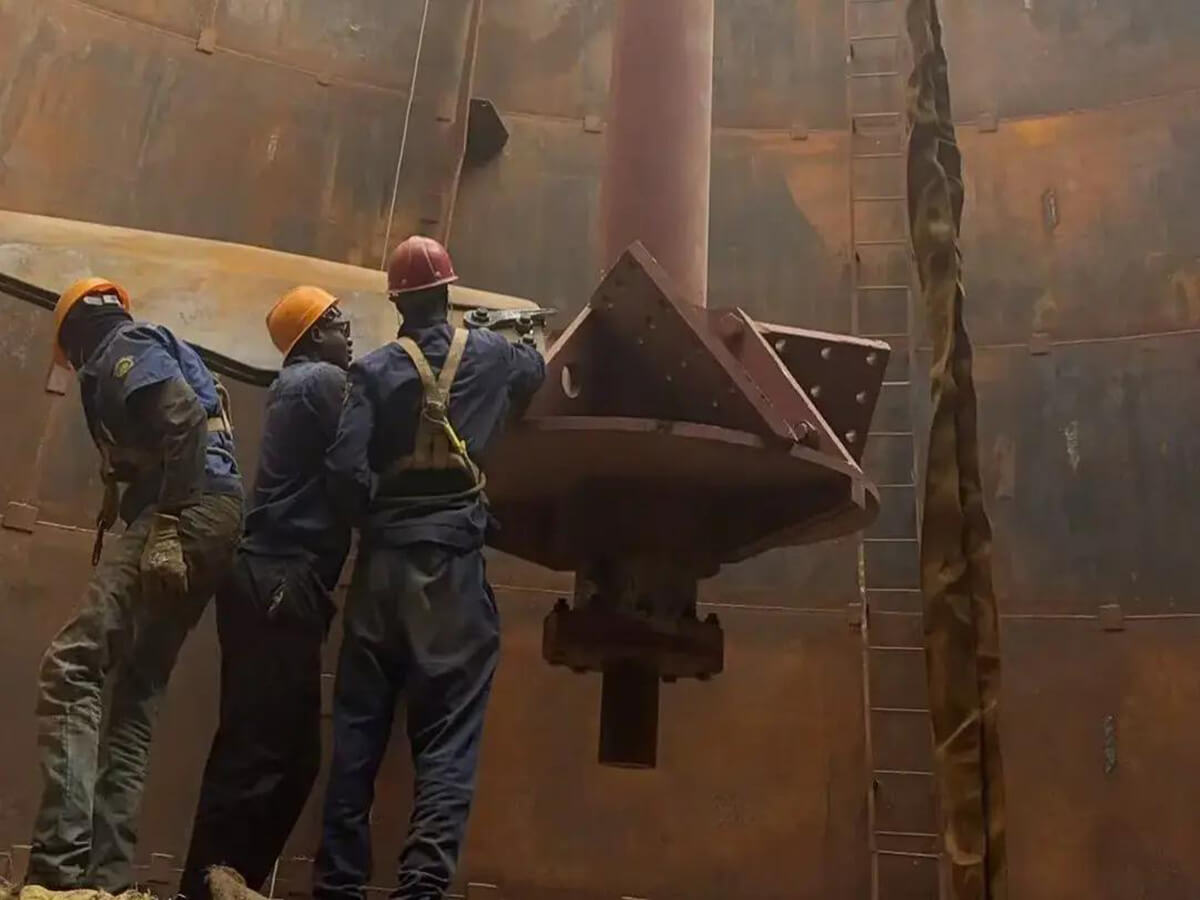
- Vertical shaft system: Connects the upper and lower impellers, transmitting torque.
- Dual impeller assembly: Each impeller has a large-diameter rubber-lined impeller, typically arranged with a 45° phase difference to enhance mixing.
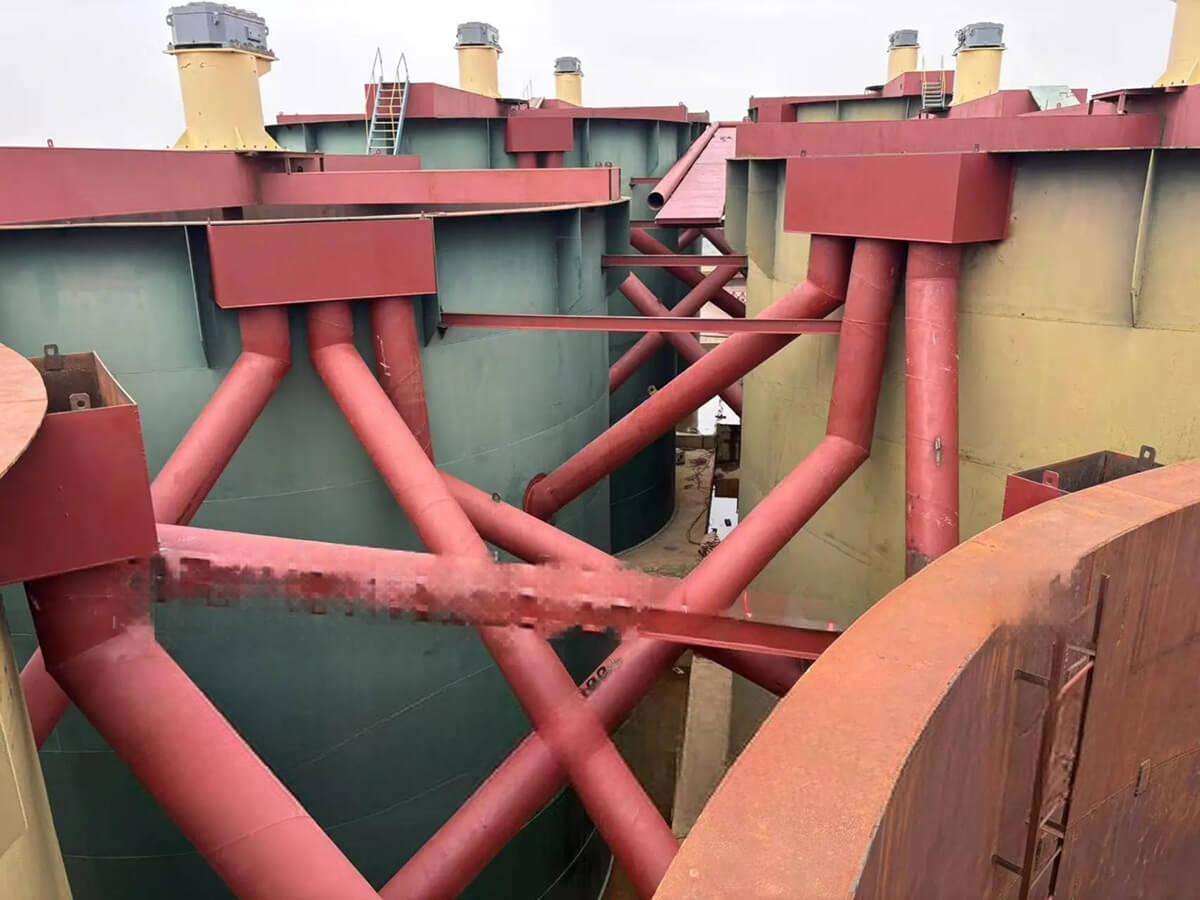
- Tank body: Cylindrical structure, lined with corrosion-resistant materials (such as rubber or epoxy fiberglass), the bottom can be flat or conical.
- Damping plates (baffles): Installed on the inner wall of the tank to prevent swirling and enhance mixing.
- Hollow shaft ventilation system: Achieves uniform air supply from the bottom, preventing gas short-circuiting.
- Shaft sealing device: Prevents slurry leakage and ensures operational sealing.
Product Advantages
- More uniform mixing: The dual-impeller design ensures consistent slurry concentration and fineness distribution within the tank, avoiding sedimentation dead zones.
- Energy saving and reduced consumption: Power consumption per unit volume is as low as 0.034kW/m³, saving over 80% energy compared to traditional equipment.
- Extended impeller life: Rubber-coated impellers operate at low speeds (typically 16.4–65 r/min), are wear-resistant and corrosion-resistant, and have a long service life.
- Reduced carbon wear: Low shear force effectively protects the integrity of activated carbon and improves the adsorption rate.
- Uniform aeration: Hollow shaft or multi-point air supply system ensures fine and evenly distributed bubbles, improving oxygen utilization.
- Compact structure and convenient maintenance: Modular design allows for easy replacement of key components and supports customized configurations.