
Chromite Ore Beneficiation: Process, Technologies & Core Equipment
Date: 2026-06-04 Categories: Iron Metal Views: 178
Chromite is the sole commercially viable chromium-bearing mineral, serving as the core raw material for stainless steel, refractory bricks, chemical chromate products, and high-temperature alloy manufacturing across global metallurgy industries. Raw mined chromite typically contains only 10%- 30% Cr₂O₃ and is mixed with gangue impurities such as quartz, serpentine, alumina, and iron oxides, which cannot meet industrial smelting standards directly. Chromite beneficiation is designed to separate valuable chromite from waste rock, upgrade Cr₂O₃ grade above 42% for metallurgical concentrate, and maximize chromium recovery rate above 85% via mature physical separation technologies. Beneficiation schemes are customized based on ore embedding granularity, density, and magnetic features, with the gravity-magnetic combined process dominating mainstream chromite processing plants worldwide.
1. Full Beneficiation Flow of Chromite Ore
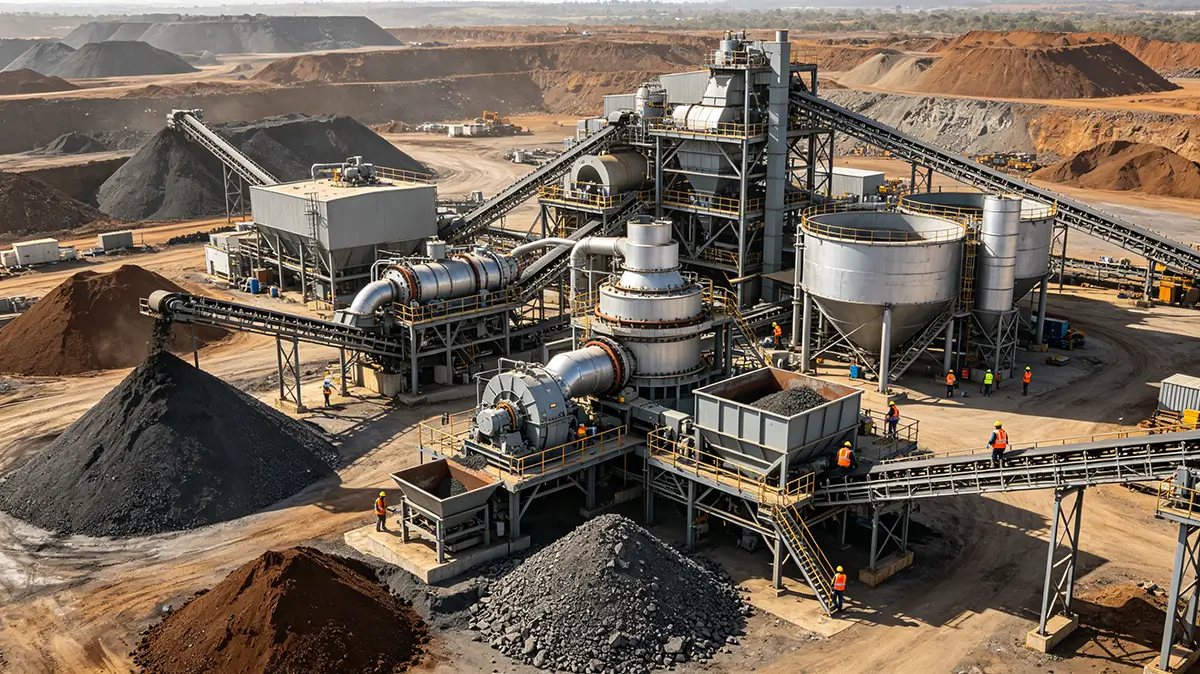
The complete chromite processing route covers five standard stages: crushing & grinding → classification → rough concentration → purification separation → concentrate dewatering.
1.1 Crushing & Fine Grinding
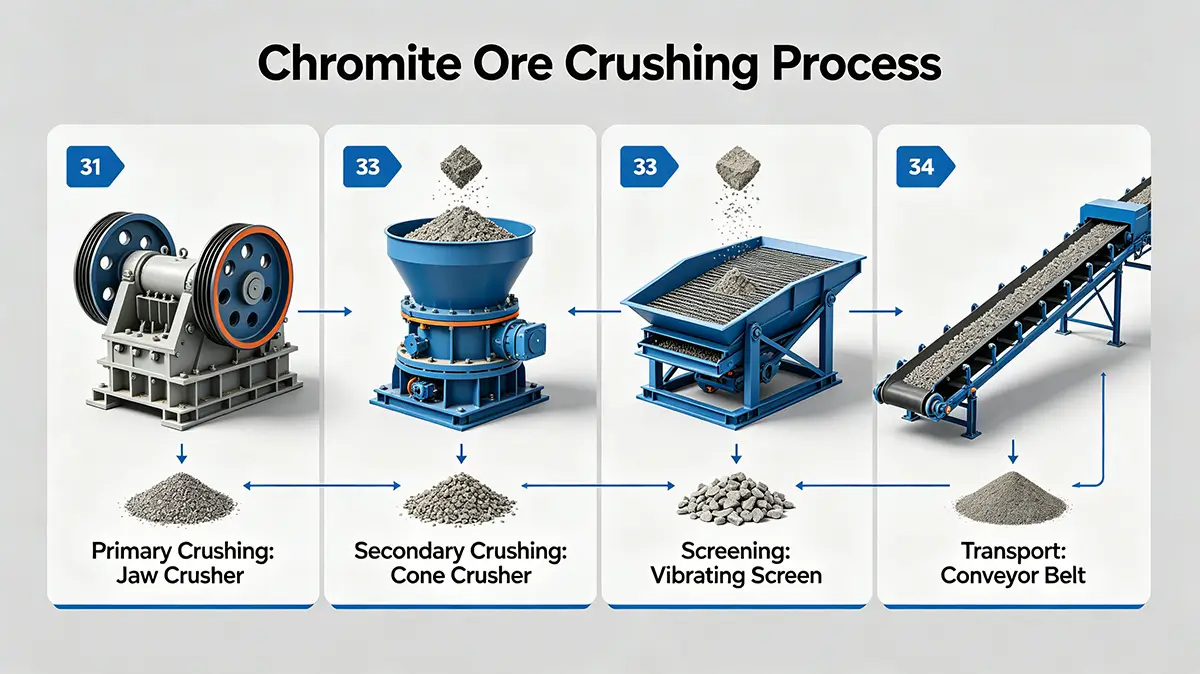
Large raw chromite lumps first go through two-stage crushing: a primary jaw crusher breaks bulk ore below 150mm, then a cone crusher conducts secondary fine crushing down to 10~20mm. Crushed ore enters a closed-circuit ball mill paired with a spiral classifier for fine grinding until chromite monomer is fully dissociated from gangue; oversize coarse particles return to the ball mill for re-grinding while qualified fine slurry flows to the separation workshop.
1.2 Core Separation Technologies
1.2.1 Gravity Separation (Dominant Process)
Chromite owns high specific gravity (4.3~4.6 g/cm³), far heavier than silicate gangue, making gravity separation the preferred method without chemical additives and with low production cost.
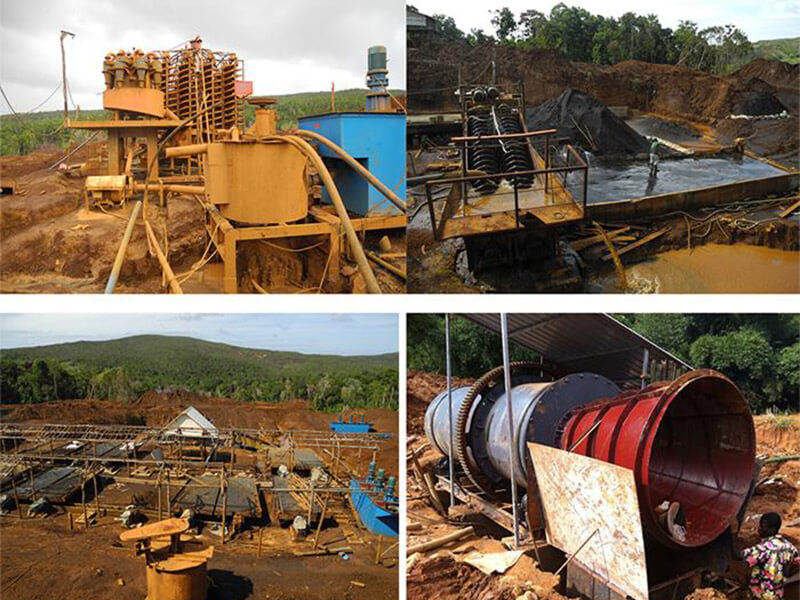
- Coarse particle (+3mm): Jig machine sorts coarse chromite by alternating vertical water flow to separate heavy minerals and light gangue.
- Medium-fine particle (0.037~1mm): Spiral chute for rough scavenging and shaking table for high-precision fine concentration to produce qualified primary concentrate.
1.2.2 Magnetic Separation (Auxiliary Purification)
Chromite is weakly magnetic, while the associated magnetite impurity is strongly magnetic. A low-intensity magnetic separator removes iron-containing impurities after gravity separation to lift the Cr/Fe ratio of final concentrate; high-intensity magnetic equipment recovers fine chromite lost from gravity tailings to boost total recovery. Gravity + magnetic combined flow fits most medium-low grade fine embedded chromite globally.
1.2.3 Flotation (For Refractory Fine Ore Only)
Flotation with selective reagents is reserved for superfine disseminated chromite below 20μm, which cannot be recycled by gravity or magnetic methods, rarely used in regular chromite beneficiation due to higher chemical cost.
1.3 Concentrate Dewatering
Qualified high-grade chromite concentrate slurry is thickened in a thickener, then filtered by a filter press to cut moisture below 12%, ready for bulk shipment and downstream smelting.
2. Main Beneficiation Equipment Used in Chromite Plant
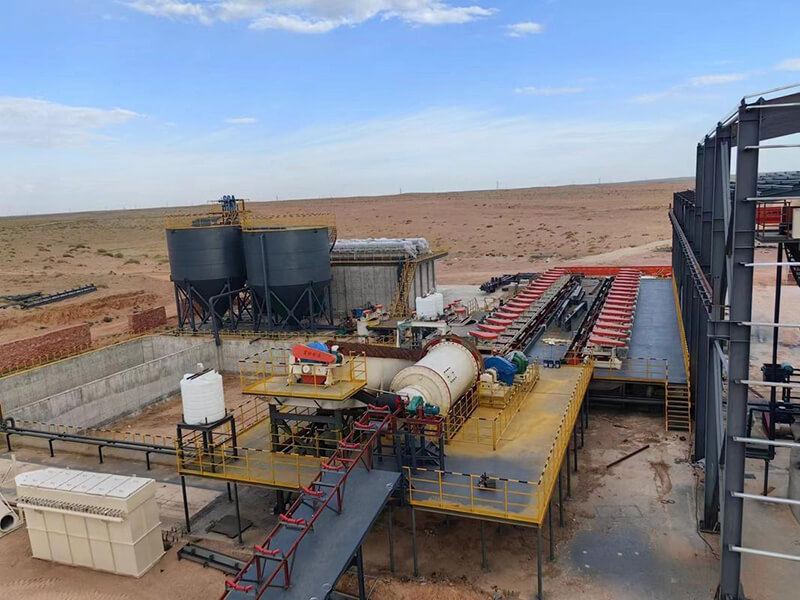
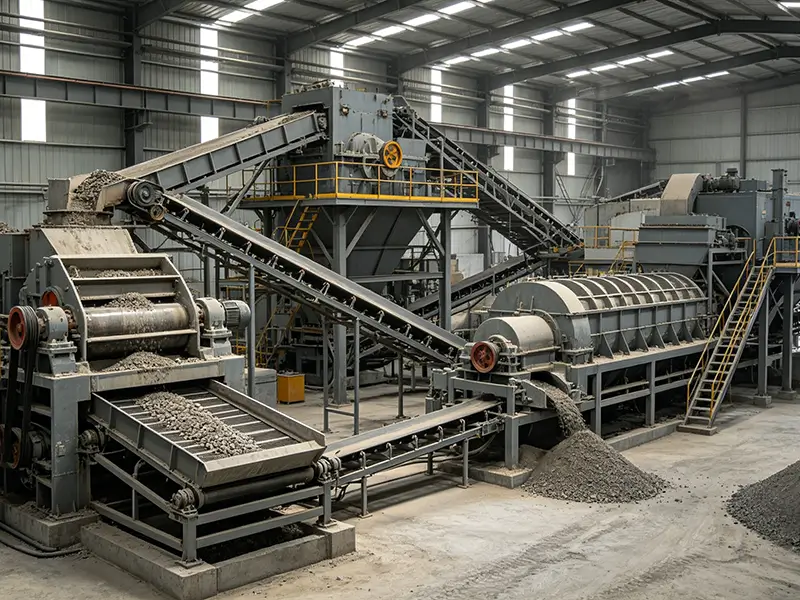
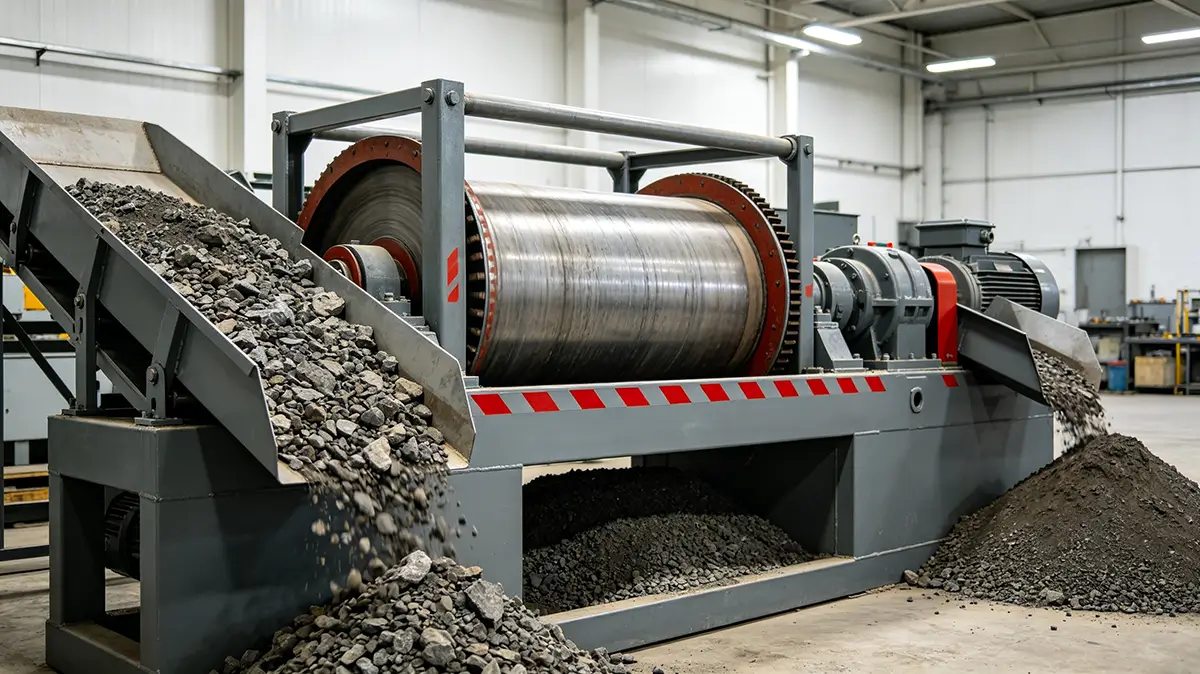
Standard equipment set includes a jaw crusher, cone crusher, overflow ball mill, spiral classifier, jig separator, spiral gravity chute, shaking table, drum magnetic separator, and filter press, forming a modular production line adjustable for different ore properties. Our customizable chromite processing plant can handle 5TPH~500TPH raw ore capacity according to the clients’ mining conditions.
3. Final Product Standard & Application
Qualified metallurgical chromite concentrate requires Cr₂O₃ ≥42%, low silica and phosphorus impurity; refractory-grade concentrate demands higher purity for high-temperature kiln lining materials. High-grade chromite products are exported to steel factories, refractory manufacturers, and chromium chemical enterprises in Southeast Asia, Africa, the Middle East, and Europe.
Conclusion
Gravity-magnetic joint beneficiation remains the most economical and reliable route for chromite upgrading at present. With growing global demand for stainless steel, customized turnkey chromite processing solutions are becoming increasingly popular among small & medium chromite mine owners. Professional mineral testing before plant construction effectively optimizes process layout and reduces investment cost for mining investors.