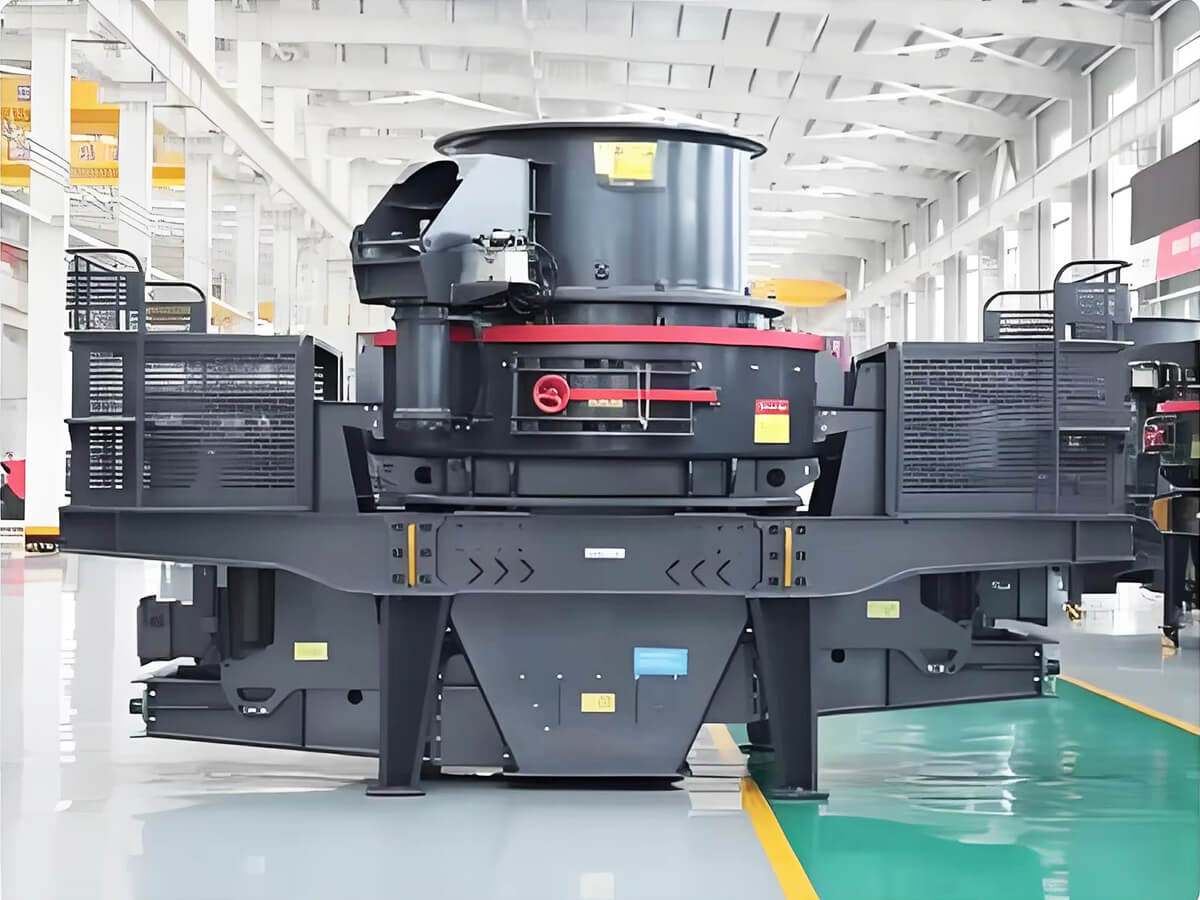
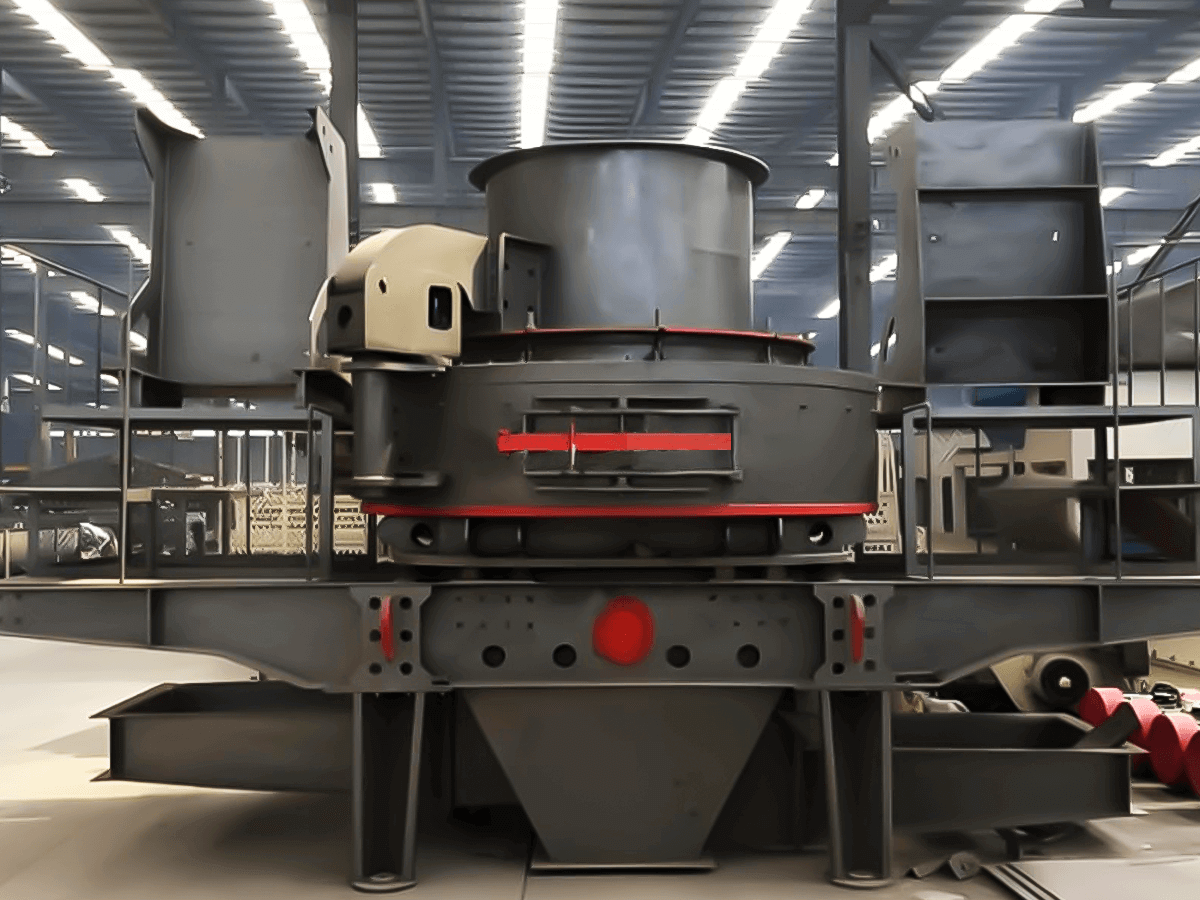
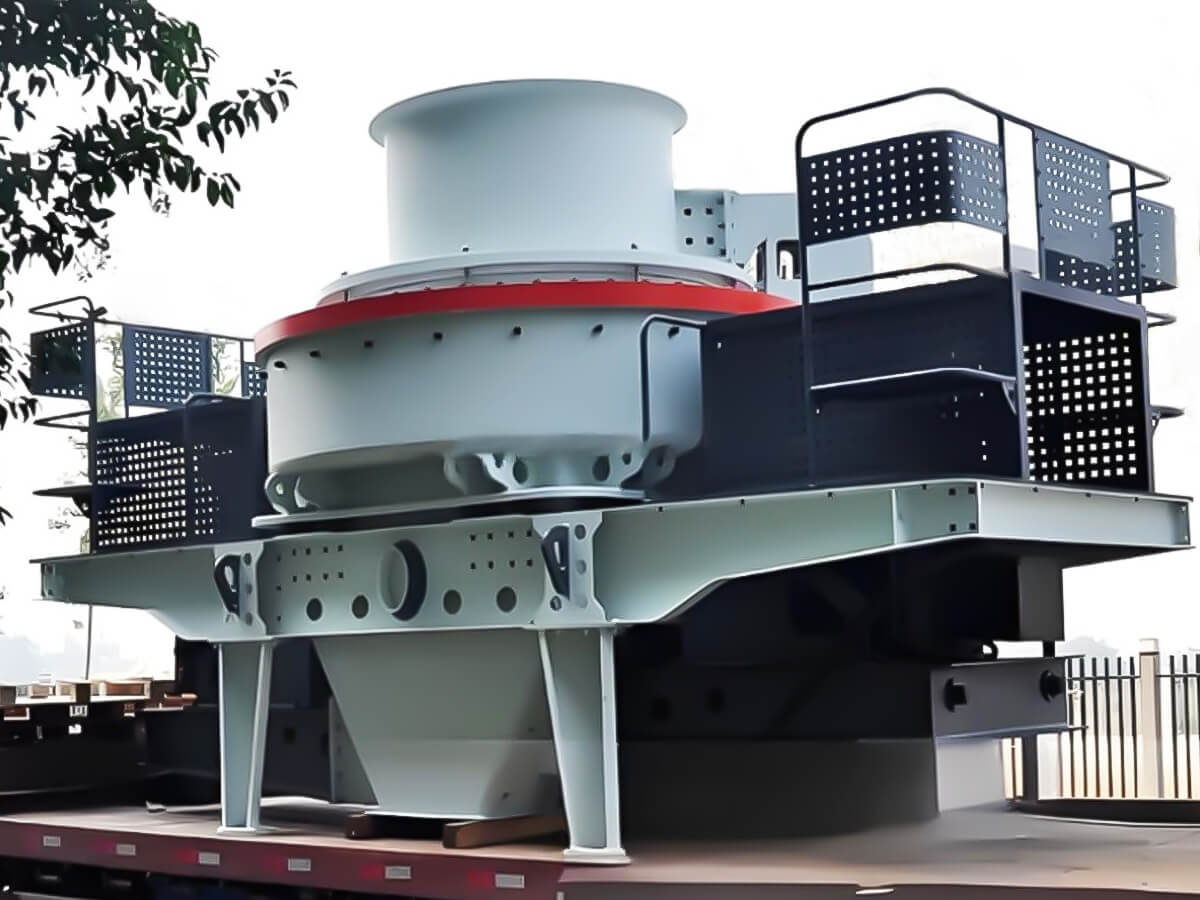
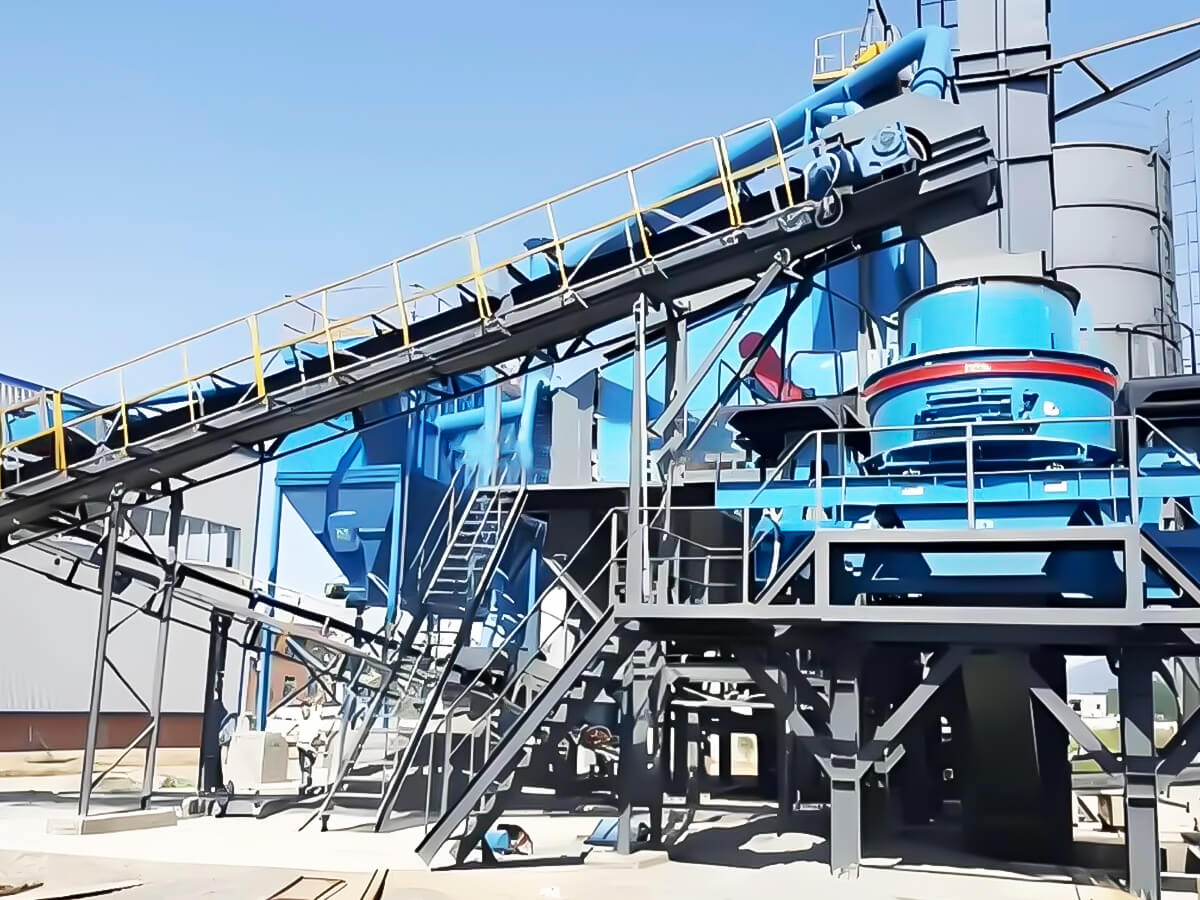
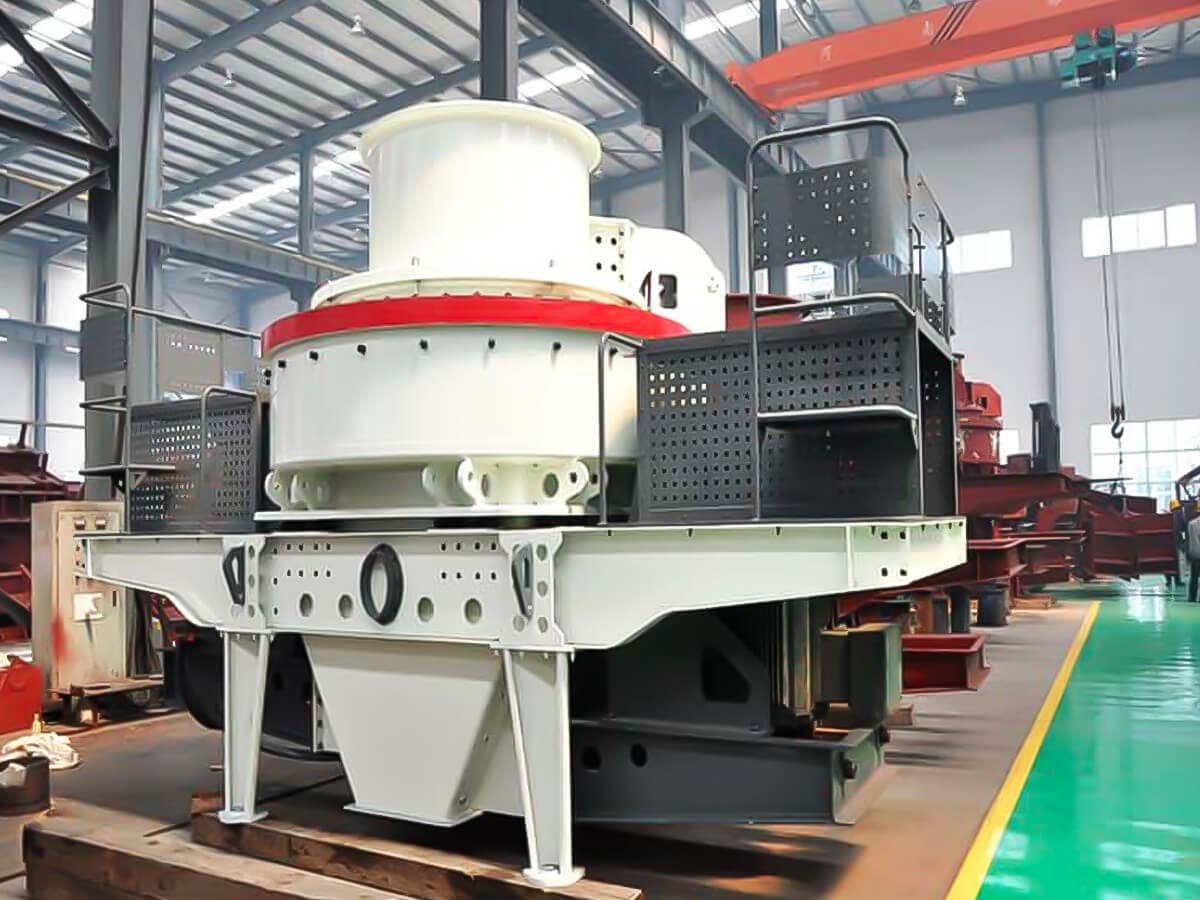

In response to the increasing demand in the sand and gravel market for large-scale, intensive, energy-saving, environmentally friendly, and high-quality manufactured sand, Bebon Group has further optimized the structure and function of impact crushers based on the application technology of thousands of impact crushers for sand making and shaping, and launched a new generation of high-efficiency and low-cost sand making and shaping equipment - PCL impact crusher.
Working Principle
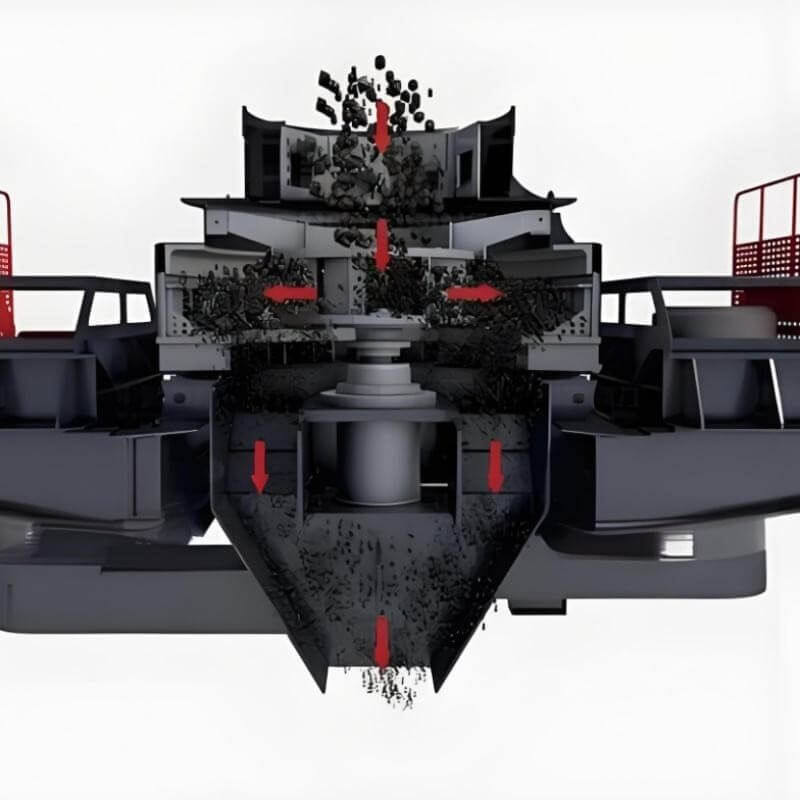
Material falls vertically from the top of the machine into a high-speed rotating impeller. Under high-speed centrifugal force, the material and other components rotate around the impeller in an umbrella-like shape, colliding and crushing each other. Material that does not collide forms a vortex between the impeller and the chassis, colliding with each other. The crushed material is discharged directly from the bottom, forming a closed-loop path. Subsequently, the material is screened by the equipment to achieve the required particle size of the finished product.
Product Structure
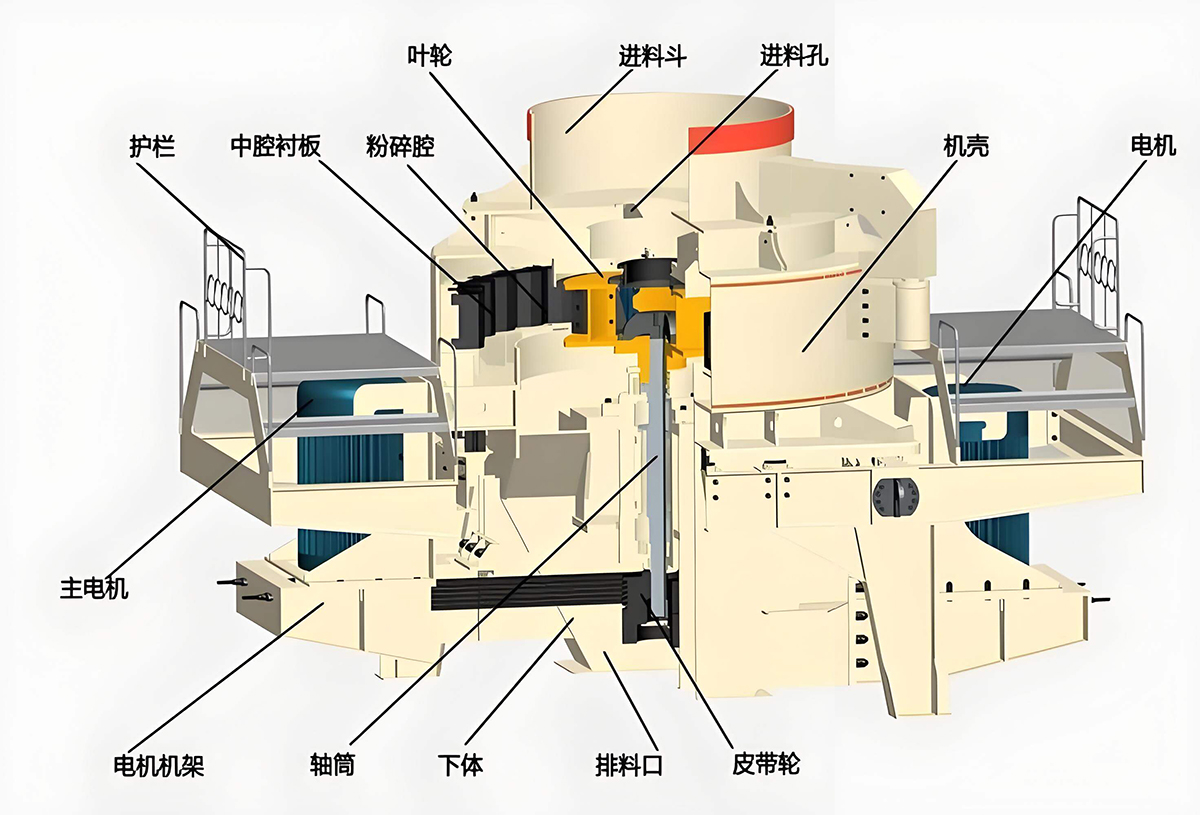
Understanding the main components of a vertical shaft impact crusher is helpful for operation and maintenance.
Hopper: The inlet where material enters the machine.
Distributor Plate: A small but crucial plate used to evenly distribute material into the rotor.
Rotor: The core component of the machine. It rotates at high speed to accelerate the material.
Crushing Chamber: The main part where rock-on-rock or rock-on-anvil impacts occur.
Wear Parts: Replaceable parts inside the machine, such as rotor blade tips and wear plates, are used to protect the main structure.
Spindle Assembly: A precision-designed shaft and bearing system used to support and drive the rotor's rotation.
Drive System: The motor and belts that provide power to the machine.
Product Advantages
1. Simple and reasonable structure, low operating cost.
2. High efficiency and energy saving, combining fine crushing and coarse grinding functions.
3. Minimal impact on material moisture content, which can reach approximately 8%.
4. Cubic product shape, high bulk density, and low iron contamination.
5. Strong wear resistance and long service life. The impeller of the sand-making machine has low self-lining wear and is easy to maintain.
6. Low noise and minimal dust pollution are beneficial to environmental protection.