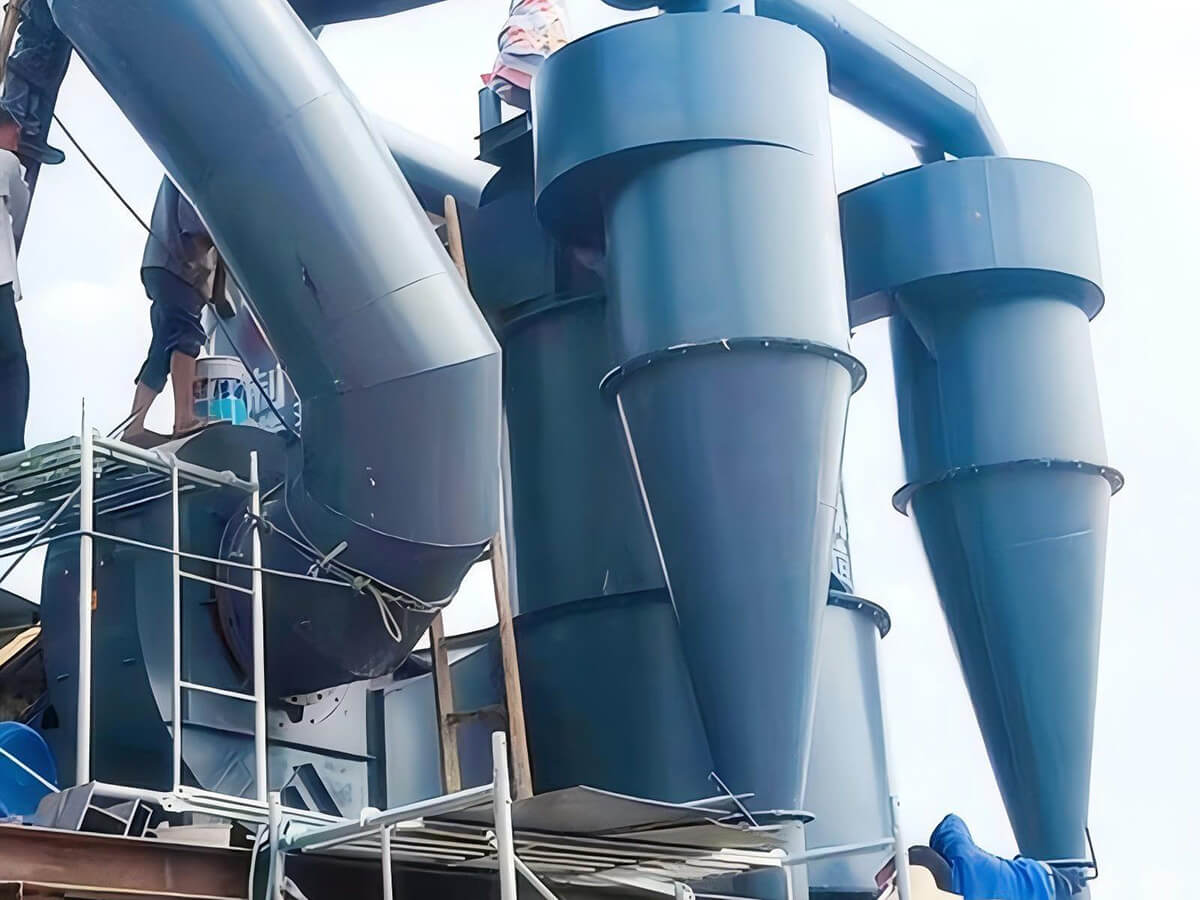
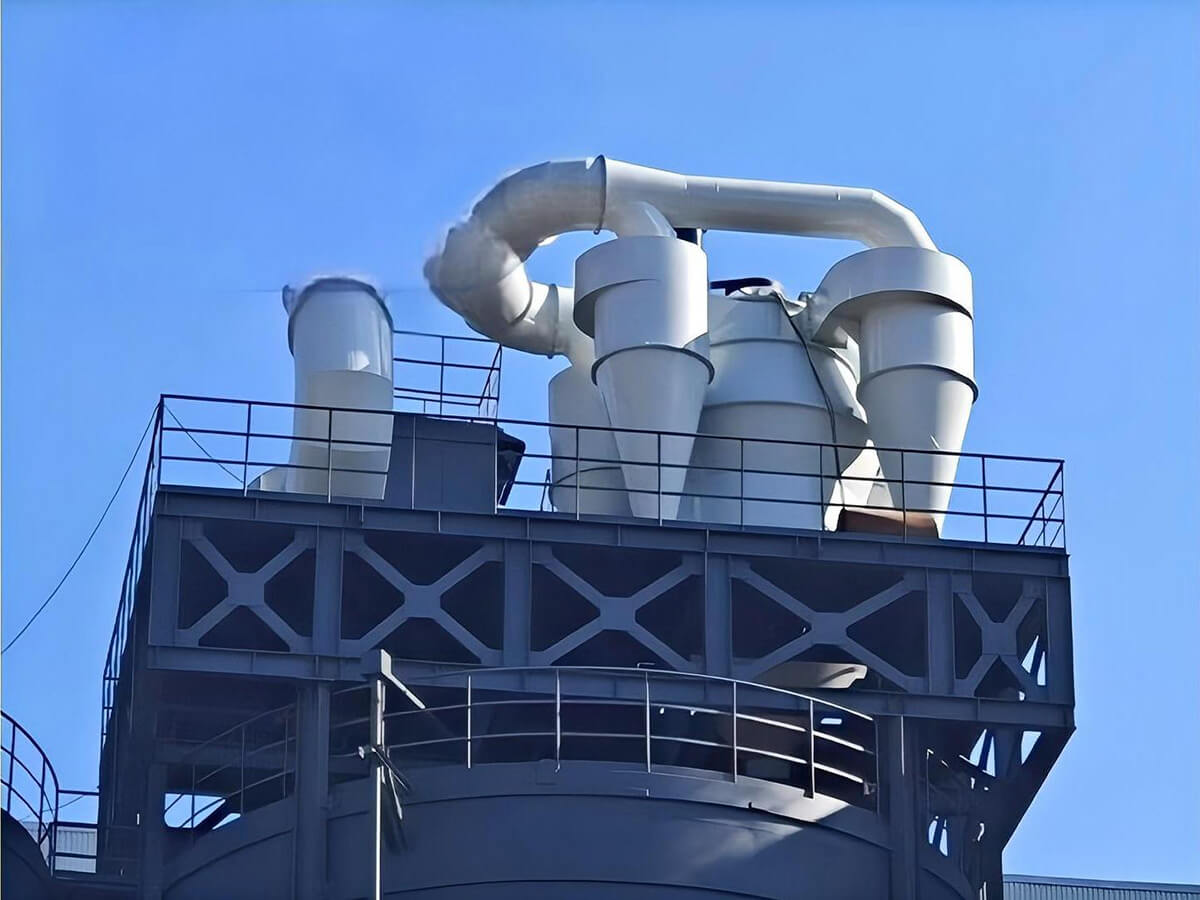
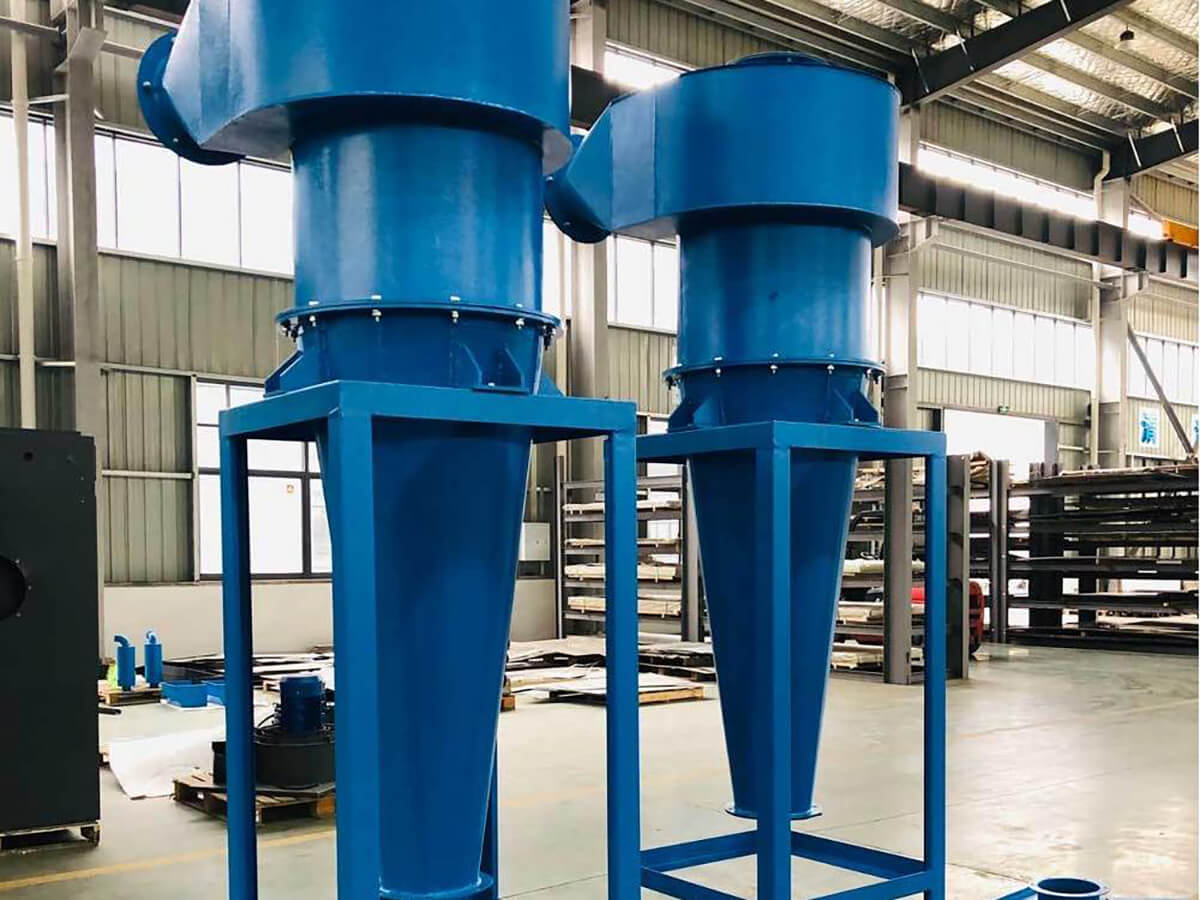
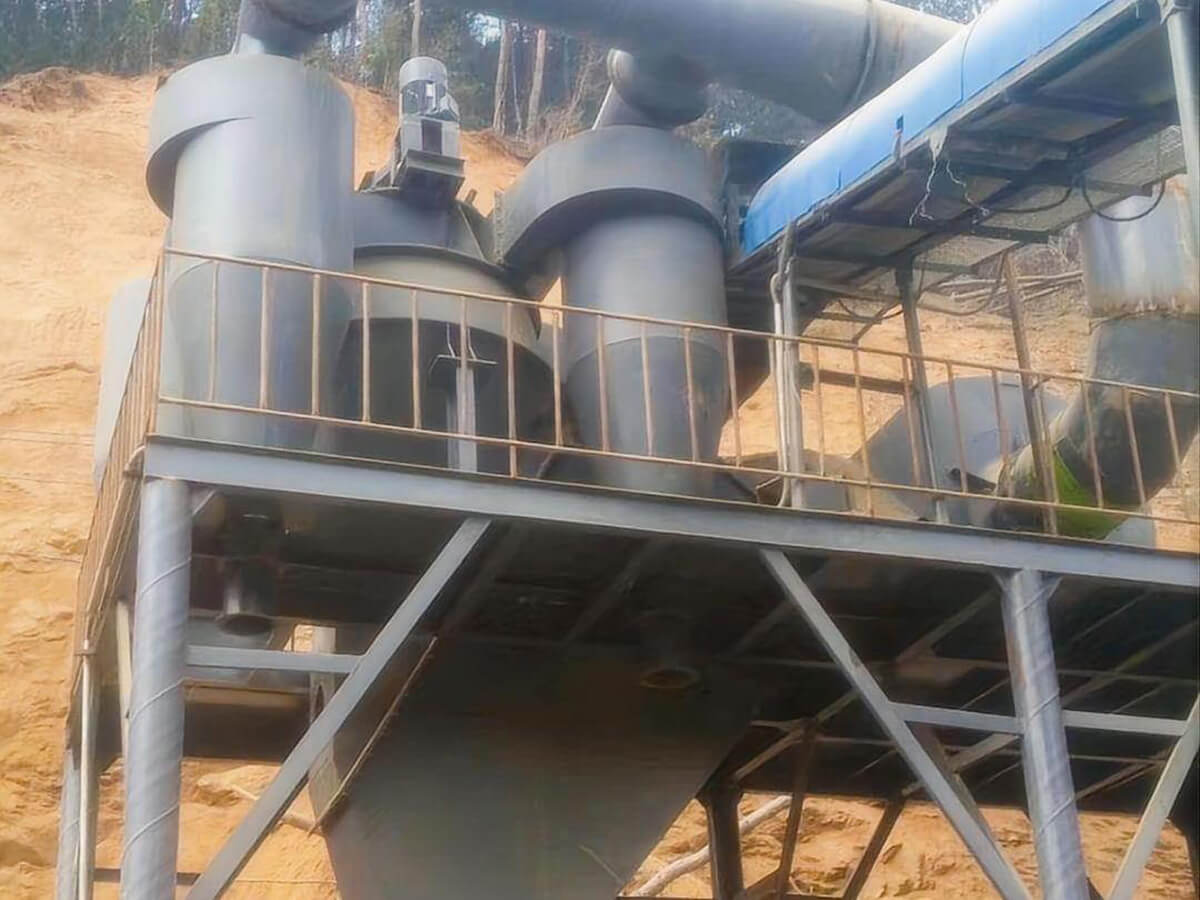
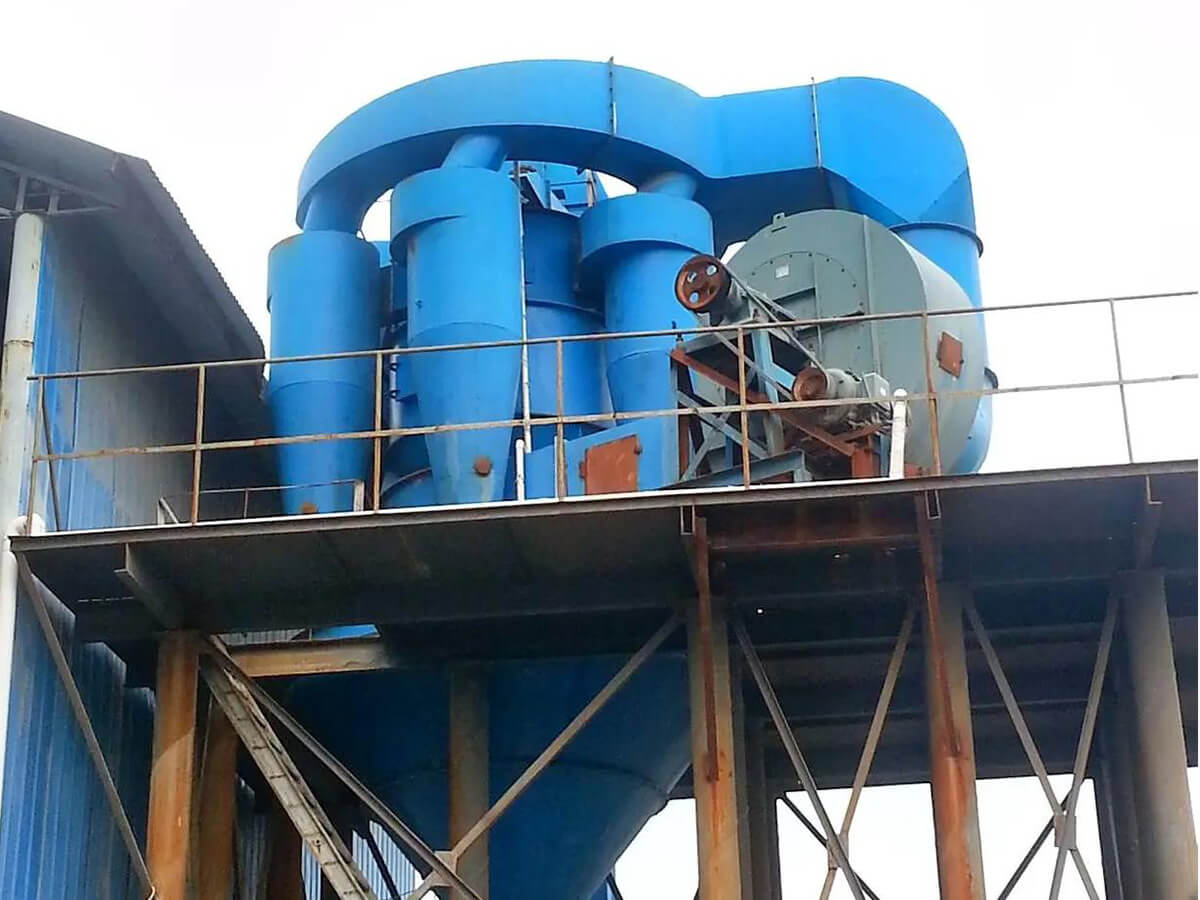

An air classifier is a key piece of equipment that uses aerodynamic principles to classify powdery materials by particle size. It is widely used in industries such as cement, mining, chemicals, and building materials. Its core function is to precisely separate the powder produced by the mill into "finished products" that meet specific particle size requirements and "coarse powder" that needs to be returned for regrinding, thereby improving product quality, system output, and reducing energy consumption.
Working Principle
The operation of an air classifier is based on the dynamic balance between centrifugal force and air drag force.
- After the material enters from the top, it is evenly dispersed under the action of a dispersing device (such as a spreading disc) to form a suspended material curtain.
- Upon entering the vortex air field generated by the high-speed rotating rotor, the particles are simultaneously subjected to two forces:
- Centrifugal force: generated by the rotation of the rotor, which throws the particles outward;
- Air drag: Driven by rising air currents, fine particles are carried toward the center.
- Fine particles, due to their small mass, are captured by the airflow because the air drag force is greater than the centrifugal force, and are collected by the dust collector as finished products.
- Because of their large mass, the centrifugal force is greater than the air drag force, so the coarse particles are thrown against the shell wall and fall down the wall back to the mill for re-grinding.
- By adjusting the rotor speed or air volume, the cutting particle size can be precisely controlled, allowing for flexible adjustment of the finished product's fineness.
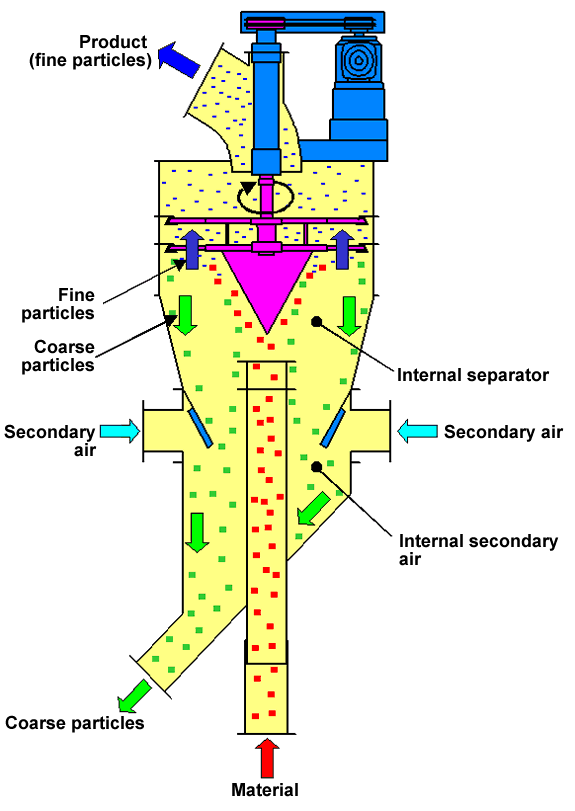
Product Structure
The air classifier mainly consists of the following five parts:
-
Housing System
It includes a main shell, ash hopper, feed hopper, and bend pipe, with internal guide vanes, buffer plates, and air seals. Inspection doors are provided on the sides and the top cover for easy maintenance. Wear-prone parts (such as the feed hopper and guide vanes) are lined with ceramic or wear-resistant materials to extend their service life. -
Slewing Section
The core component is the rotor assembly, which includes a feeding disc, a cage rotor, a main shaft, and bearings. The rotor is fixed to the main shaft and driven to rotate at high speed through a transmission system, thereby creating an airflow field. Some models use a detachable, segmented rotor for easier maintenance. -
Transmission System
It consists of a motor, a reducer, and a coupling, which drives the main shaft. Modern equipment is mostly equipped with a speed-regulating motor, which supports stepless speed regulation and improves the sensitivity of fineness control. -
Lubrication And Sealing System
The spindle bearing is lubricated with thin oil and is equipped with double protection of a rubber skeleton oil seal and air seal to prevent dust intrusion and ensure long-term stable operation. -
Air System And Dust Collection Device
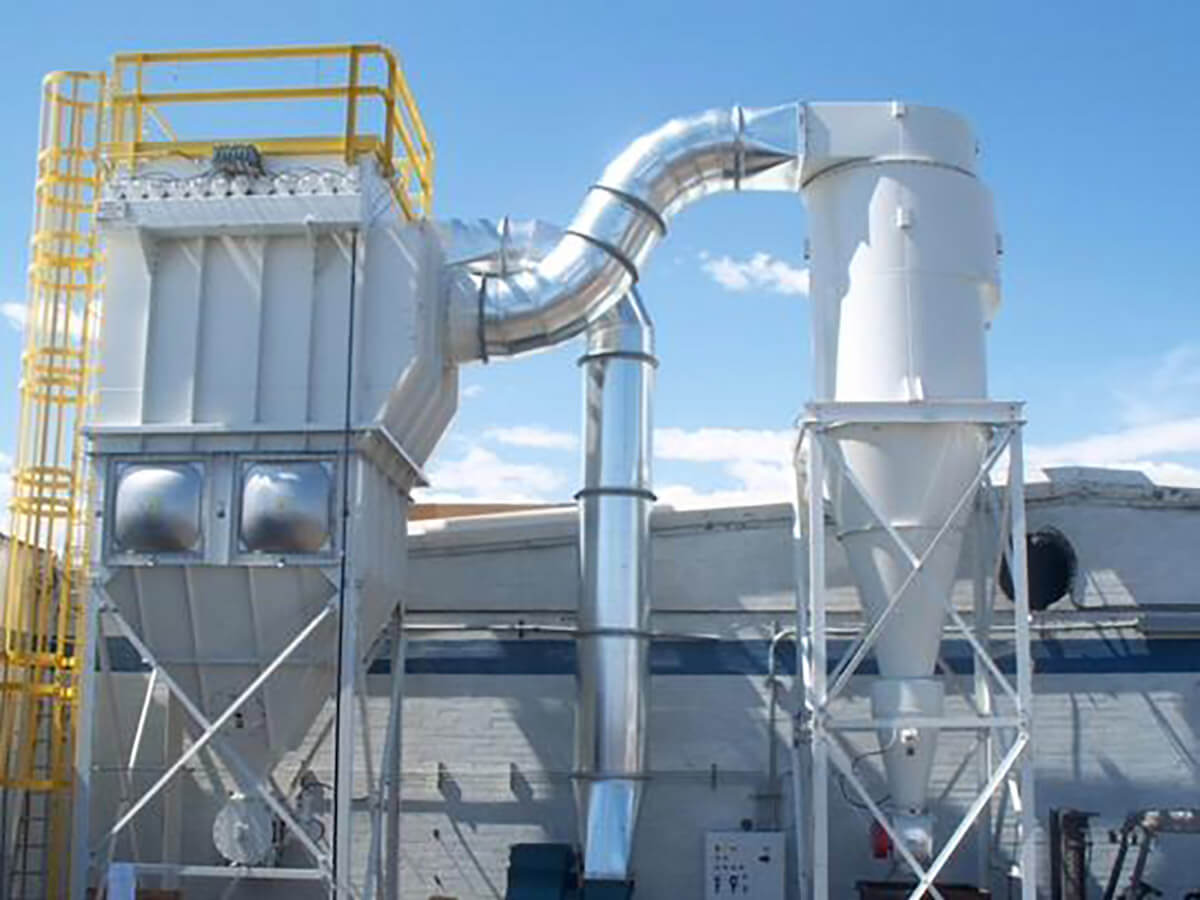
Equipped with primary, secondary, or even tertiary air inlets to optimize airflow distribution, and equipped with high-efficiency, low-resistance cyclone dust collectors or bag filters to improve fine powder recovery rate.
Product Advantages
-
High Grading Accuracy And Stable Product Quality
It can achieve ±5μm level control, and the 45μm sieve residue is controlled within 3%, meeting the stringent requirements of high-end building materials and chemical products for particle size uniformity. -
Significant Energy Conservation And Emission Reduction
Compared with traditional processes, the system can reduce unit power consumption by 20%-30%, reduce over-grinding, and improve overall grinding efficiency. -
High Processing Power And Wide Adaptability
The single-unit processing capacity can reach hundreds of tons/hour, and it is suitable for a variety of materials such as river pebbles, granite, cement clinker, fly ash, and slag. -
Easy To Operate And Highly Automated
The fineness of the finished product can be adjusted online steplessly by adjusting the wind speed or rotor speed, with a response time of less than 10 seconds, and supports integration with an intelligent control system. -
Reliable Structure And Low Maintenance Cost
Wear parts are made of wear-resistant materials such as silicon carbide coating and high-chromium cast iron, extending their service life to more than 3,000 hours; some static air classifiers have no moving parts, resulting in an extremely low failure rate. -
Excellent Environmental Performance
The fully enclosed design reduces dust spillage, and the dry separation process eliminates the need for water, avoiding wastewater discharge and aligning with green production trends.