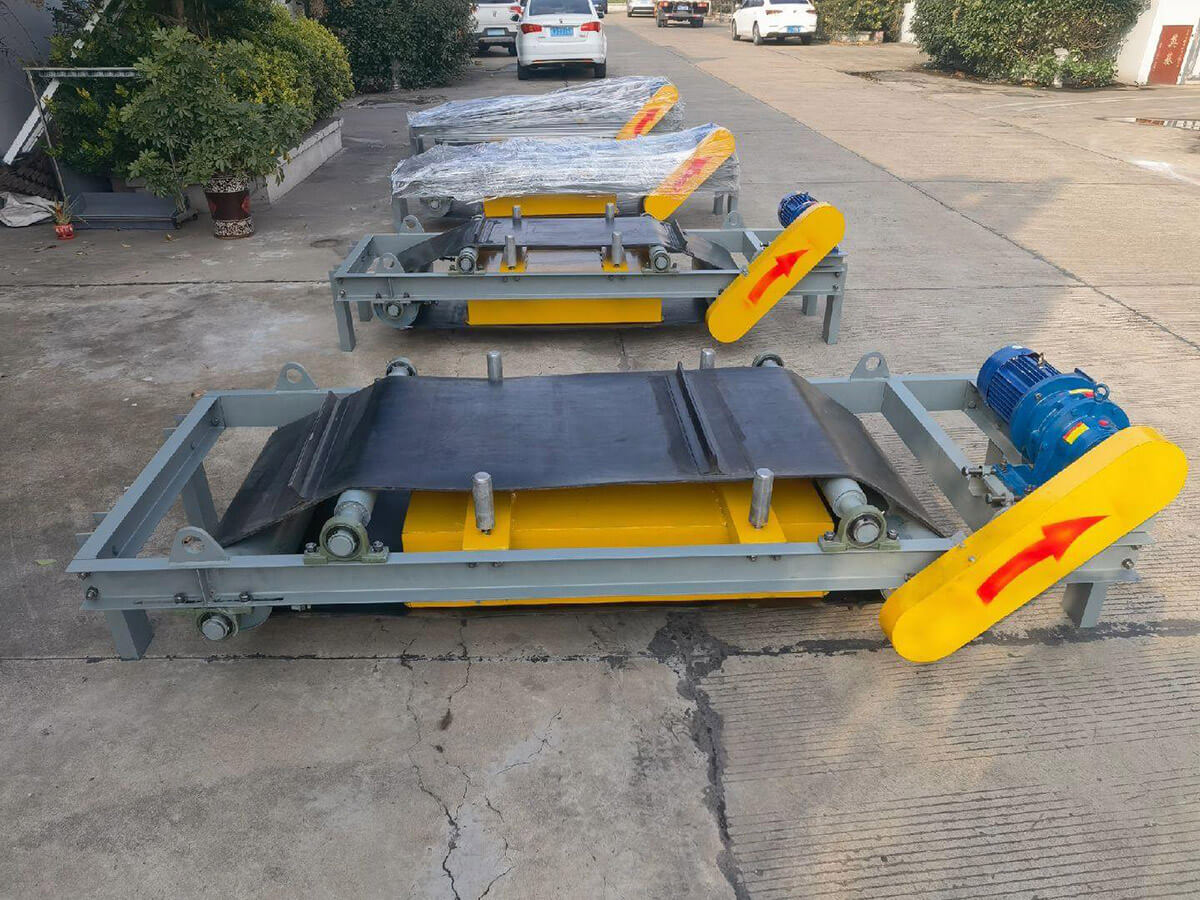
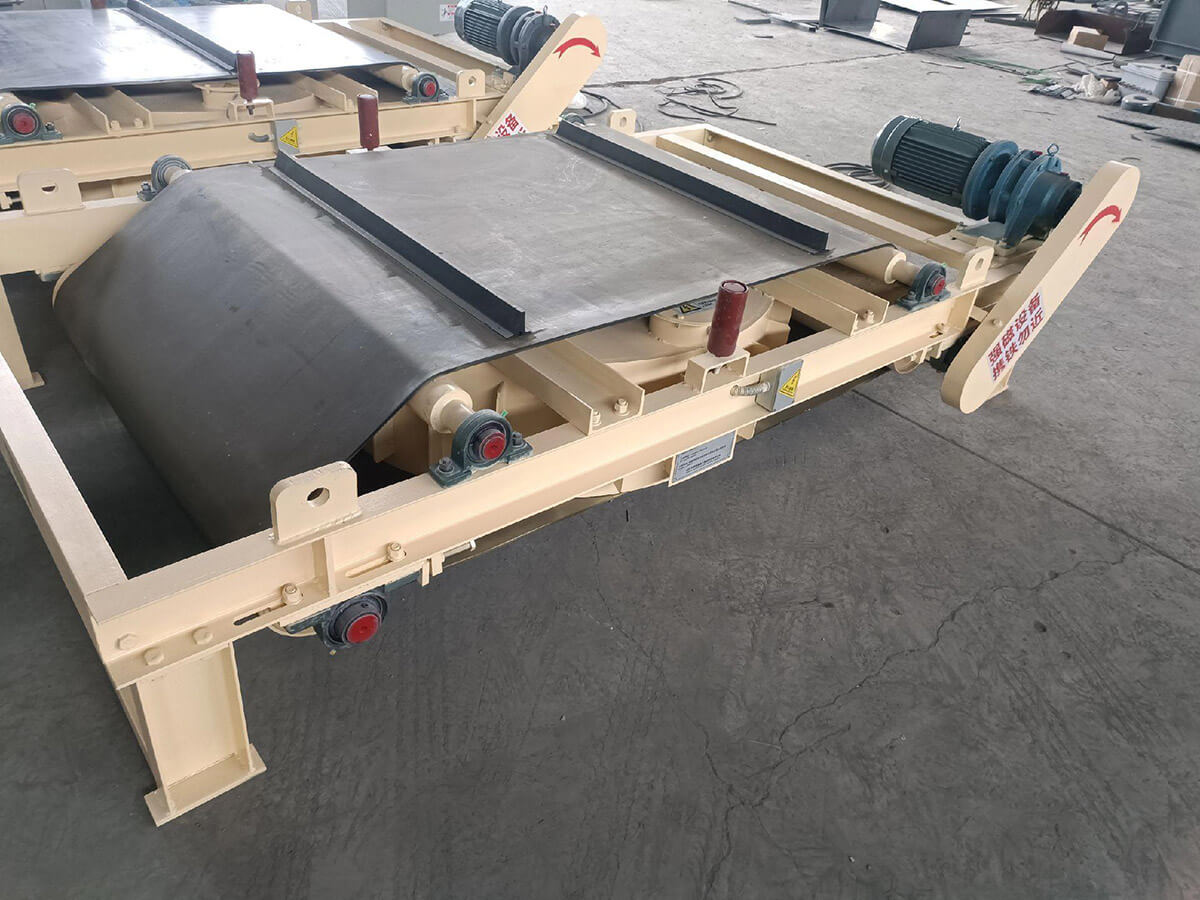
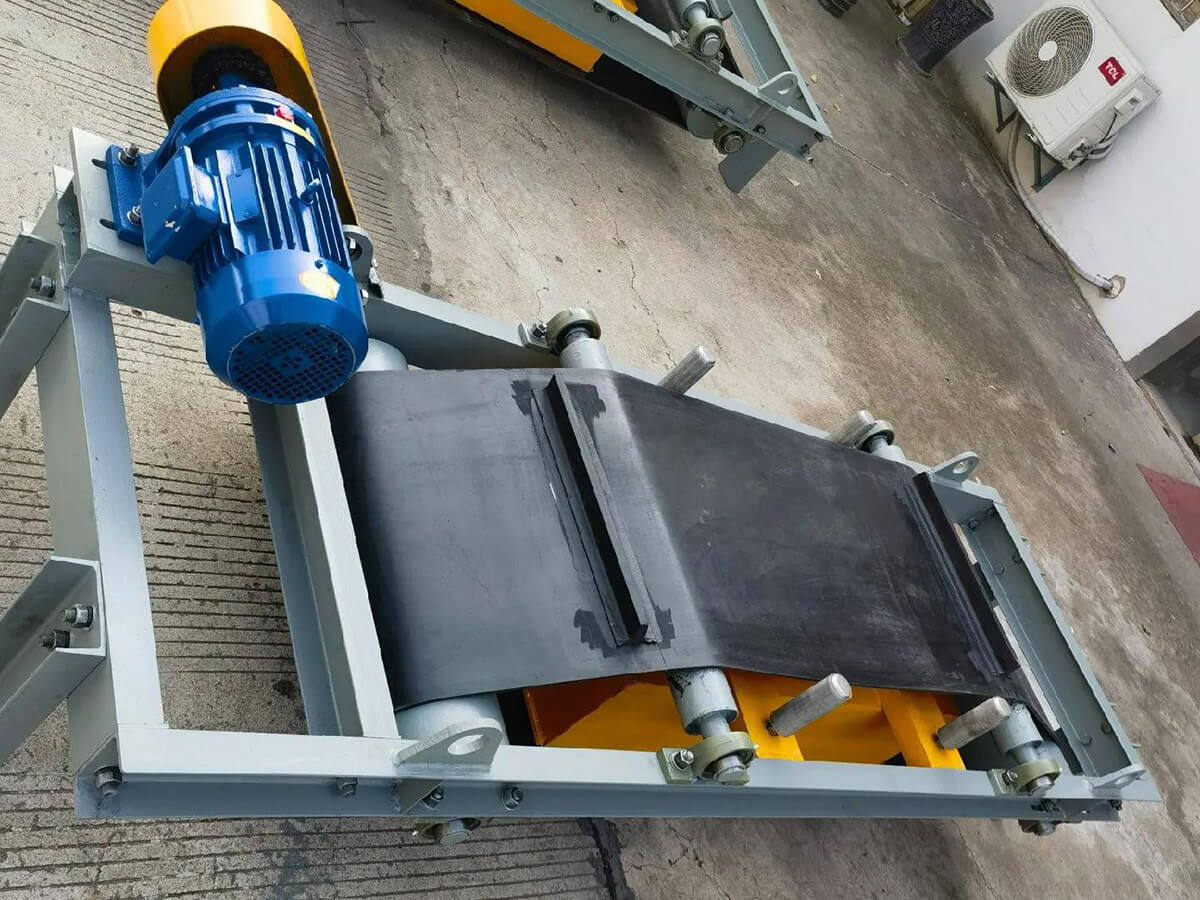
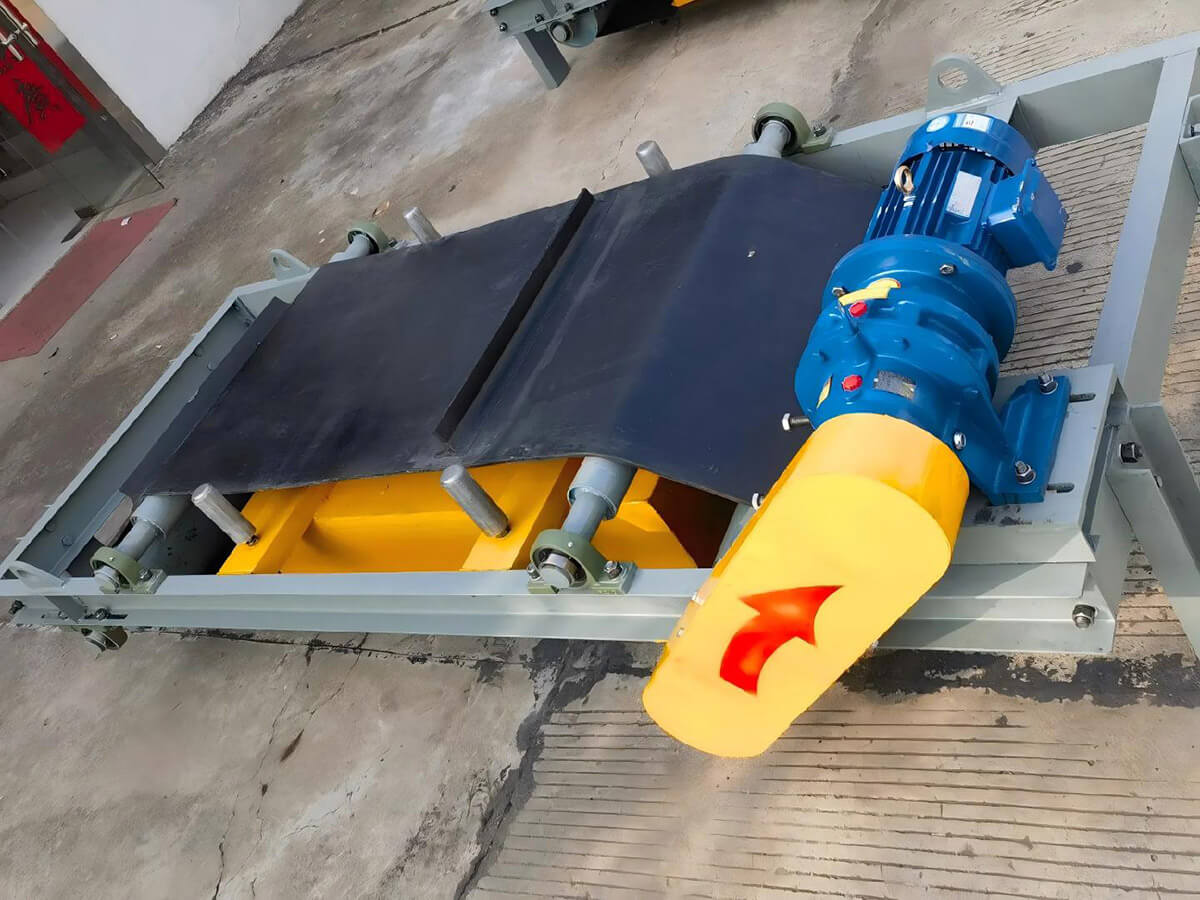
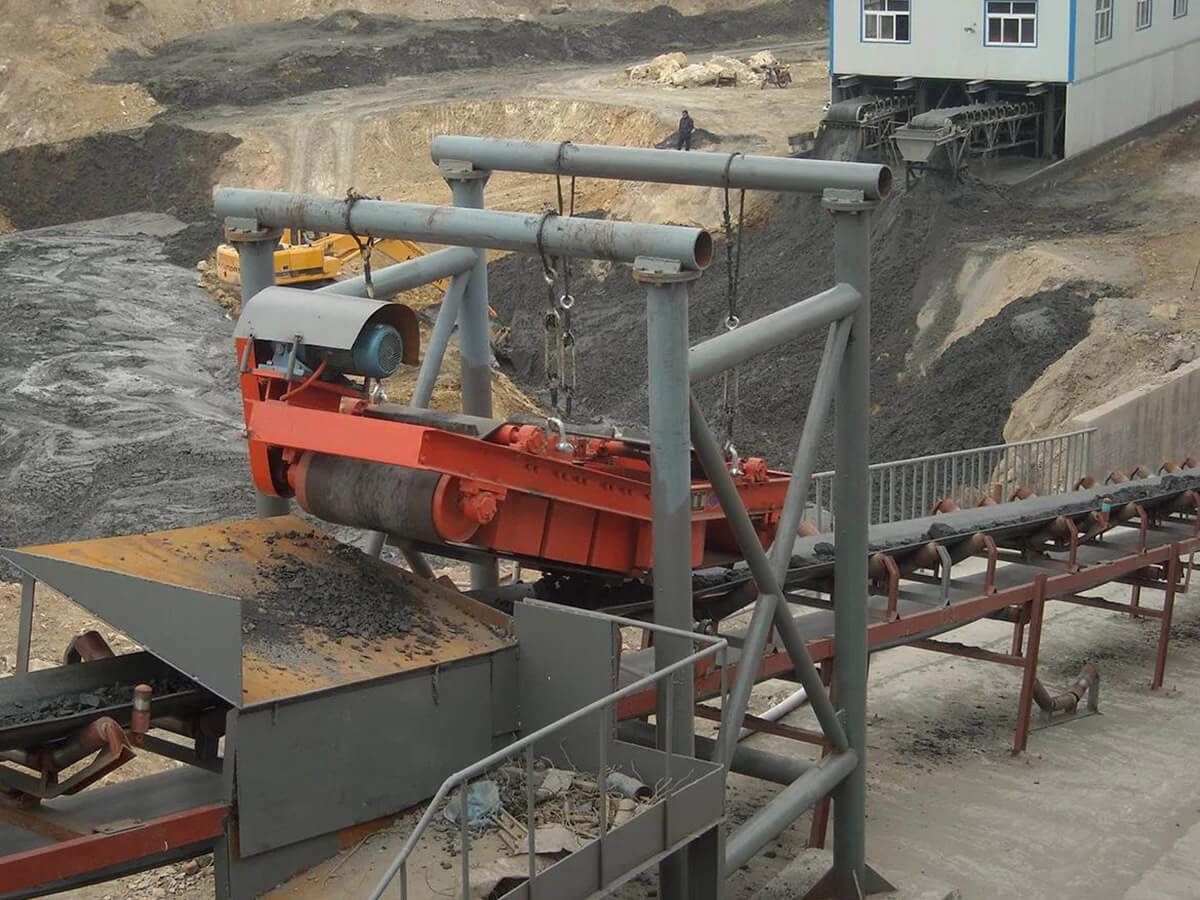

A magnetic separator is an industrial device that generates a strong magnetic field to attract and remove ferromagnetic impurities from bulk materials. This ensures the safe operation of subsequent crushing and grinding equipment, prevents iron parts from scratching conveyor belts, and improves raw material purity and product quality. It is widely used in mining, metallurgy, power, building materials, chemical, food, and new energy materials industries.
Working Principle
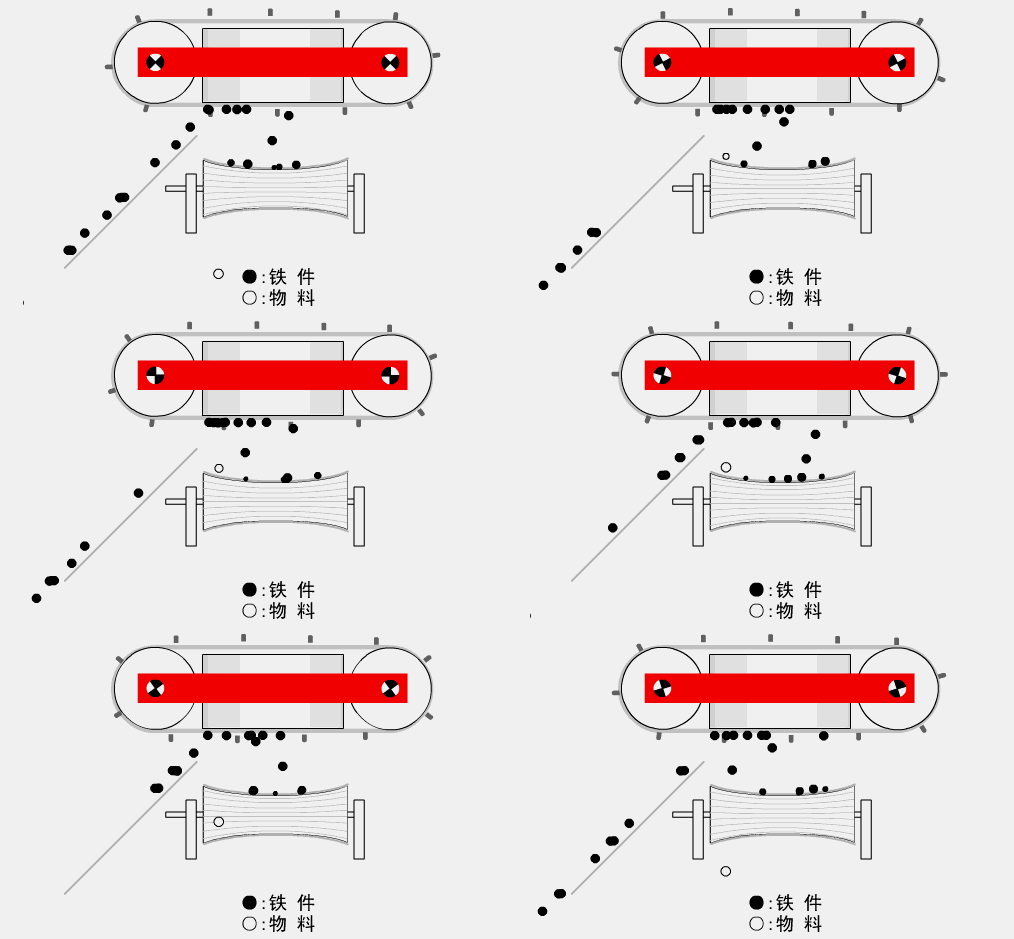
Magnetic separators utilize the principle of magnetic adsorption, using a strong magnetic field to attract and separate ferromagnetic materials (such as screws, iron filings, and welding slag) mixed in during material transport. Based on the type of magnetic source, they can be divided into:
- Permanent magnet separators: These use high-performance neodymium iron boron or ferrite permanent magnet materials for the core, continuously generating a stable magnetic field without a power supply, suitable for energy-saving and power-free environments.
- Electromagnetic separators: These generate a magnetic field by energizing an excitation coil, offering advantages such as high magnetic field strength and adjustability, suitable for applications requiring high iron removal accuracy, such as the lithium battery and ceramics industries.
When material passes under or inside the separator, iron impurities are adsorbed onto the magnetic pole surface, and then discharged manually or automatically by an unloading device (such as a belt conveyor or rotary scraper), achieving continuous iron removal.
Product Structure
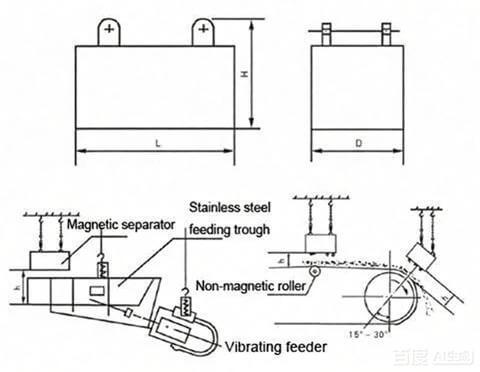
Different types of magnetic separators have slightly different structures, but the core components include:
-
Magnetic Source System
- Permanent Magnet Type: Composed of high-performance permanent magnets (such as neodymium iron boron) and magnetically conductive steel plates forming the magnetic circuit;
- Electromagnetic Type: Composed of excitation coils, an iron core, and a cooling system (air cooling or oil cooling).
-
Mechanical Structure
- Suspension Device: Used for suspending above the conveyor belt.
- Belt Conveyor Mechanism (Self-Unloading Type): Drives the adsorbed iron parts out of the magnetic field area.
- Support Frame and Rollers: Support the entire machine and enable belt operation.
- Control System (some models): PLC control for start/stop, remote monitoring, etc.
-
Protection and Heat Dissipation System
- Fully sealed structure, dustproof, moisture-proof, and corrosion-resistant;
- Oil-cooled or air-cooled design ensures low temperature rise during long-term operation.
Product Advantages
-
Highly Efficient Iron Removal, Ensuring Equipment Safety
Removes iron particles larger than 0.1mm with a removal rate exceeding 98%, effectively protecting critical equipment such as crushers and grinders. -
Robust Structure, Adaptable to Complex Working Conditions
The outer shell is constructed of high-strength steel, ensuring excellent sealing and stable operation in harsh environments such as dust, humidity, and high temperatures. -
Energy-Saving and Low Consumption, Easy Maintenance
The permanent magnet type requires no electricity, while the electromagnetic type utilizes efficient cooling technology, reducing energy consumption by 30%-50% compared to traditional equipment. -
High Degree of Automation
Supports PLC control, remote operation, and timed iron removal, allowing seamless integration with production lines and enhancing overall intelligence. -
Modular Design, Strong Adaptability
The number of magnetic rods and flange interfaces can be customized according to pipe size and material characteristics, making it suitable for various scenarios such as food, pharmaceuticals, and new energy.