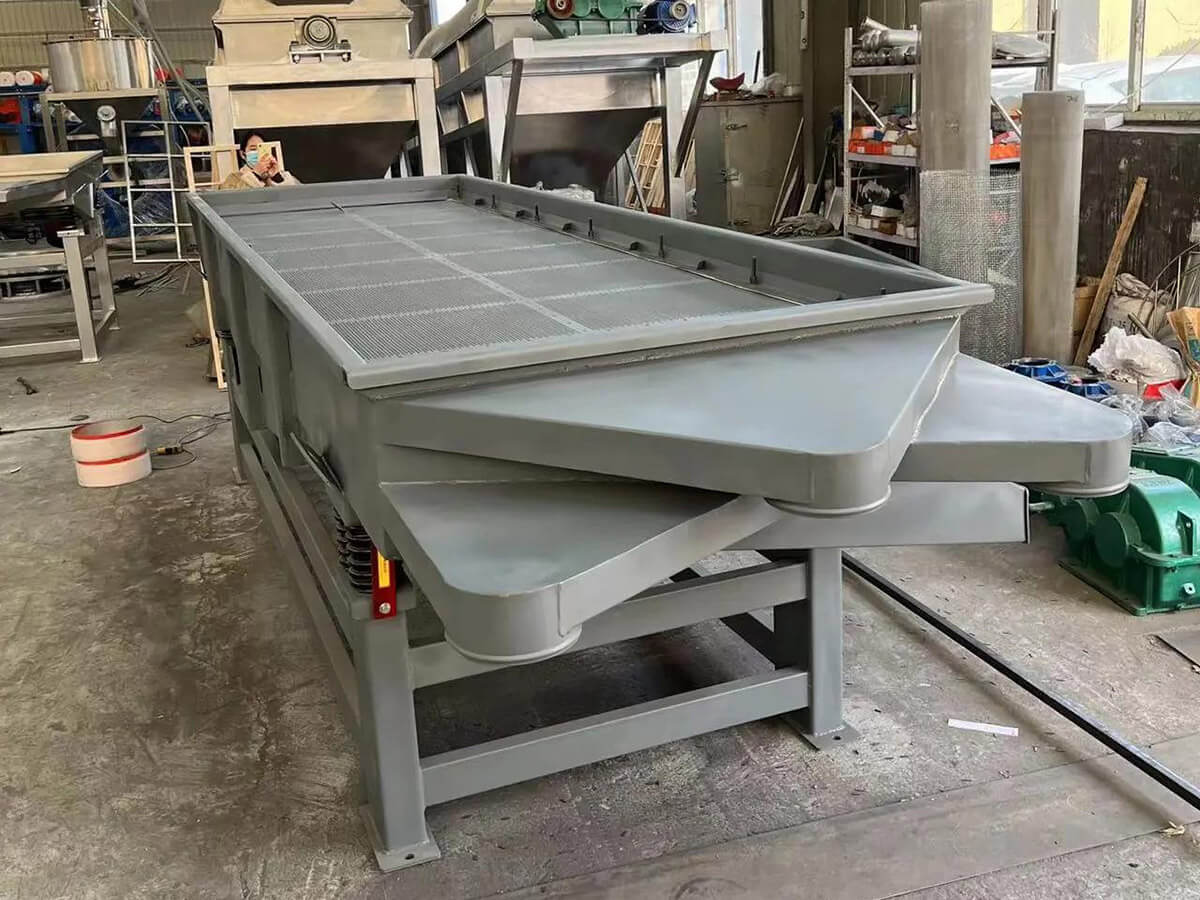

Linear screens are highly efficient screening equipment widely used in industrial production, primarily for grading, removing impurities, dewatering, and screening powdery and granular materials. With their compact structure, stable operation, high screening efficiency, and excellent sealing properties, they have become indispensable equipment in industries such as mining, chemicals, food, building materials, and pharmaceuticals.
Working Principle
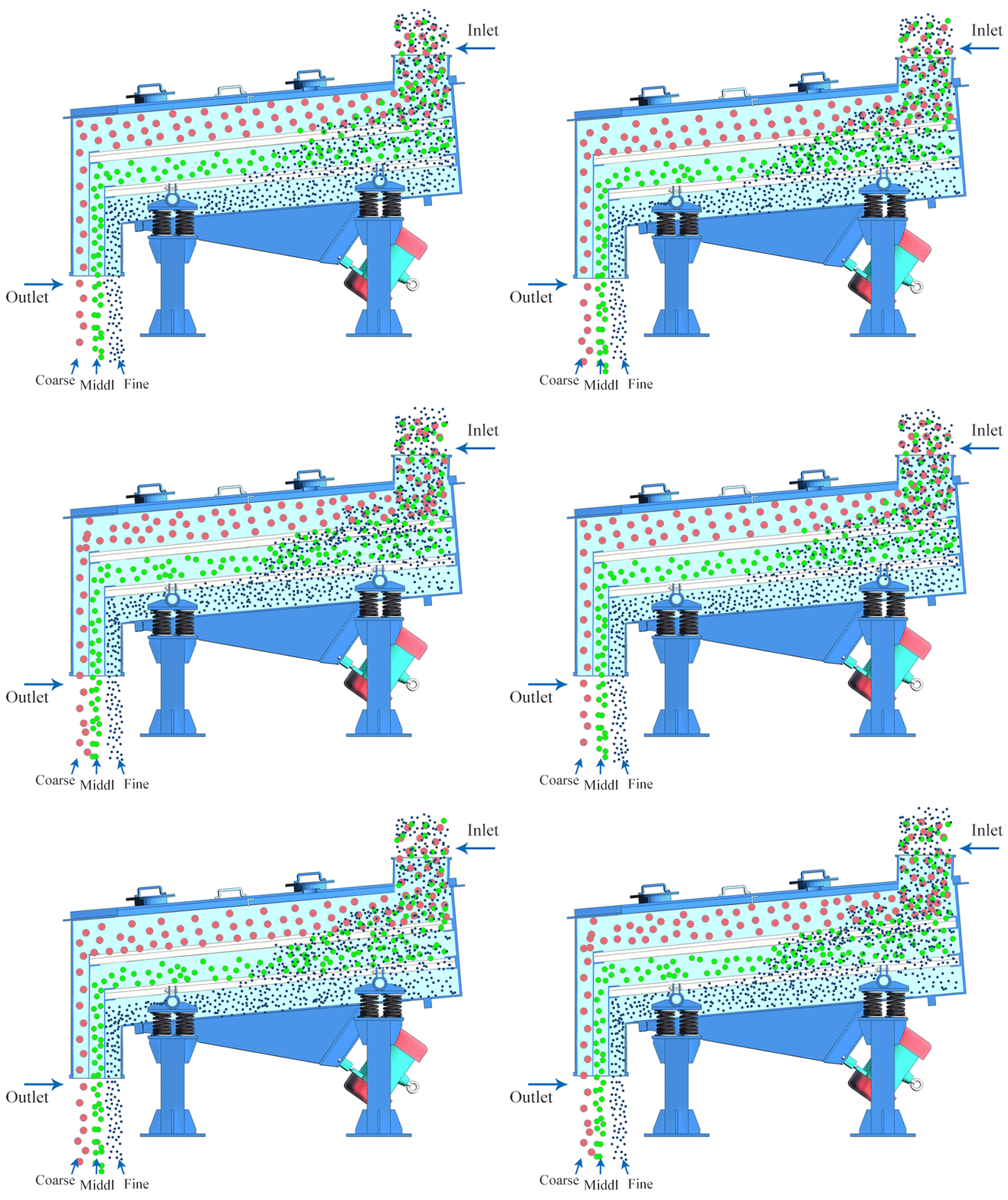
The core working principle of a linear vibrating screen is based on the synchronous counter-rotation of two vibrating motors. When the two vibrating motors operate synchronously in opposite directions, the excitation forces generated by their eccentric blocks cancel each other out in the direction parallel to the motor axis, and superimpose in the vertical direction to form a single linear excitation force, causing the screen body to produce a linear reciprocating motion along the screen surface.
After the material enters the screen box evenly from the feed inlet, it moves forward in a jumping motion along the screen surface under the combined action of the excitation force and gravity. Fine particles smaller than the screen openings pass through the screen and fall into the lower layer or receiving bin, whereas coarse particles larger than the screen openings continue to move forward and are discharged from the outlet, thereby achieving continuous and efficient grading.
By adjusting the angle of the eccentric blocks in the vibrating motors, the magnitude of the excitation force can be controlled, thereby regulating the material's speed of movement and residence time on the screen surface to accommodate different material characteristics and production requirements.
Product Structure
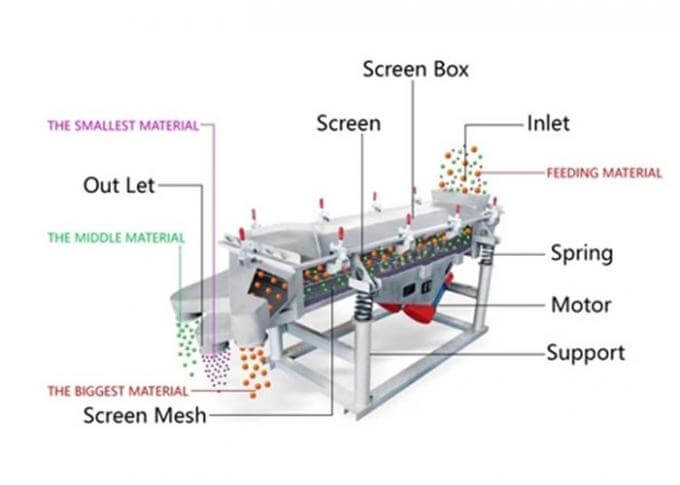
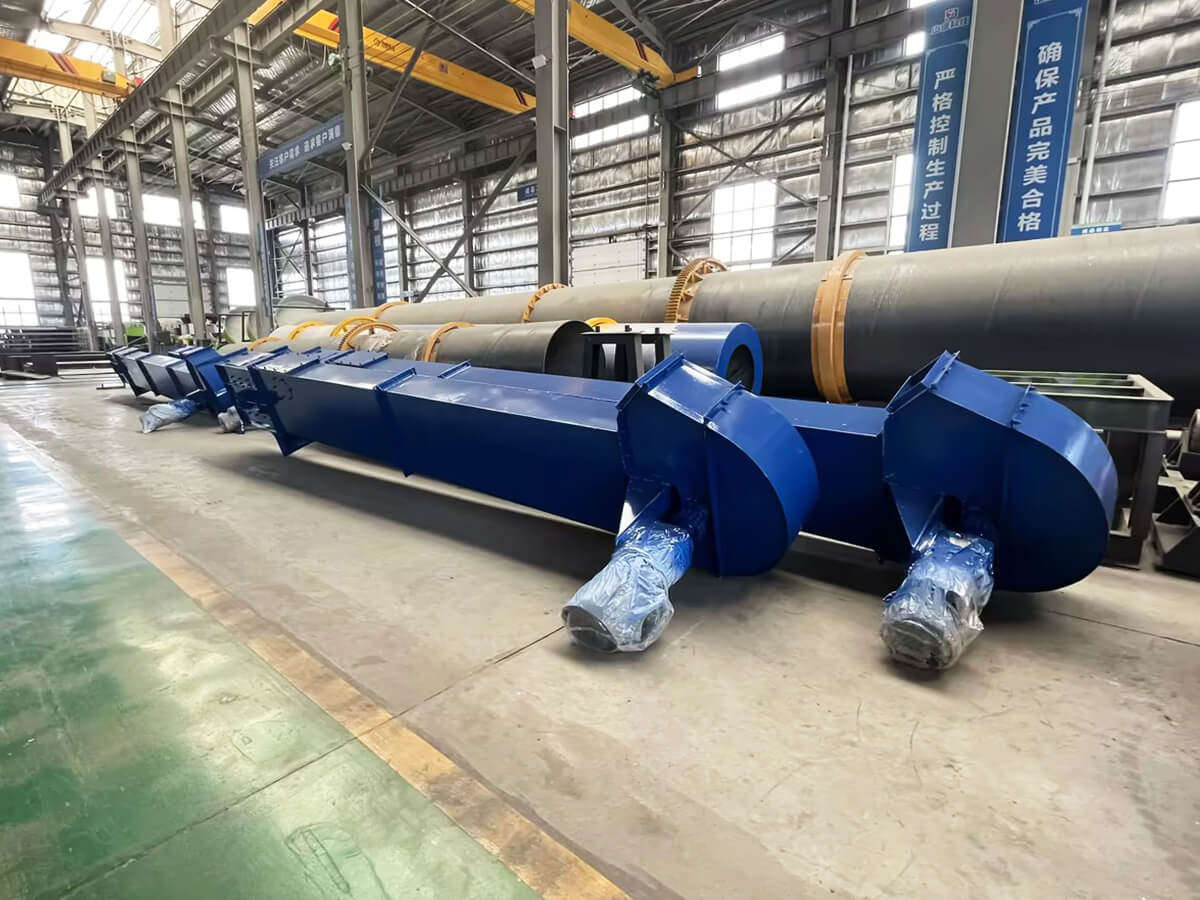
A linear vibrating screen mainly consists of the following five core components:
-
Screen Box (Screen Body)
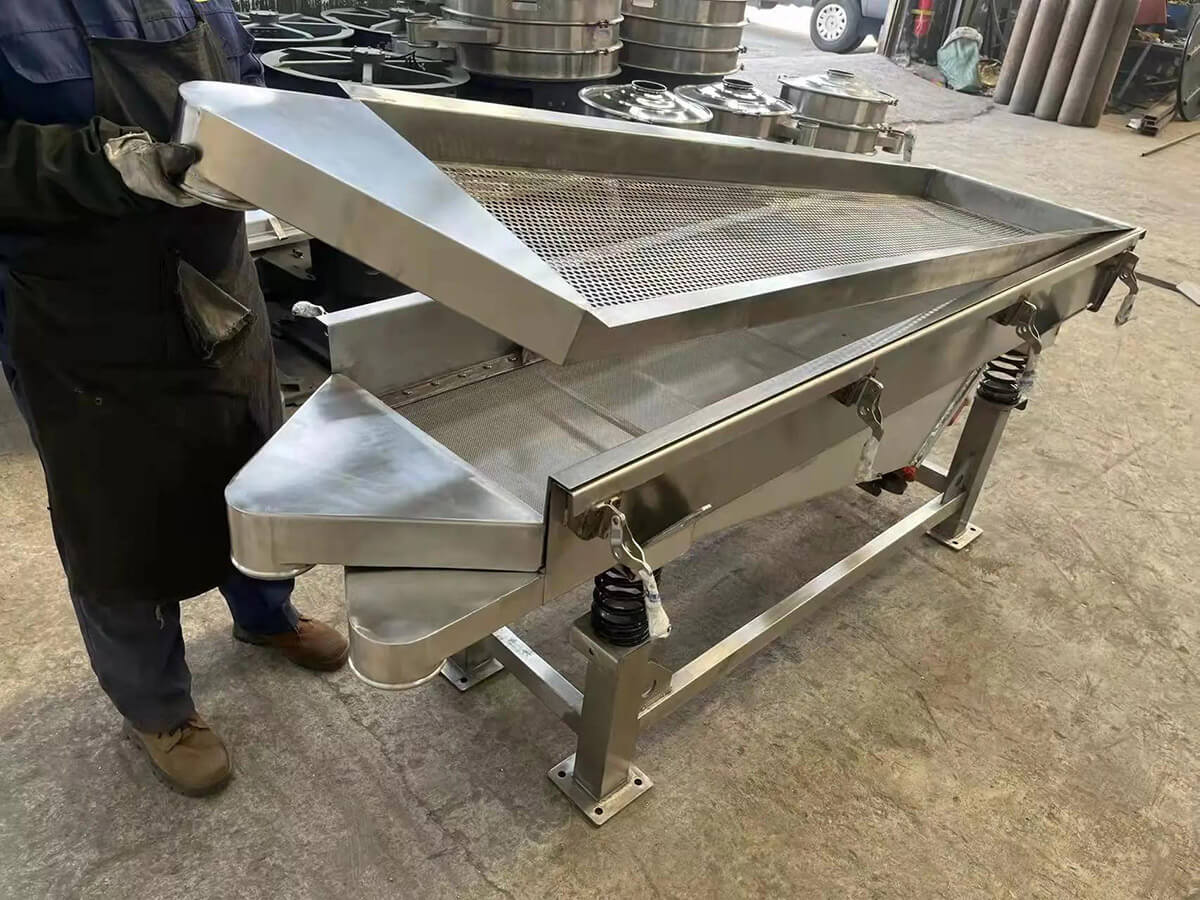
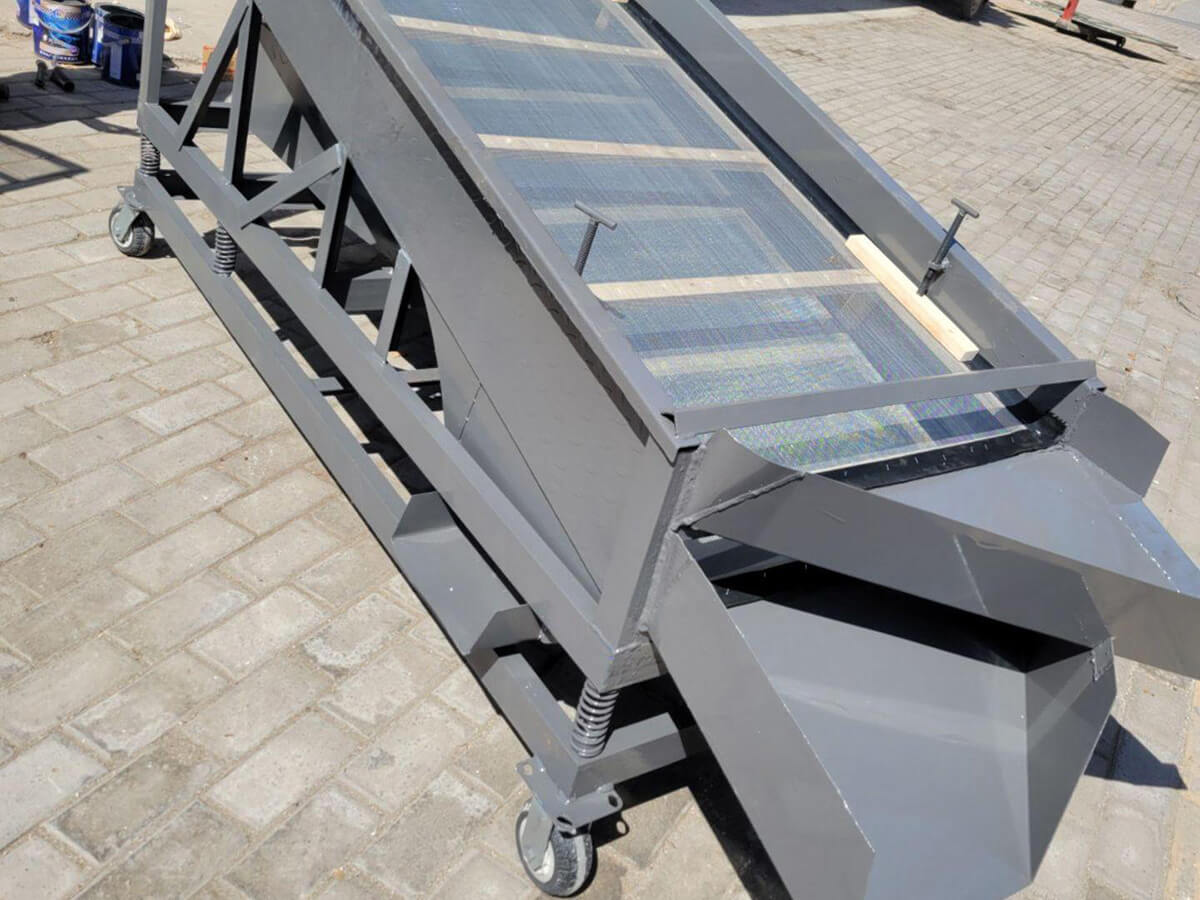
As the main body of the equipment, it is typically welded from Q235 carbon steel or 304 stainless steel and possesses sufficient strength and rigidity. The screen box can be designed as a single-layer or multi-layer structure (commonly 2–4 layers) to support multi-stage screening. -
Screen Mesh System
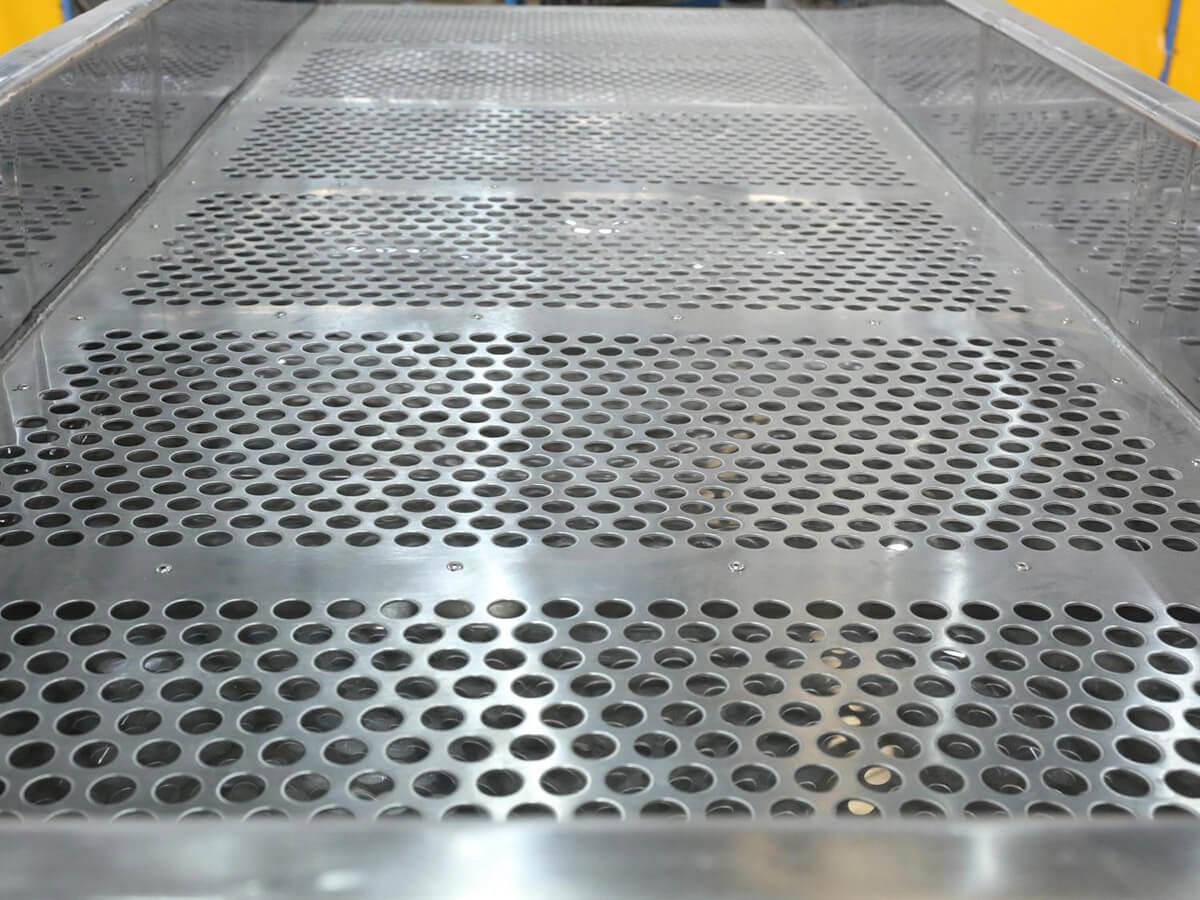
Various types are available, including woven mesh, perforated mesh, polyurethane mesh, and slotted mesh. Screen aperture sizes range from 3/8 inch (approximately 10 mm) to 400 mesh (approximately 38 μm), accommodating different particle-size classification requirements. -
Vibration Source (Vibration Motor)
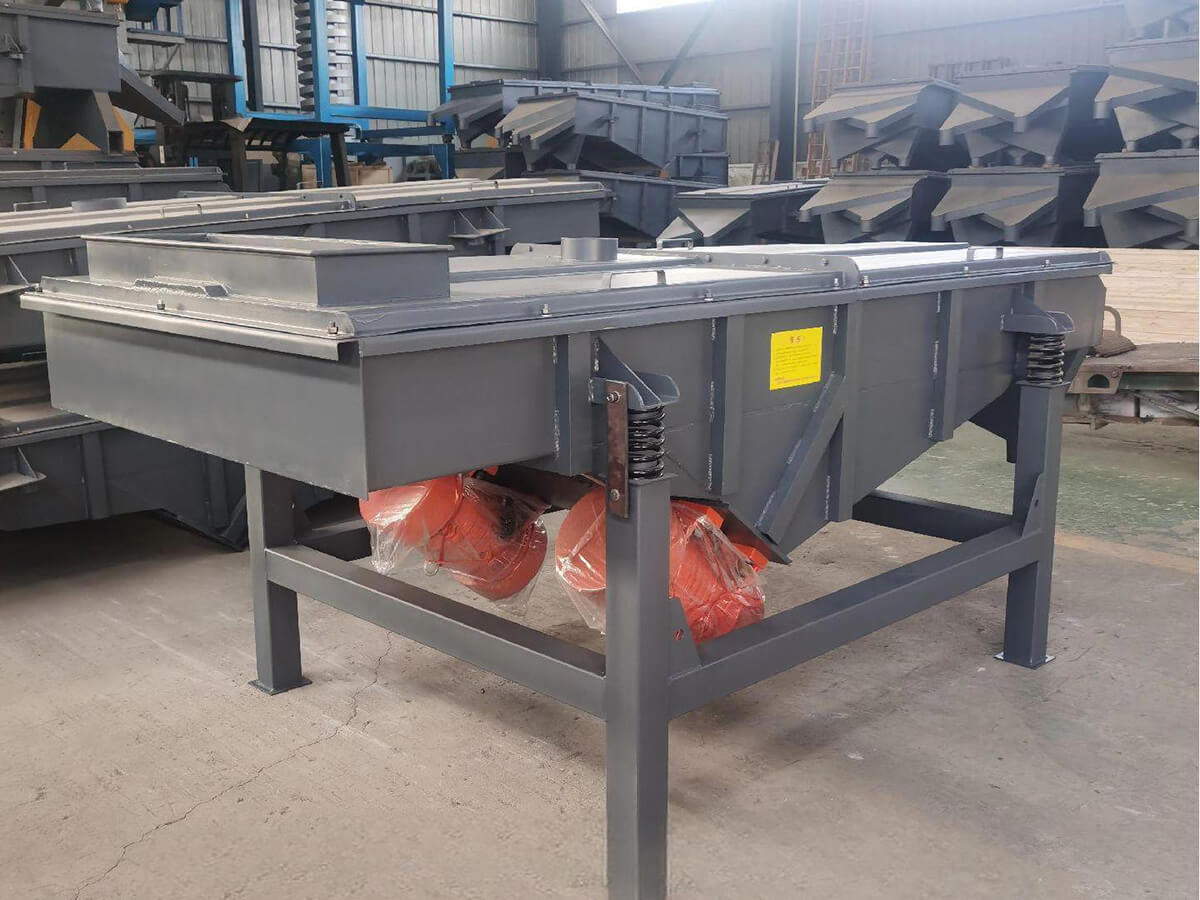
Generally, a horizontal vibration motor is used, installed on both sides of the screen box. The motor power is matched to the processing capacity, typically ranging from 2 × 0.5 kW to 2 × 3 kW, with some heavy-duty models rated at 5.5 kW or more. -
Vibration Damping Device
Typically uses rubber, steel, or composite springs to effectively isolate vibration transmission, reduce foundation loading, and ensure stable operation. -
Support Base and Control System
The base fixes the screening machine's position. Some models are equipped with a PLC-based intelligent control system that enables remote start and stop, parameter monitoring, and fault alarms, thereby improving automation.
Product Advantages
-
High Screening Efficiency And Strong Processing Capacity
Linear screens achieve screening efficiency over 96%, offer high processing capacity per unit time, are suitable for large-scale continuous operation, and are widely used in assembly-line production. -
Simple Structure And Convenient Maintenance
Modular design makes screen replacement and component maintenance convenient; ordinary operators can complete daily maintenance after simple training. -
Fully Enclosed Structure, Environmentally Friendly, and Dust-Free
Especially suitable for industries with high hygiene requirements, such as food and pharmaceuticals, it effectively prevents cross-contamination. -
Low Energy Consumption And Low Operating Costs
The motor power of the vibrating motor is reasonably matched, resulting in lower energy consumption per unit of material processed than traditional screening equipment, aligning with the concept of green production. -
High Degree Of Customization
Screen width (500–1500mm), length (1500–4000mm), inclination angle (0°–10°), and number of layers can all be customized to suit different process layouts and material characteristics. -
High Degree Of Automation Integration
Supports seamless integration with upstream and downstream equipment (e.g., feeders, conveyors, and crushers) to enable automated control of the entire production line.