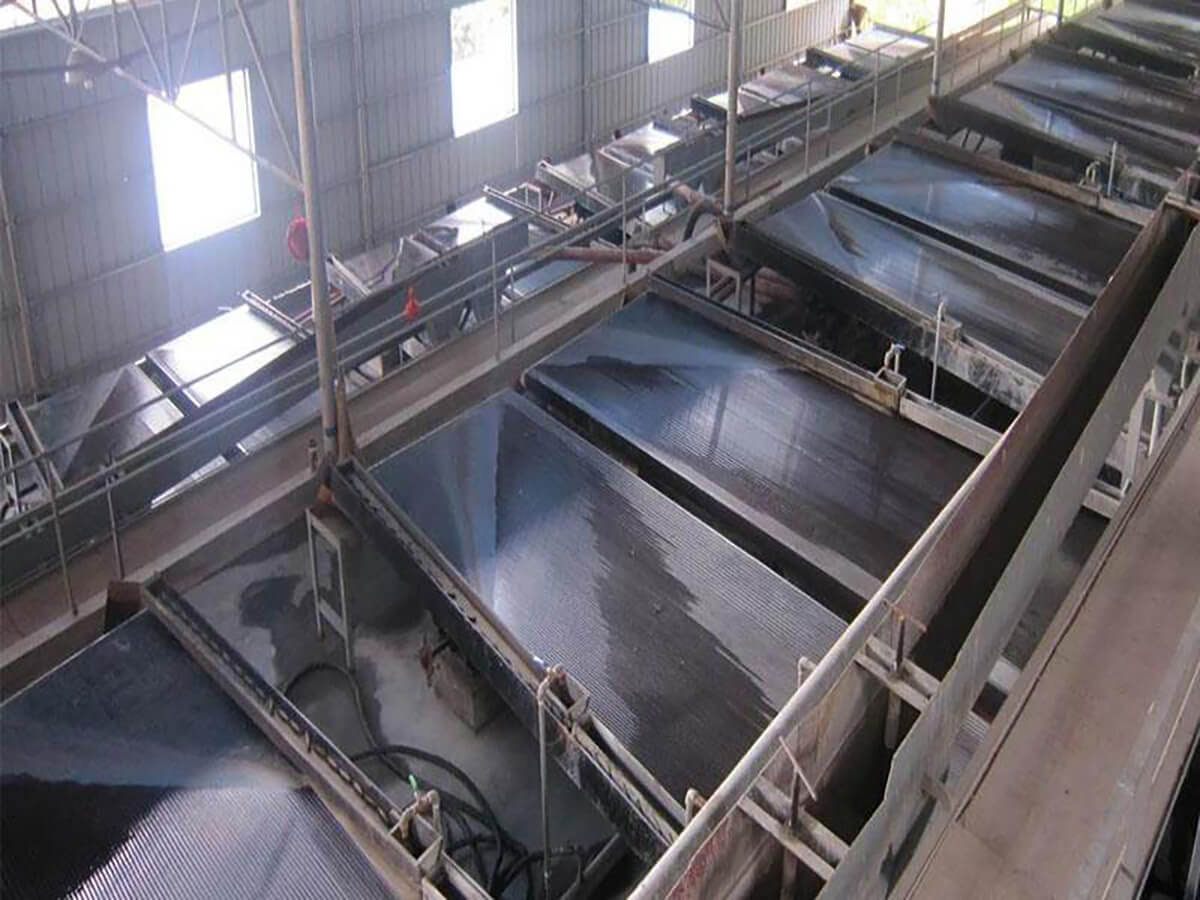
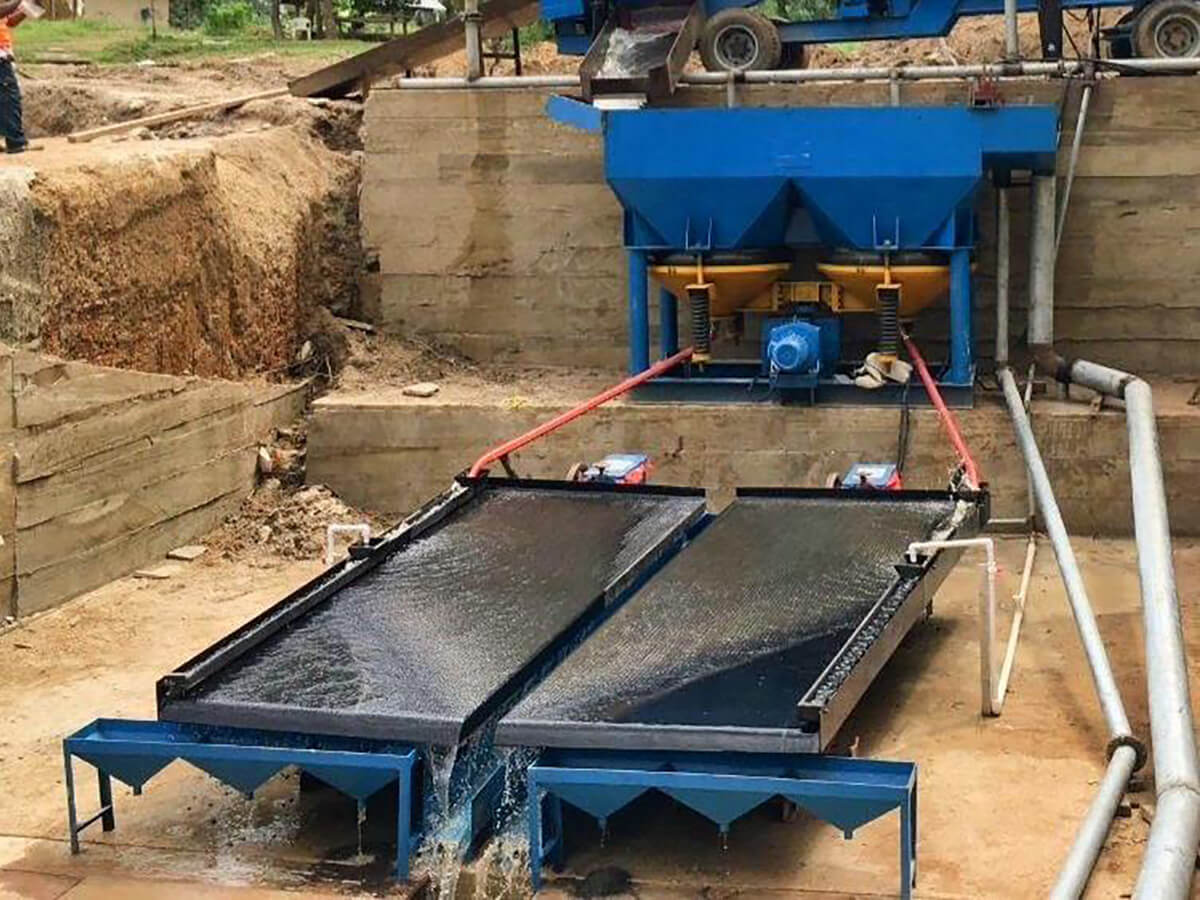
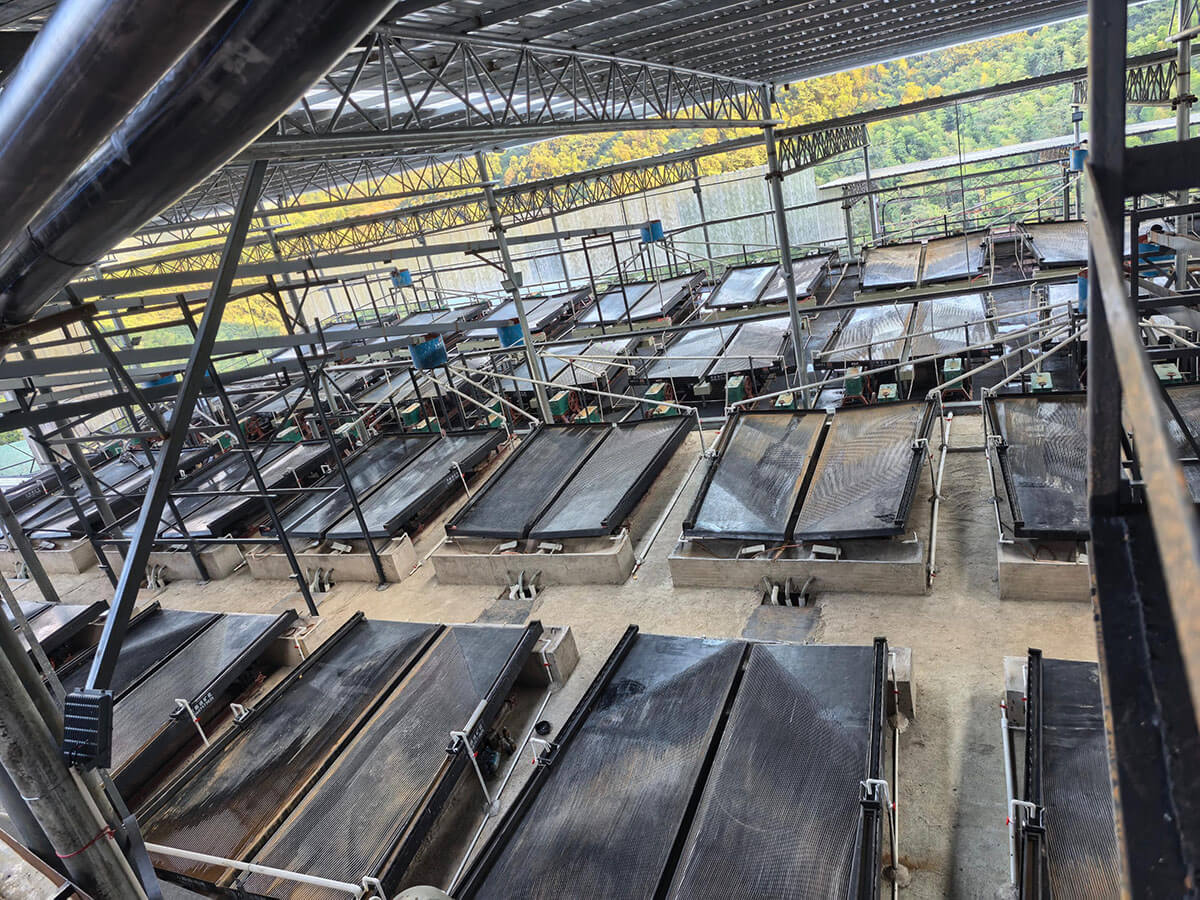
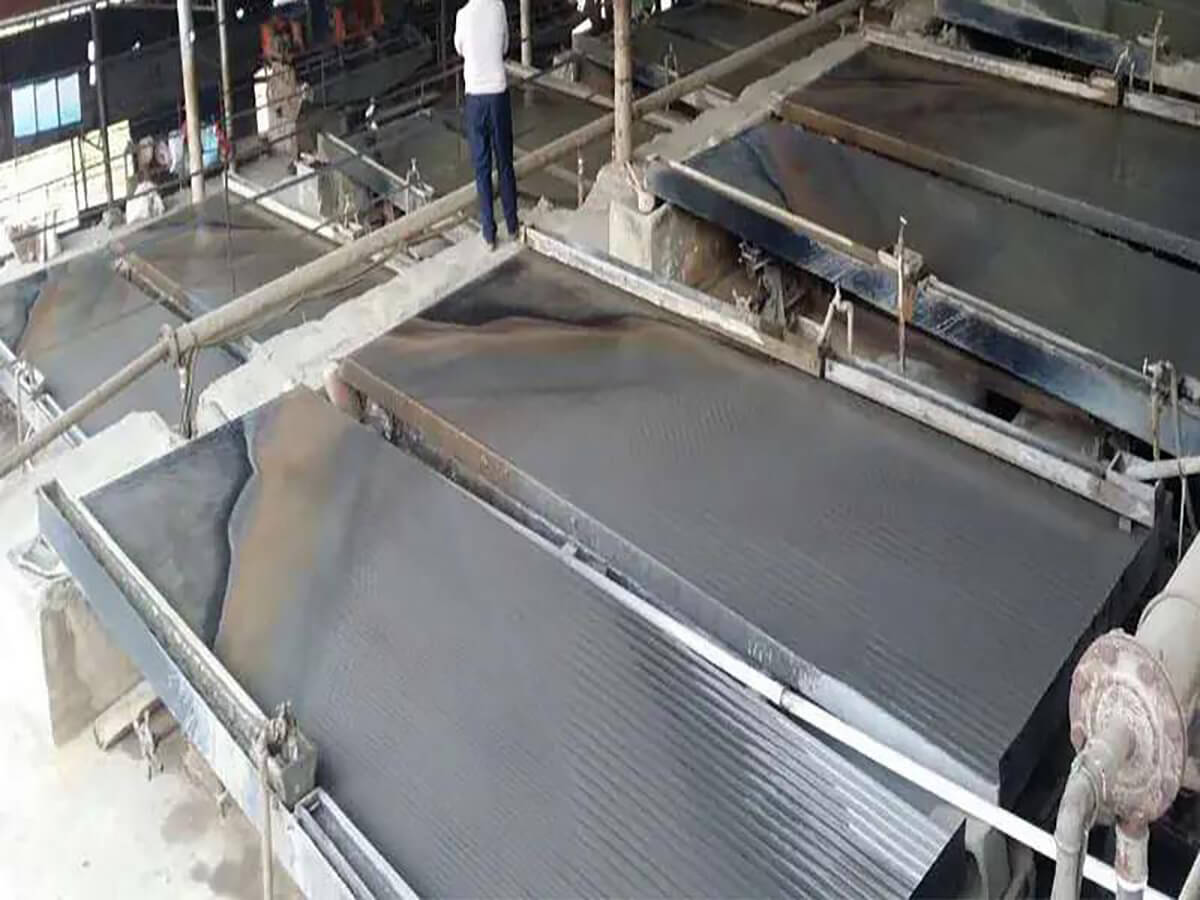

The 6S shaking table is a gravity separation device widely used in mineral processing. It excels in the purification of metallic minerals such as gold, tungsten, and tin due to its high separation accuracy and stable operation. It can complete roughing and cleaning operations in one pass, directly producing concentrate and tailings, making it a commonly used and highly efficient piece of equipment in small and medium-sized mineral processing plants and laboratories.
Working Principle
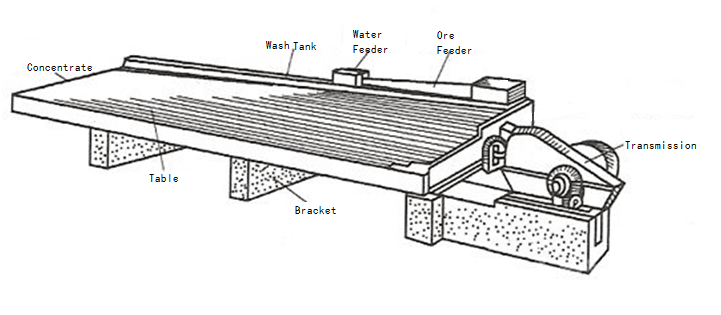
The 6S shaking table utilizes the combined effects of gravity-induced stratification of mineral particles on an inclined bed surface and lateral water flow washing, along with the asymmetric reciprocating motion of the bed surface, to effectively separate minerals of different densities.
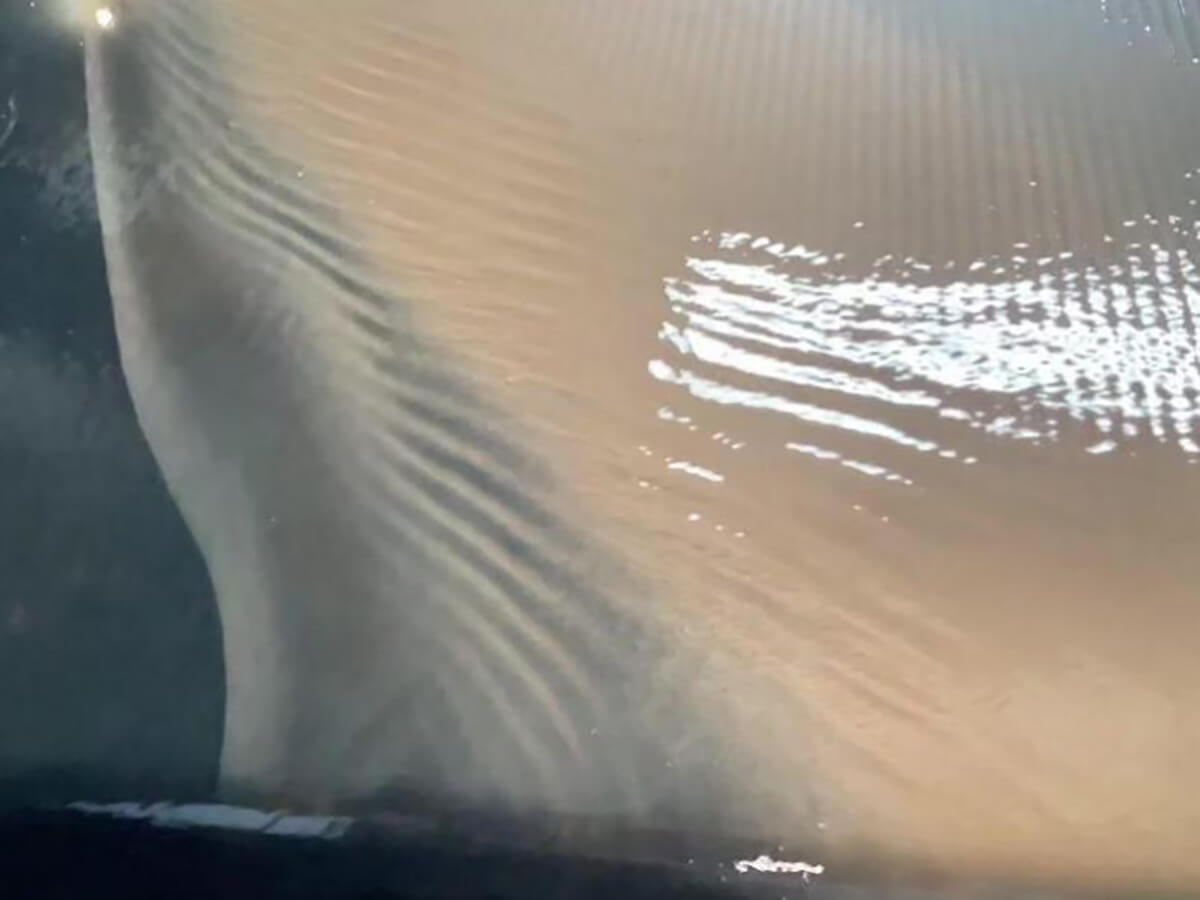
After the slurry enters the bed with reciprocating bars from the feed trough, under the combined action of gravity, water flow, and bed vibration, heavier minerals (such as gold and tungsten) settle to the bottom layer and slowly move along the bed surface towards the concentrate end; lighter minerals float to the top and are washed to the tailings side by the lateral water flow.
Ultimately, mineral particles of different densities are distributed in a fan shape, flowing out from different areas on the concentrate and tailings sides, forming three products: concentrate, middlings, and tailings.
This process requires no chemical reagents, is environmentally friendly and energy-saving, and the separation effect is intuitive and controllable. It also allows for easy adjustment of the stroke, frequency, and slope to adapt to different ore properties.
Product Structure
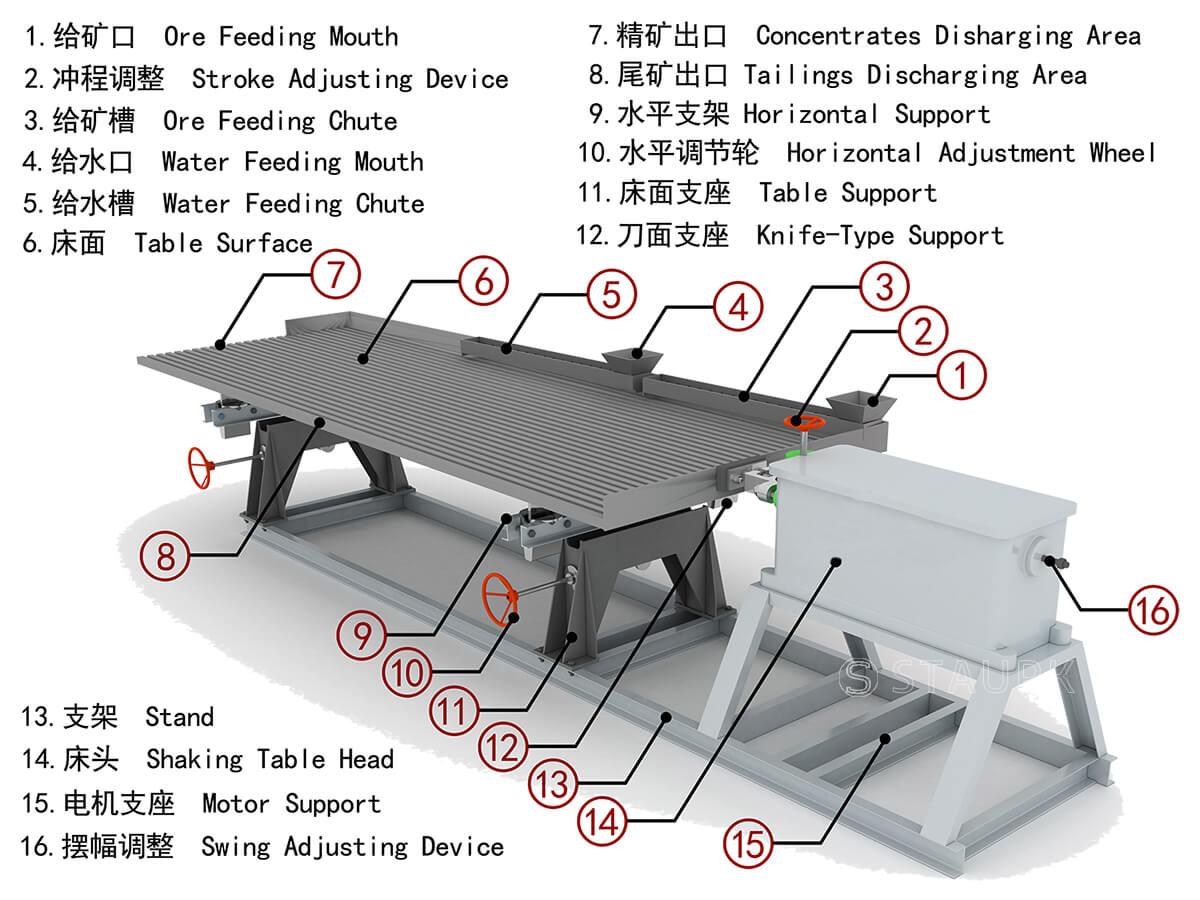
The 6S shaking table mainly consists of three core components:
-
Headboard (Transmission Mechanism)
Provides power, employing an eccentric linkage or cam lever structure to drive the bed surface in asymmetrical reciprocating motion. The stroke (8–36 mm) and stroke rate (210–380 strokes/min) can be controlled via a handwheel, ensuring sorting flexibility. -
Bed Surface
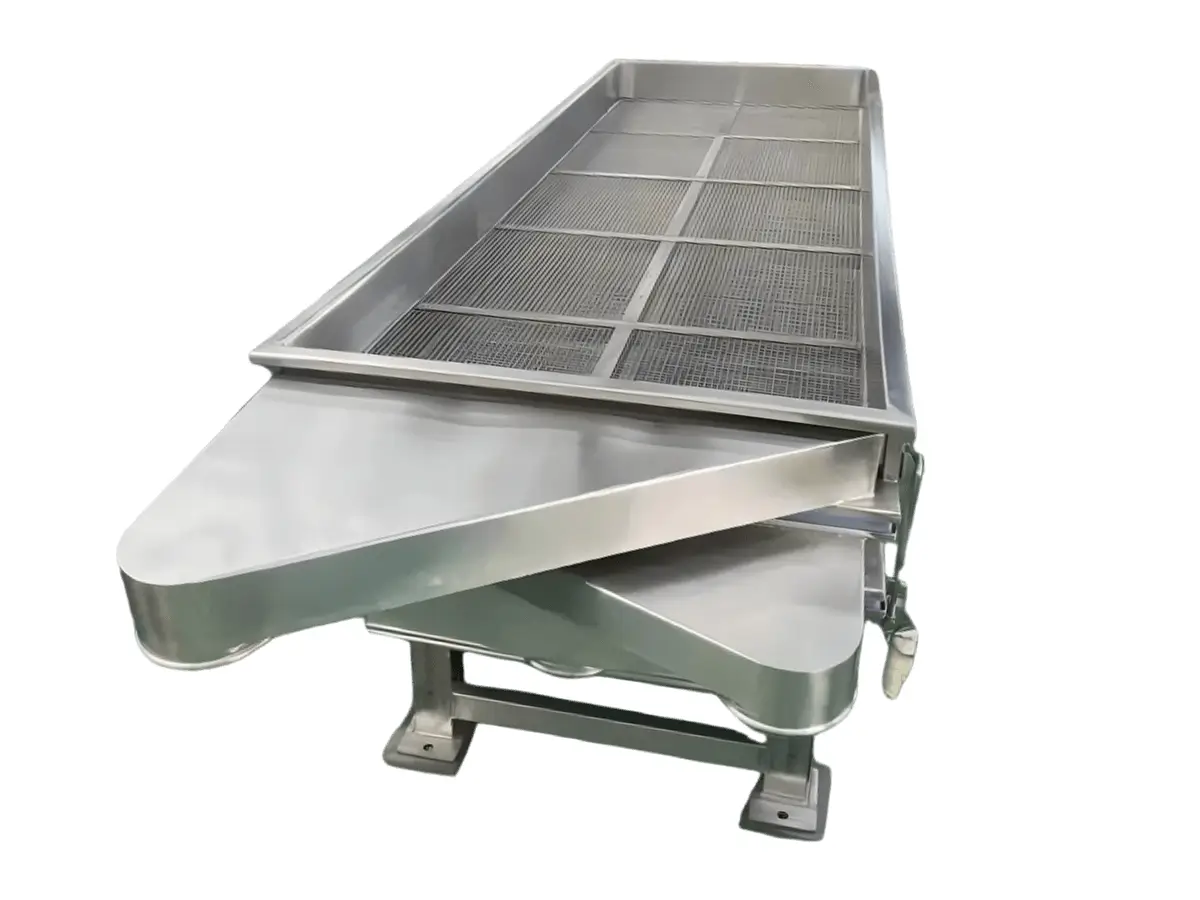
Shaped as a right-angled trapezoid, it is typically made of fiberglass encasing a steel frame, with rifling (rectangular, sawtooth, or triangular) on the surface. Depending on the particle size being processed, there are three bed surface types: coarse sand, fine sand, and slime, each corresponding to different trough shapes and sizes. -
Support and Inclination Mechanism
Supports the bed surface and adjusts the lateral inclination angle (usually 0°–10°). Rotating the inclination adjustment handwheel changes the bed surface slope, thereby affecting the lateral movement speed and stratification of the mineral particles.
Product Advantages
- High sorting accuracy: Enrichment ratio up to 100 times, high-quality concentrate obtained in a single operation.
- No reagents required: Pure physical sorting, environmentally friendly, and low operating costs.
- Easy operation: Stable structure, easy adjustment, and easy monitoring, suitable for beginners to quickly learn.
- Strong adaptability: Can process various particle sizes such as coarse sand, fine sand, and sludge, widely used for various minerals such as gold, tungsten, tin, iron, and manganese.
- Low maintenance costs: Few vulnerable parts, reliable operation, some models are corrosion-resistant and acid/alkali-resistant.
- Double-layer design improves efficiency: The 6-S double-layer shaking table increases the processing capacity to 40–60 tons/day, reduces the floor space by 50%, and significantly increases production capacity.