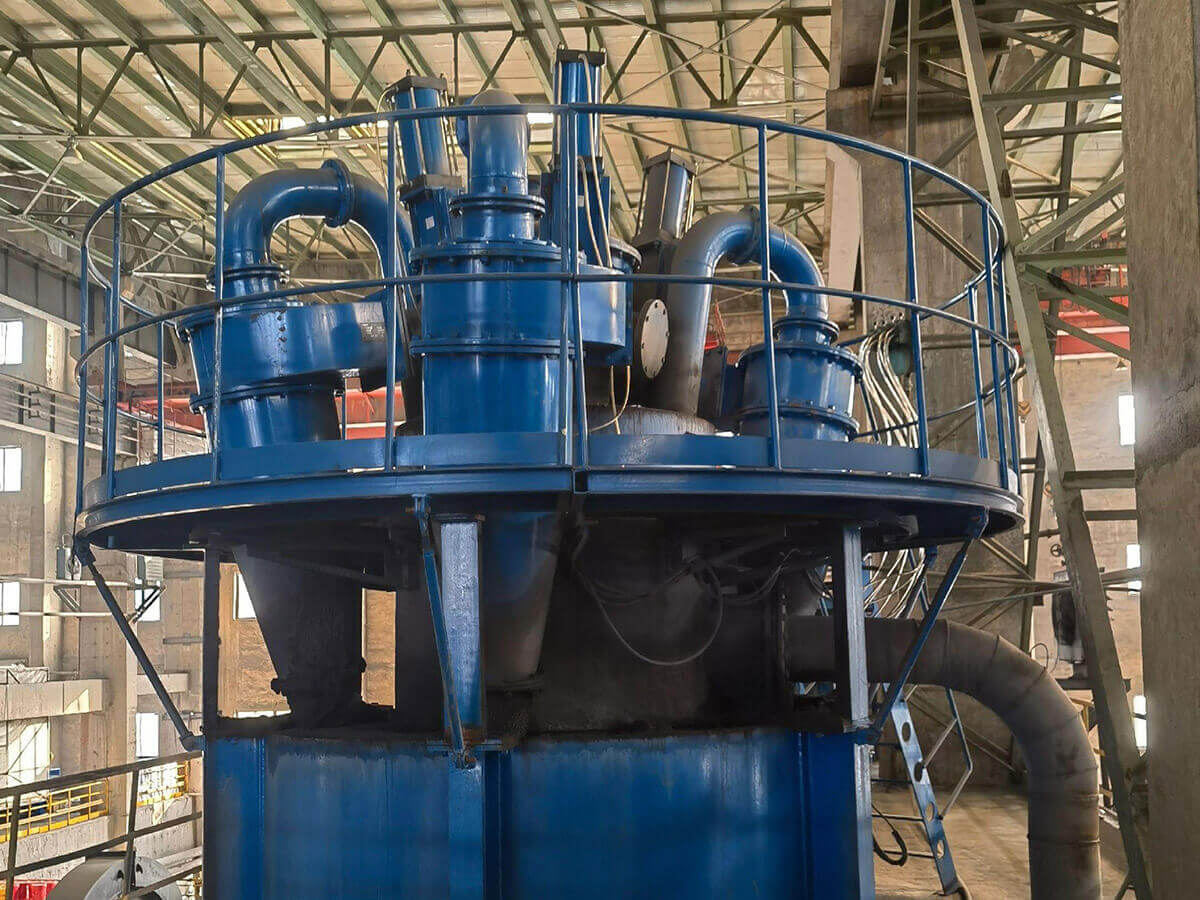
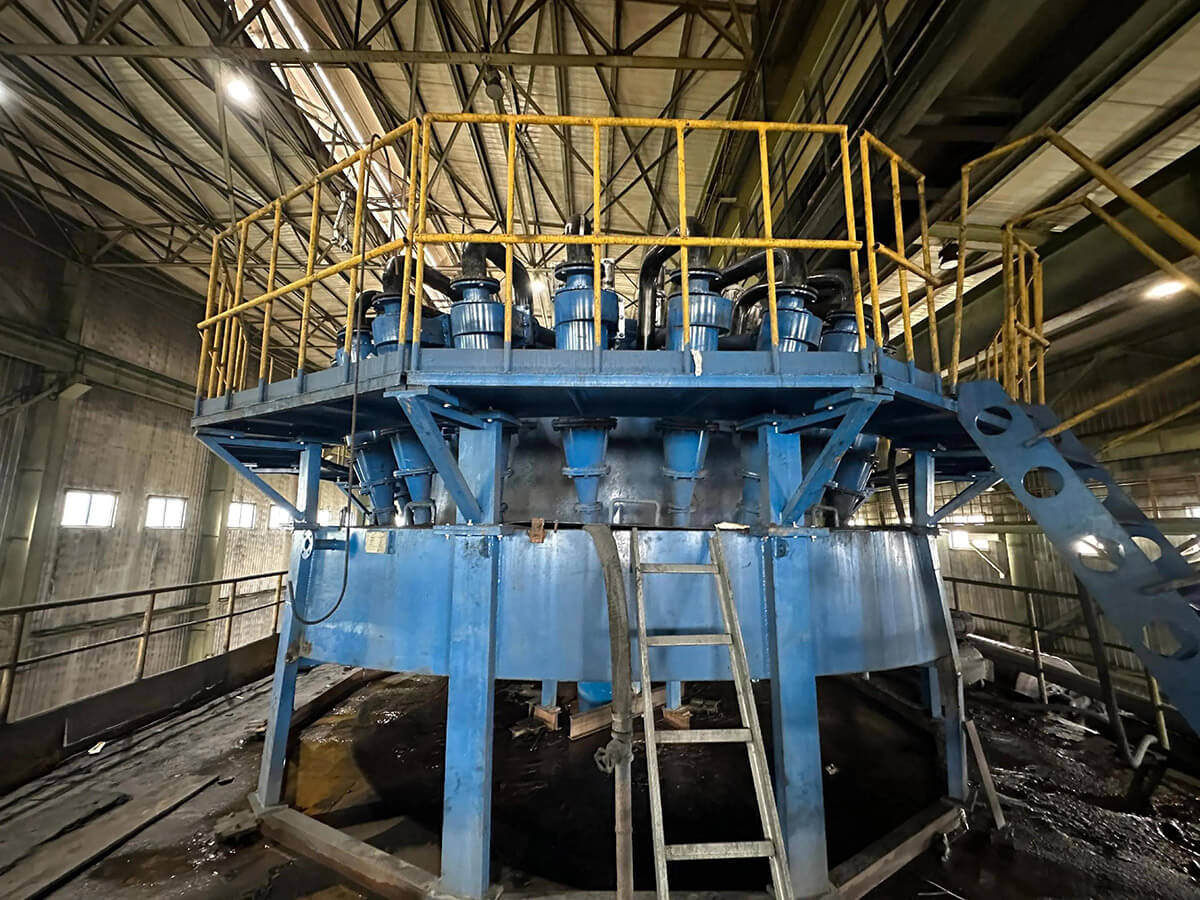
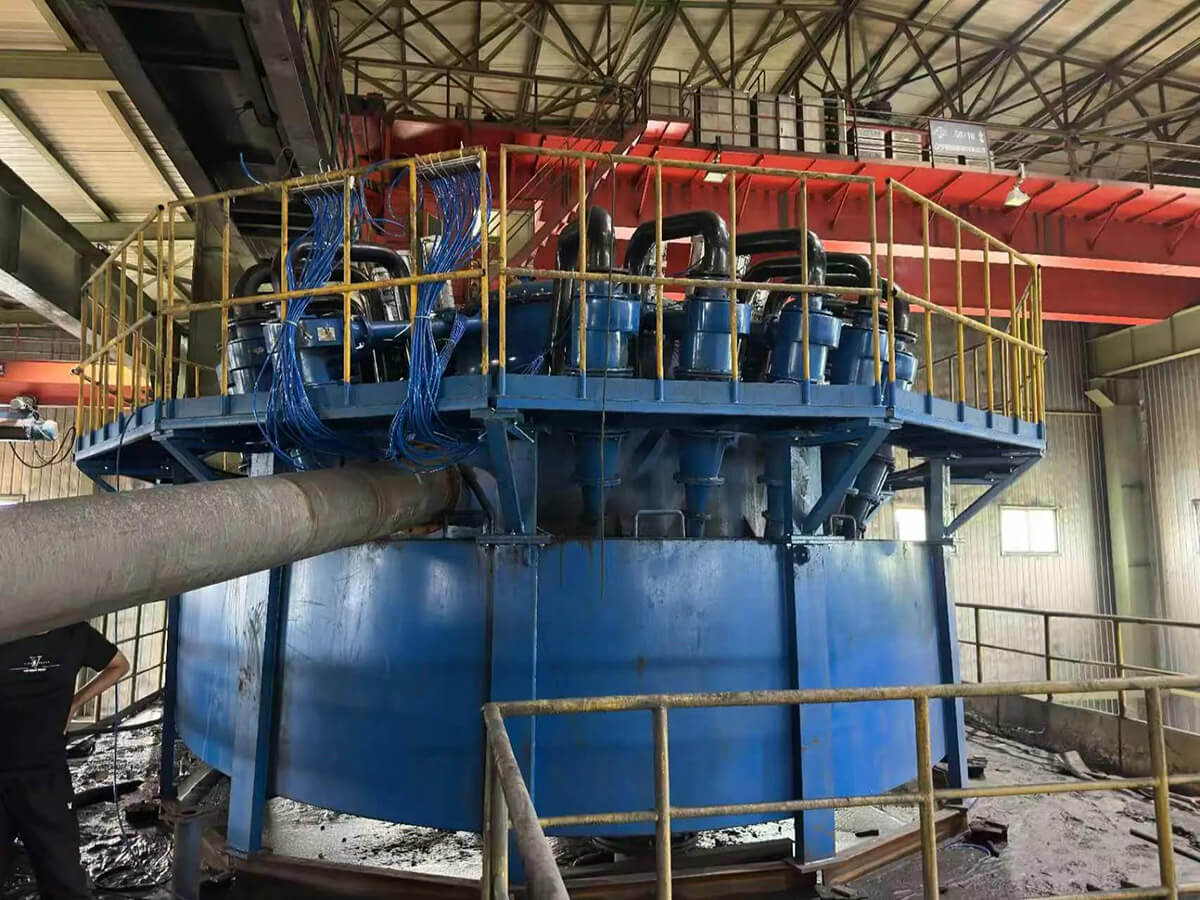
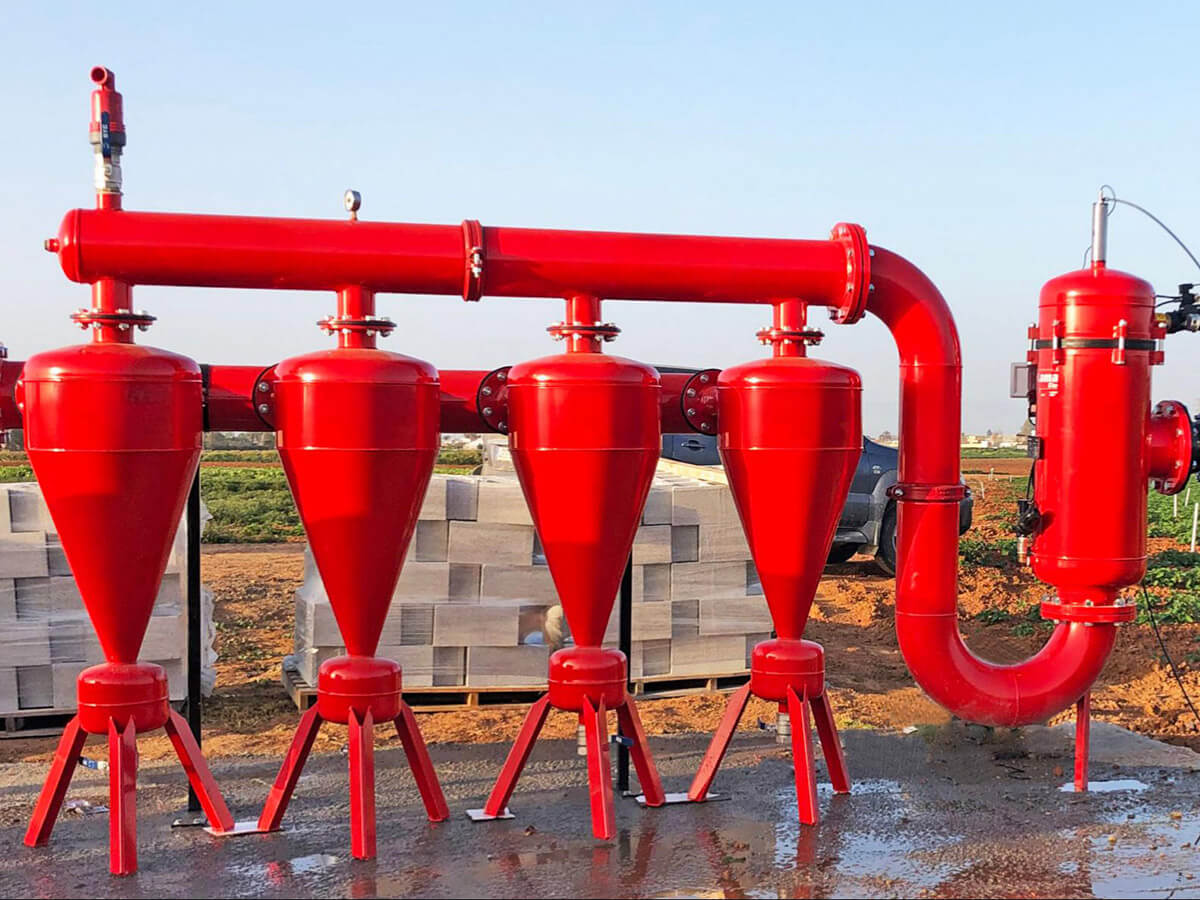

Hydrocyclone arrays are efficient and simple-structured classification and separation devices widely used in mining, chemical, environmental protection, and petroleum industries, playing a crucial role, especially in closed-circuit grinding systems in mineral processing plants. By operating multiple small hydrocyclones in parallel, they achieve a balance between high throughput and fine classification, making them one of the core pieces of equipment for solid-liquid separation and particle classification in modern industry.
Working Principle
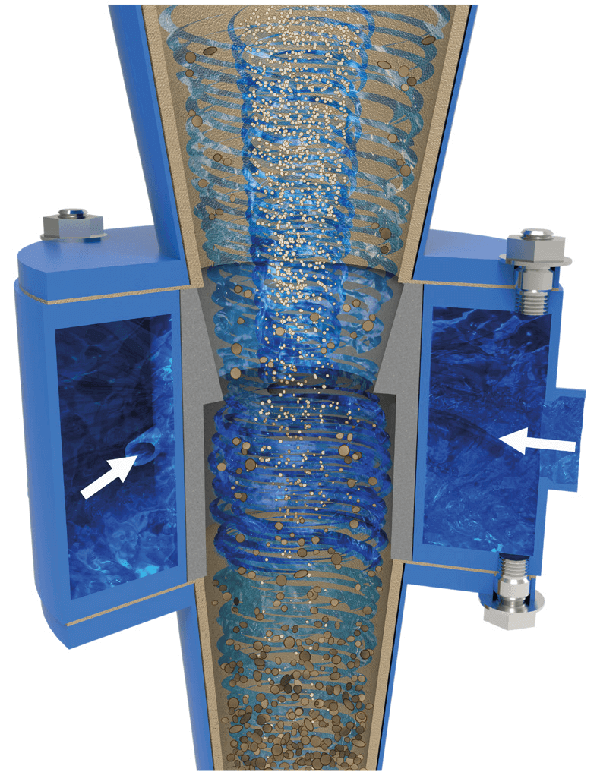
Hydrocyclone arrays operate based on the principle of centrifugal sedimentation. The slurry or mixture enters the hydrocyclone tangentially under pressure, creating a high-speed rotating flow field within the cylinder. Due to the different centrifugal forces experienced by particles of different sizes or densities, coarse particles or heavy phase materials are thrown against the wall and spiral downwards along the cone, exiting from the bottom outlet; while fine particles or light phase materials concentrate in the central region and are discharged from the top overflow pipe with the upward flow from the inner layer, thus achieving particle classification or liquid-solid separation.
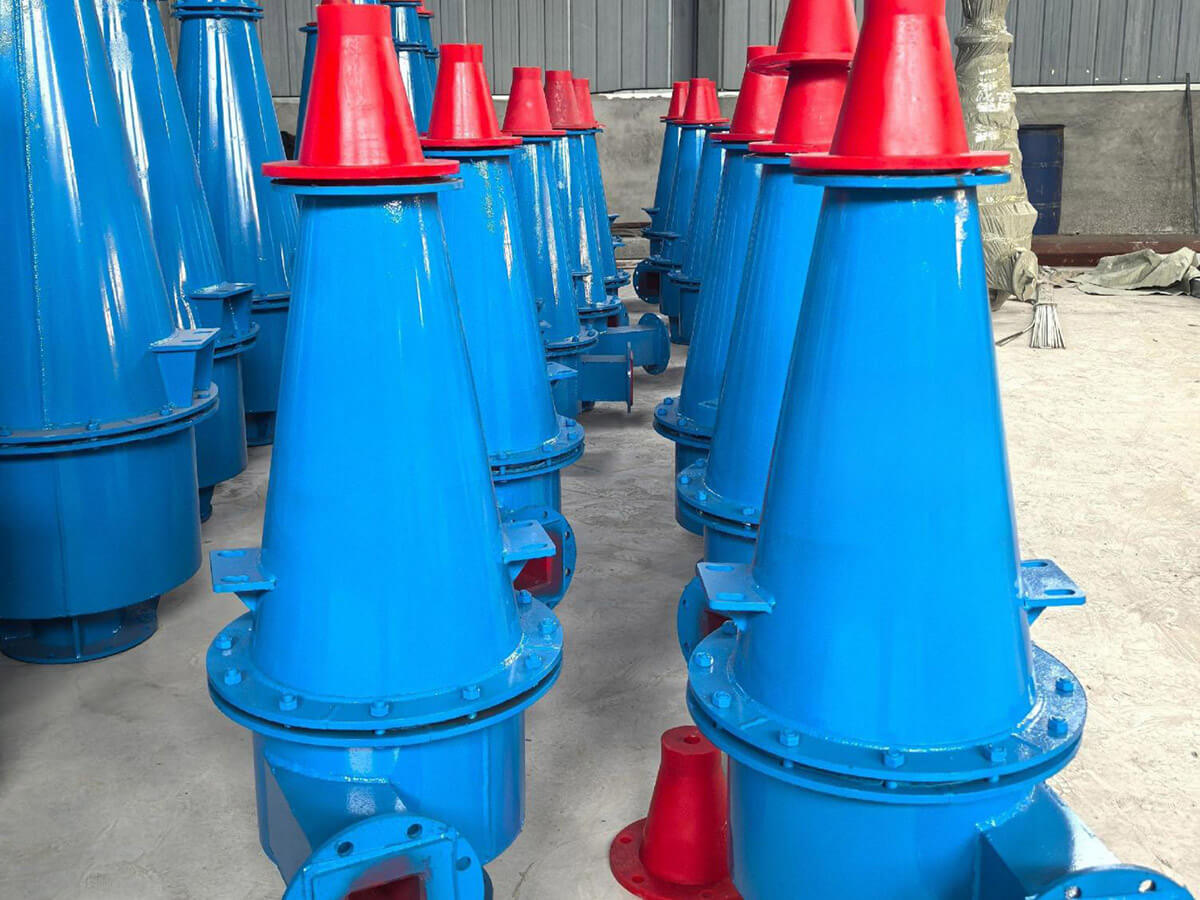
When the processing capacity of a single hydrocyclone is insufficient, multiple units are connected in parallel to form a "hydrocyclone array," sharing the feed pipe, overflow tank, and sedimentation tank, which both increases production capacity and ensures classification accuracy.
Product Structure
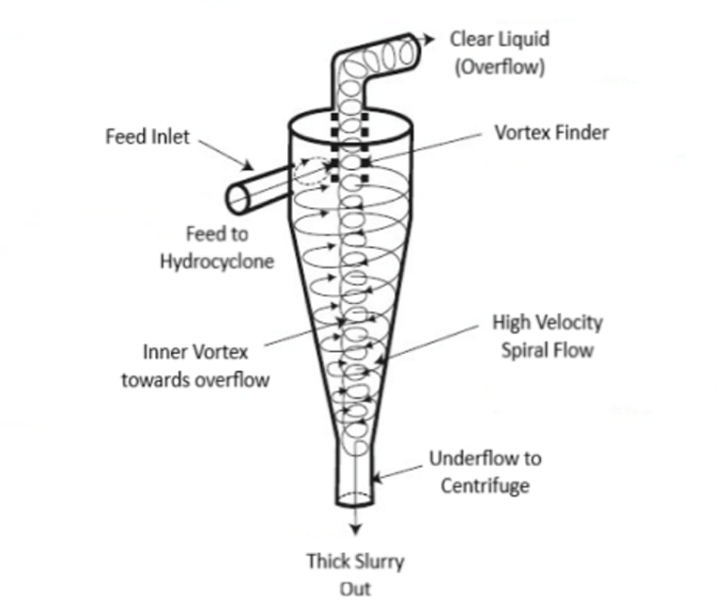
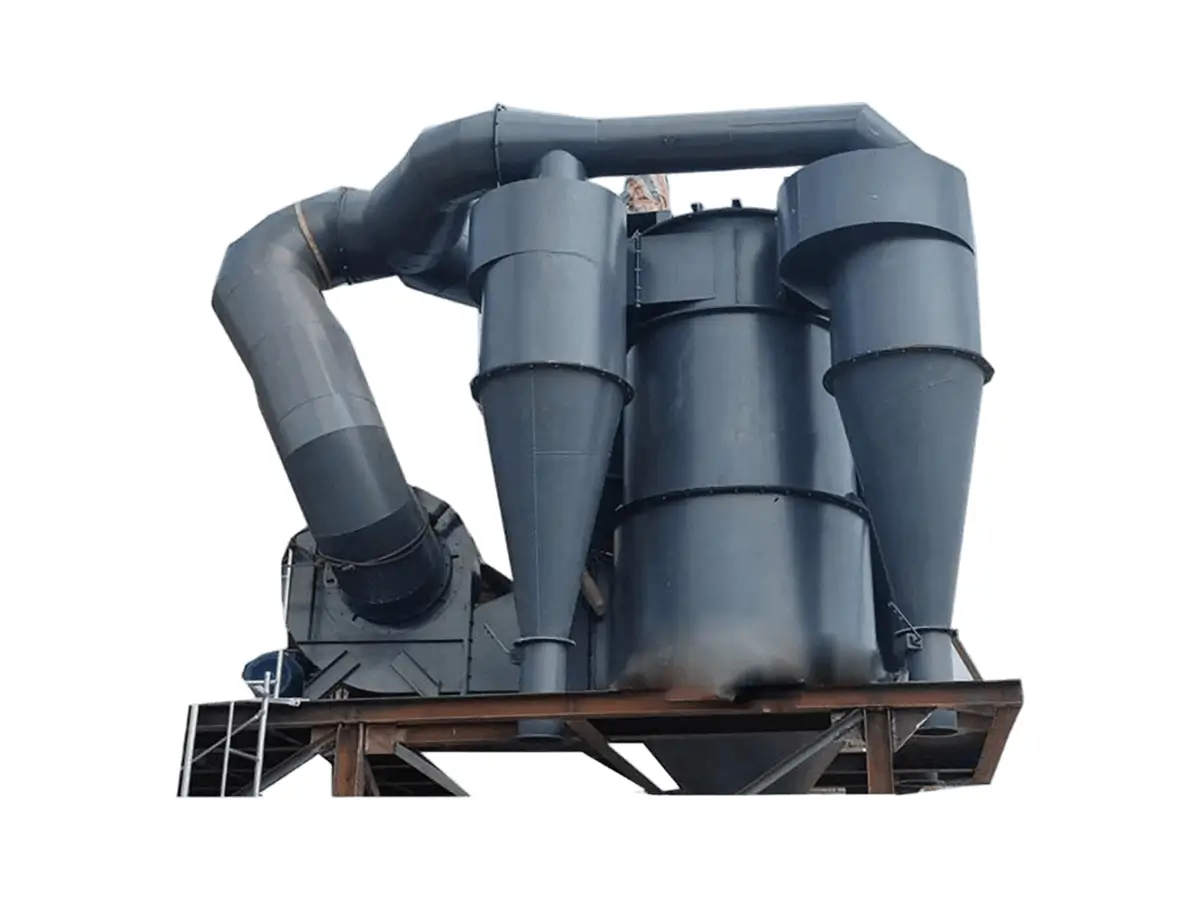
A hydrocyclone assembly mainly consists of the following components:
- Multiple unit hydrocyclones: Installed in parallel, typically FX series (e.g., FX-125, FX-150), with diameters ranging from 50–660 mm.
- Feed system: Includes a feed pump, distribution box, and feed pipeline, ensuring uniform material distribution to each unit.
- Overflow box: Collects overflow from the top of each hydrocyclone, centrally outputting fine-particle product.
- Settling box (underflow box): Collects coarse-particle material discharged from the bottom.
- Support frame and piping system: Secures the overall structure and connects the various components.
- Wear-resistant lining: The inside of the hydrocyclone is often lined with materials such as polyurethane, high-alumina ceramic, silicon carbide, or rubber to improve service life.
Product Advantages
- High throughput: By connecting multiple units in parallel, the overall processing capacity is significantly improved, making it suitable for large-scale production.
- High classification efficiency: Classification efficiency can reach 80%–90%, and overflow particle size is controllable, meeting the needs of fine classification.
- Simple structure, no moving parts: Stable operation, low maintenance cost, and small footprint.
- Modular design: The number of units can be flexibly increased or decreased to adapt to different working conditions.
- High degree of automation: Can be equipped with an automatic control system to adjust pressure, concentration, and flow rate in real time, ensuring classification stability.
- Wide application: Not only used for slurry classification, but also for desliming, dewatering, thickening, and tailings dry discharge.