
Plate and frame filter presses are classic intermittent solid-liquid separation equipment widely used in environmental protection, chemical, mining, food, and pharmaceutical industries. They are particularly suitable for scenarios requiring high filter cake moisture content, complex material composition, or high-purity recovery. Their core advantages lie in high dewatering efficiency, wide applicability to materials, and high filter cake solids content, making them one of the key pieces of equipment for deep industrial dewatering.
Working Principle
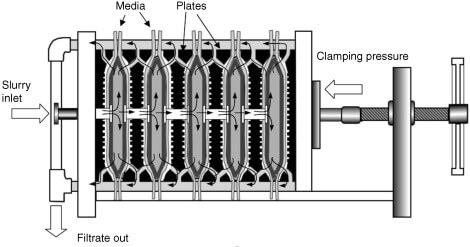
The working principle of a plate and frame filter press can be summarized as "high-pressure pressing and mechanical dewatering," similar to "squeezing a sponge by hand":
- Compression: A hydraulic system presses multiple sets of filter plates and frames together to form a sealed filter chamber.
- Feeding: The suspension enters the filter chamber under pump pressure (typically 0.6–2.0 MPa). The liquid passes through the filter cloth to become filtrate and is discharged, while the solids are retained to form a filter cake.
- Squeezing: Some models are equipped with a diaphragm or secondary air pressure to further compress the filter cake and reduce its moisture content.
- Discharging: The pressing device is released, and the filter plates are pulled apart one by one. The filter cake is then manually or automatically removed, completing one cycle.
The entire process is intermittent, but a continuous batch operation can be achieved through an automated system.
Product Structure
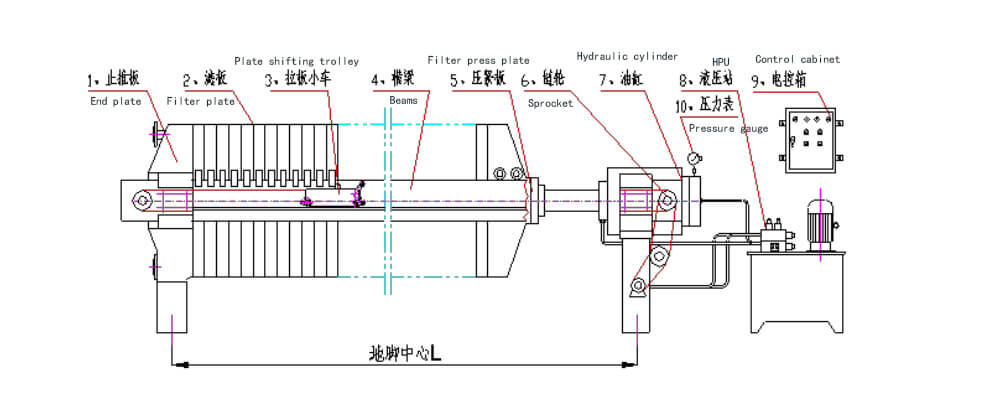
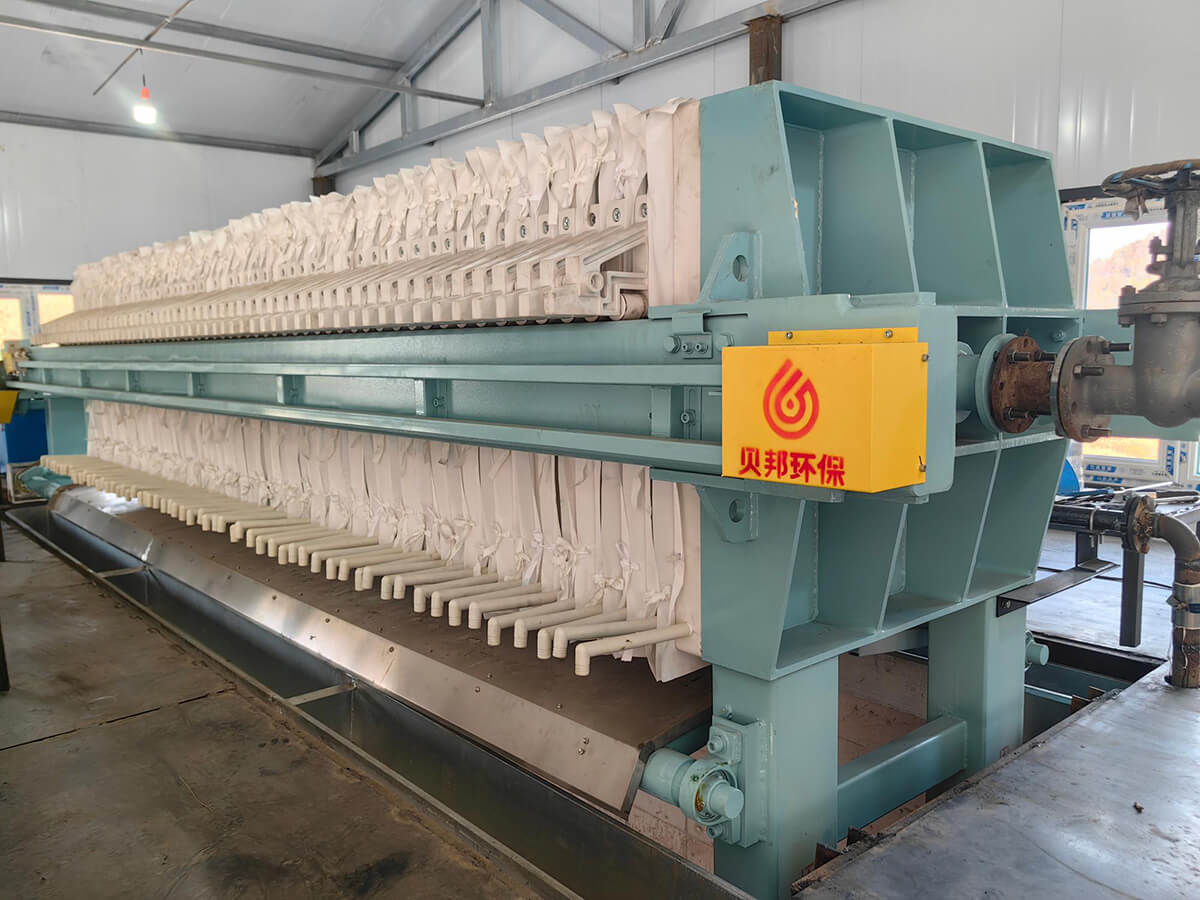
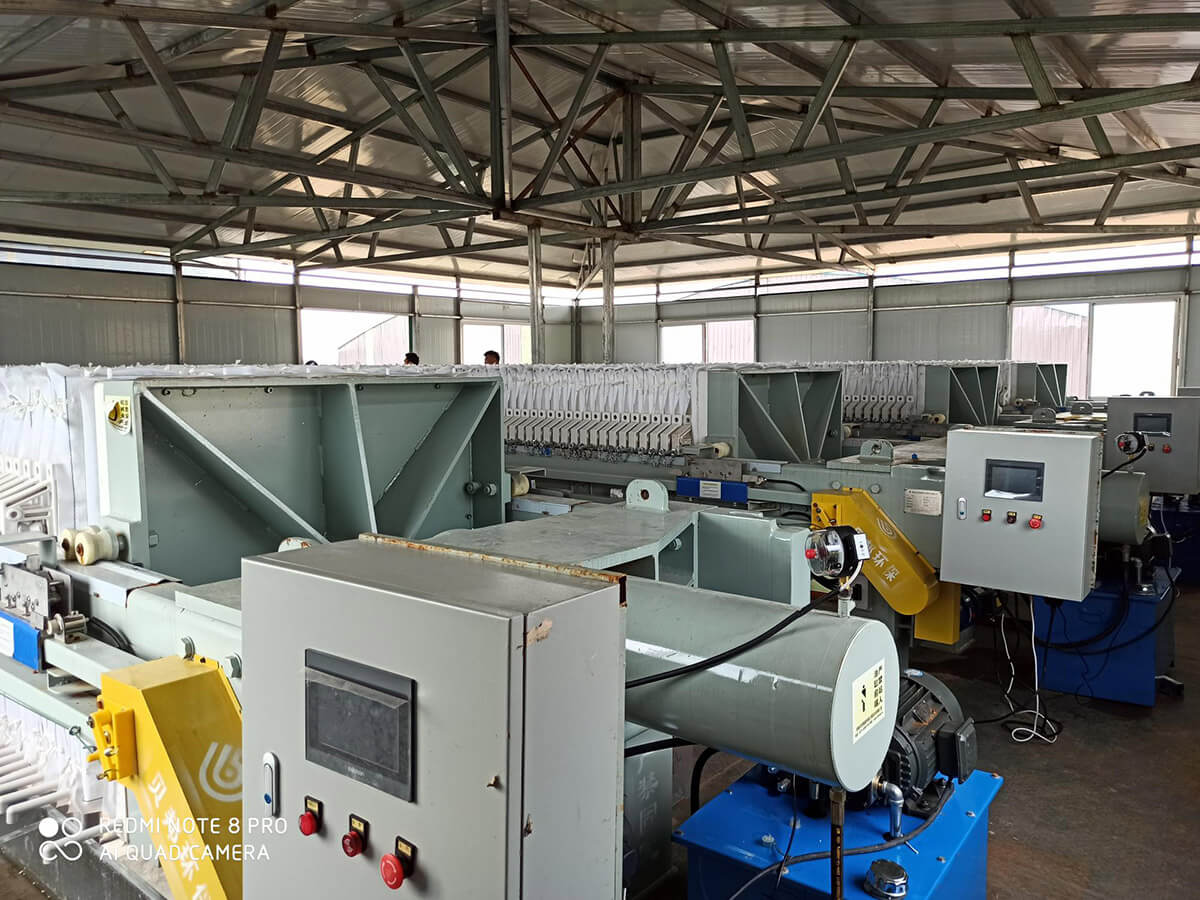
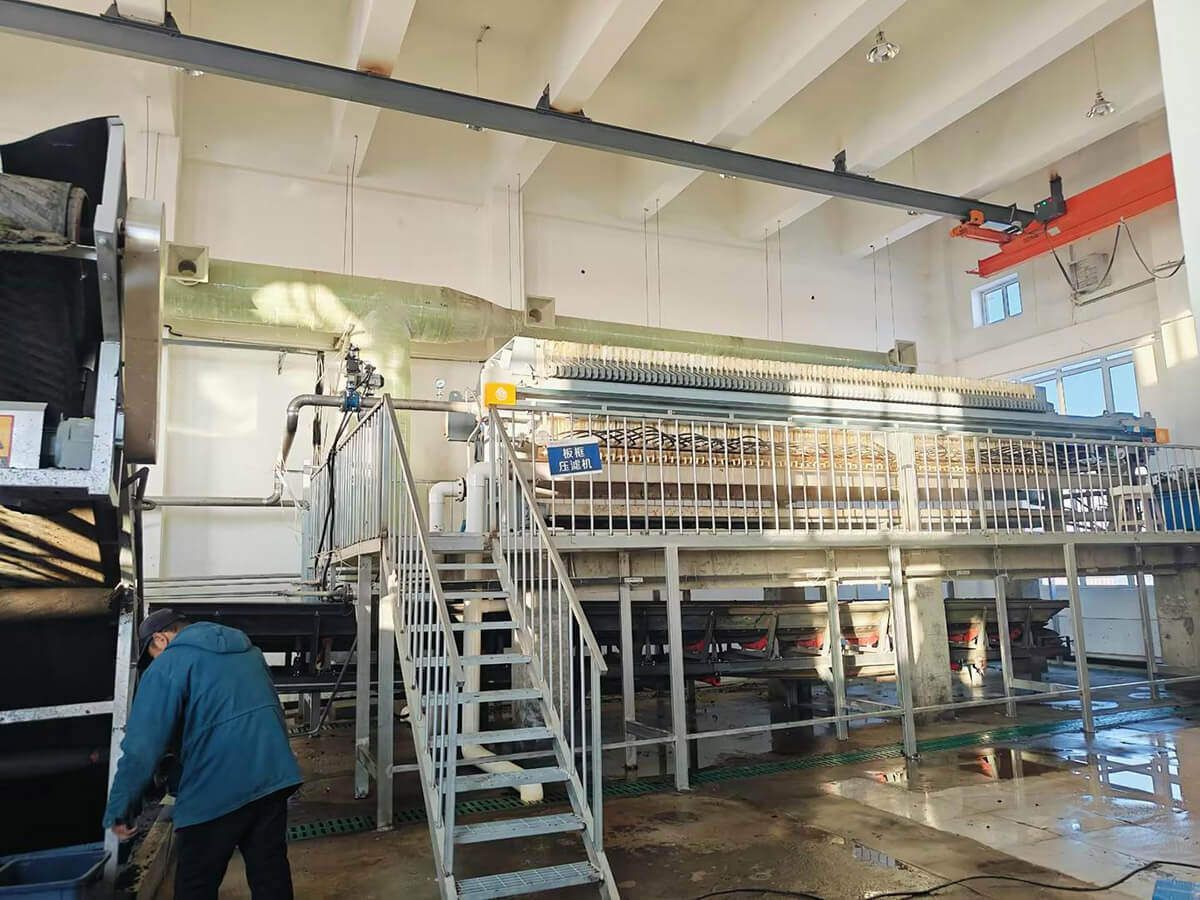
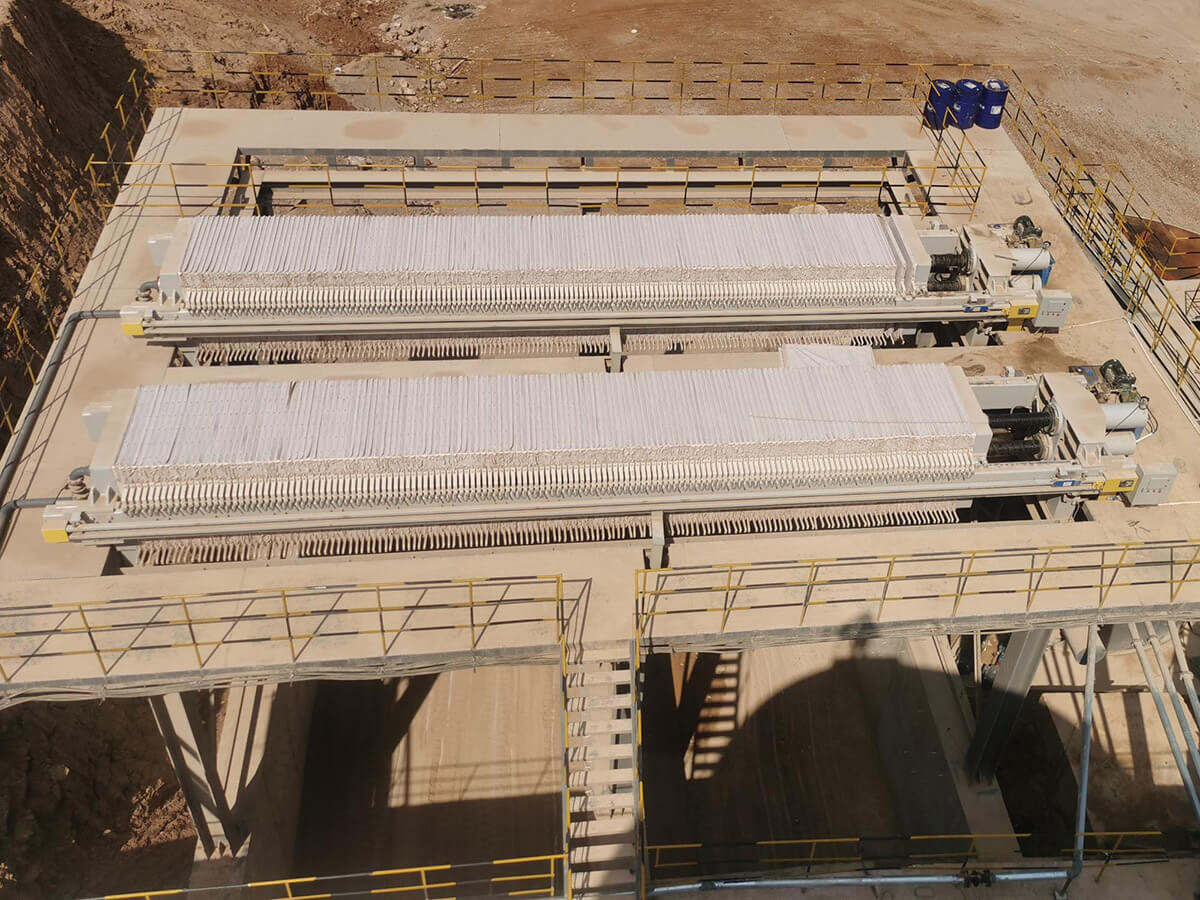
A plate and frame filter press mainly consists of the following parts:
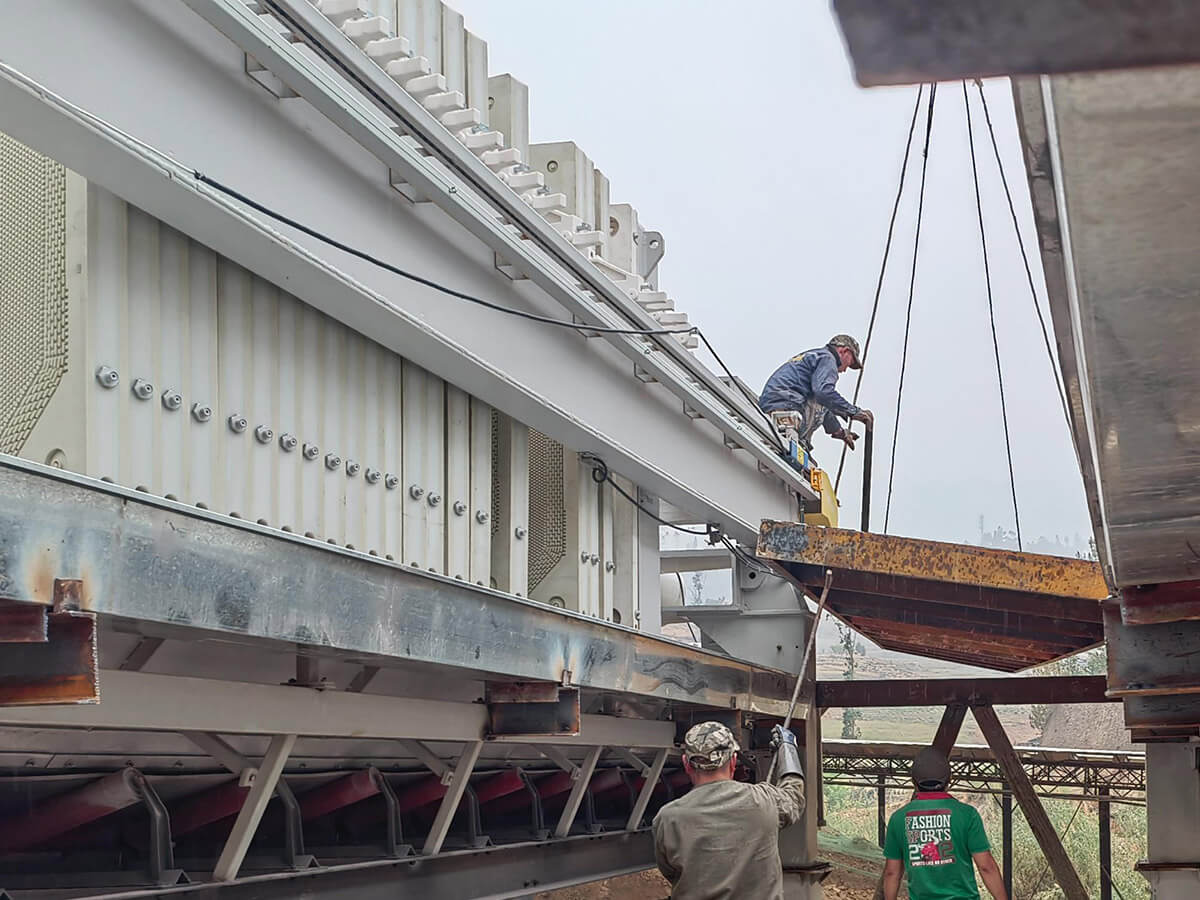
- Frame system: including thrust plates, clamping plates, main beams, hydraulic cylinders, etc., supporting the entire machine and providing clamping force;
- Filter unit: composed of alternating filter plates (with grooved flow guides) and filter frames (hollow to hold the filter cake), with filter cloth sandwiched between them;
- Filter cloth system: typically made of polypropylene, polyester, or polypropylene fiber, with the corrosion-resistant type selected according to the acidity or alkalinity of the material;
- Hydraulic system: drives the clamping and releasing actions, with pressure up to 1.0–2.0 MPa;
- Automatic plate pulling system: The robotic arm automatically pulls open the filter plates one by one, improving unloading efficiency.
- Electrical control system: PLC controls the entire workflow and supports remote monitoring and fault alarms.
Product Advantages
-
High dewatering efficiency and low filter cake moisture content
Relying on high-pressure pressing (up to 2.0 MPa), the filter cake moisture content can be controlled at 15%–25%, far lower than belt filter presses (75%–80%) and centrifuges (70%–75%). For example, the moisture content of tailings from a certain mine was reduced from 35% to 20% after treatment, directly eliminating the drying process and saving more than 20,000 yuan in electricity costs per month. -
Wide range of applicable materials
- High-concentration slurries (such as ceramic slurry, mineral slurry);
- Corrosive liquids (electroplating wastewater, acid, and alkali waste liquids) can be addressed by replacing the filter cloth with acid and alkali-resistant filter cloth and stainless steel filter plates.
- Liquids containing large particulate impurities (construction slurry), which can be treated simply by pre-screening to remove hard lumps >1cm.
-
High filter cake purity, facilitating resource recovery
Selectable filter cloth pore size (50–500 mesh), which can accurately trap solid particles. For example:- In the chemical industry, sodium sulfate is recovered, with filter cake purity exceeding 98%.
- In the food industry, starch is filtered, and the filter cake is free of impurities and can be directly reused.
-
Simple structure and easy maintenance
The modular design facilitates the replacement of filter cloth and filter plates, allowing workers to operate independently without the need for on-site technical personnel. -
Low operating costs
Compared to belt or centrifuge equipment, the purchase cost is 40%–60% lower, and energy consumption is also lower, making it suitable for small and medium-sized enterprises.