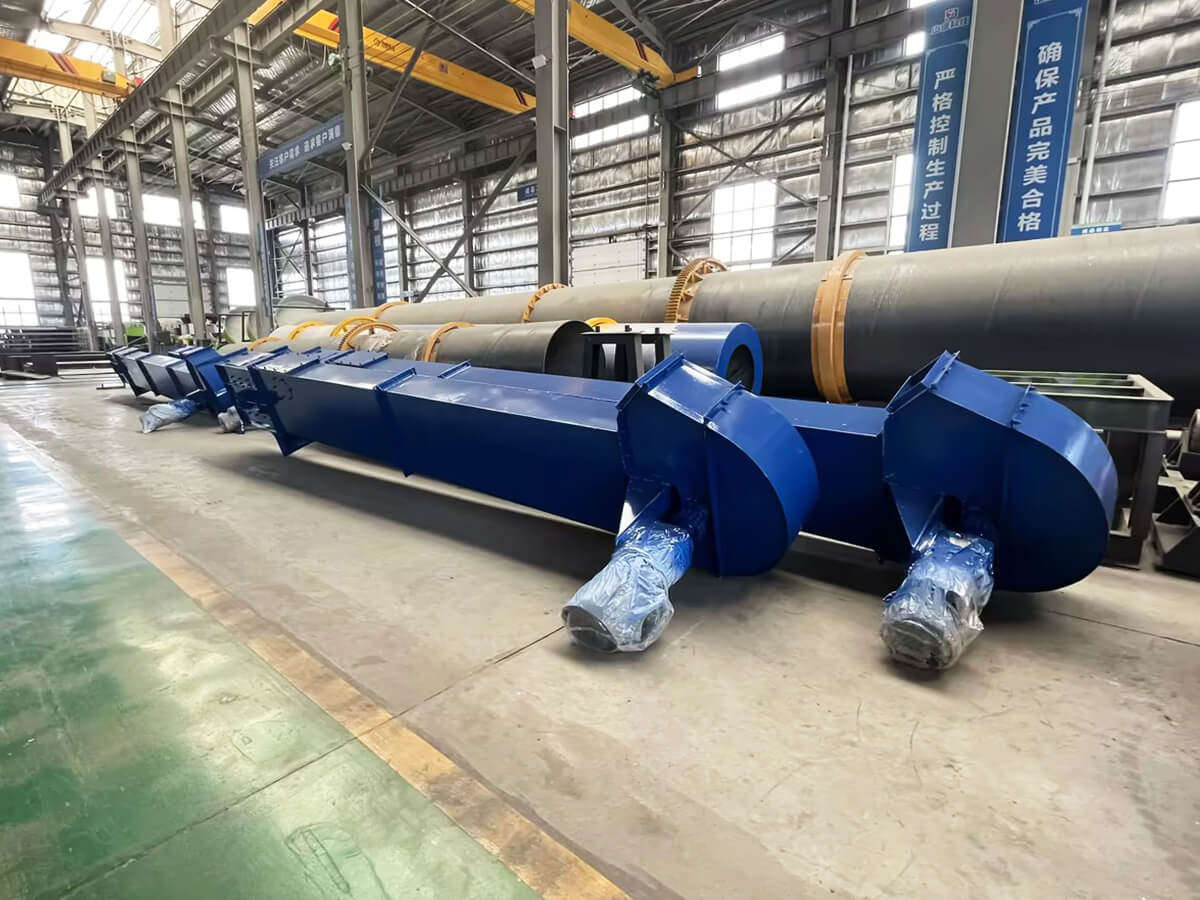
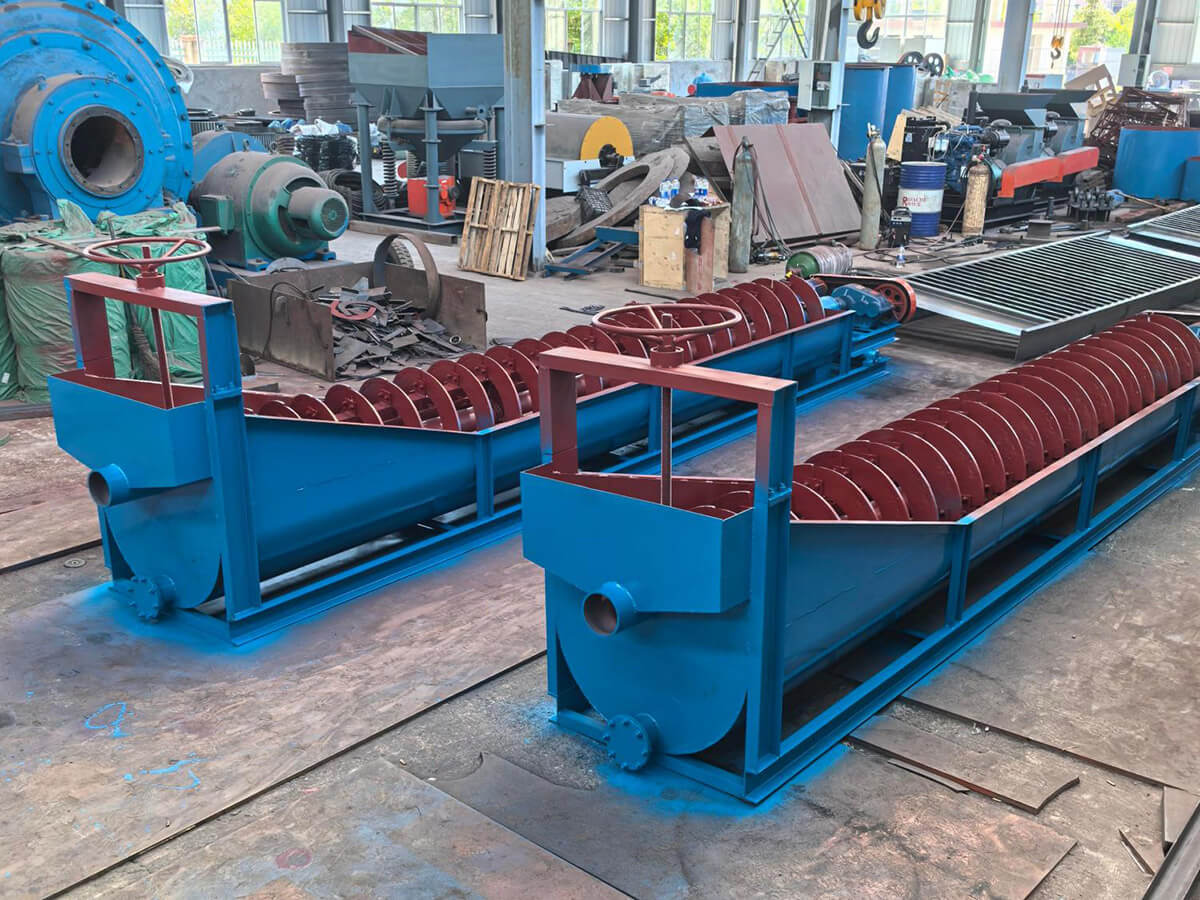
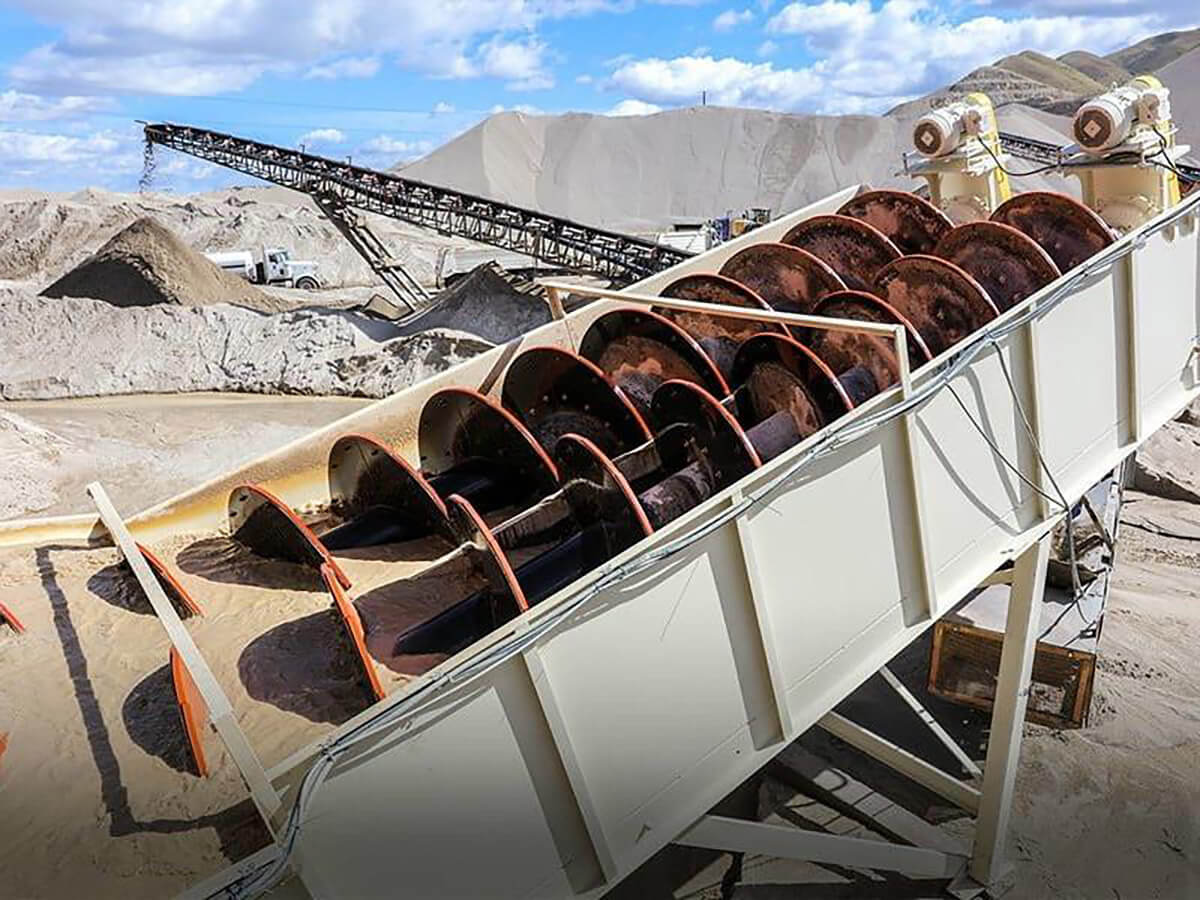
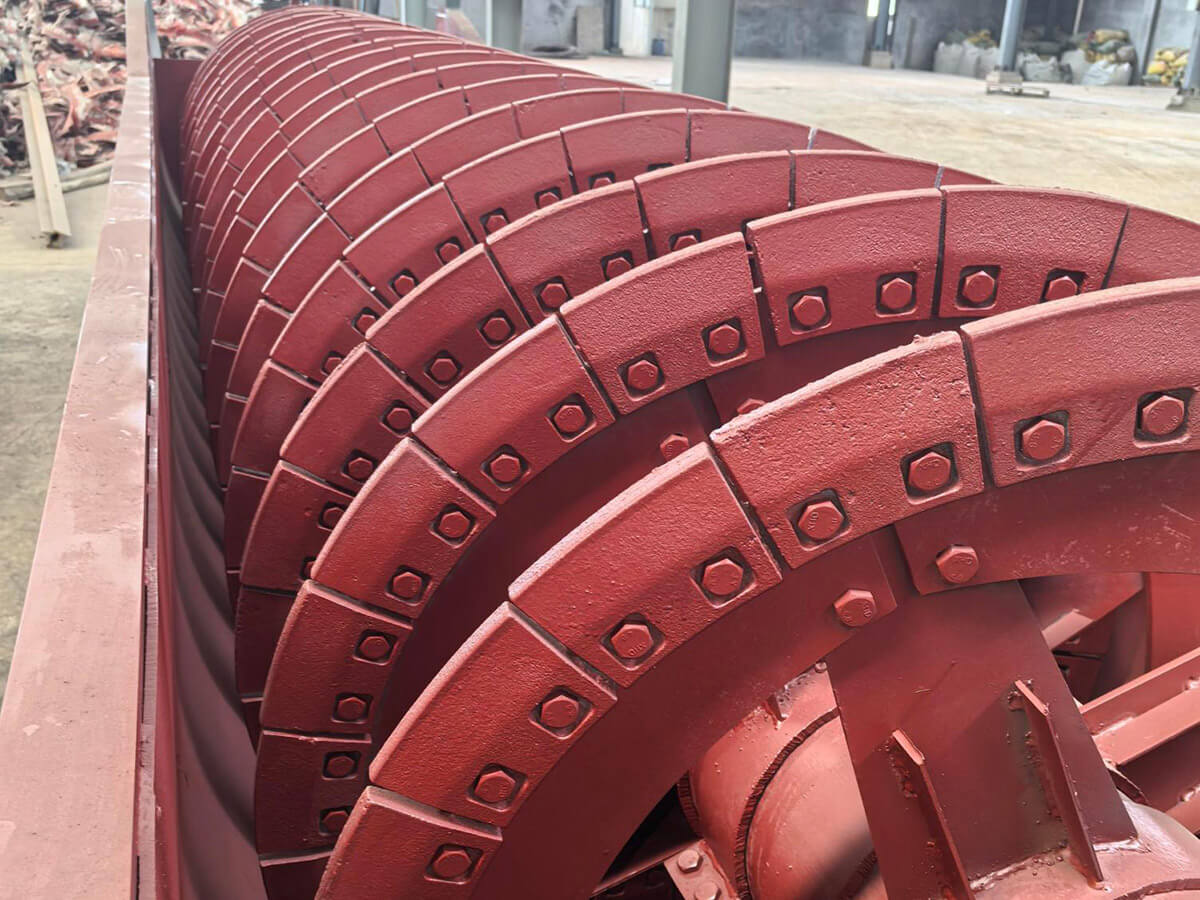

Spiral classifiers are key classification equipment widely used in mineral processing, sand and gravel processing, building materials, and chemical industries. They are mainly used in wet grinding operations to classify slurry by particle size, achieving the separation of coarse and fine particles. They are often integrated with ball mills to form a closed-loop circulation system, where qualified fine particles are discharged as overflow to the next process, while coarse particles are returned to the ball mill for regrinding, thereby improving grinding efficiency and product quality.
Working Principle
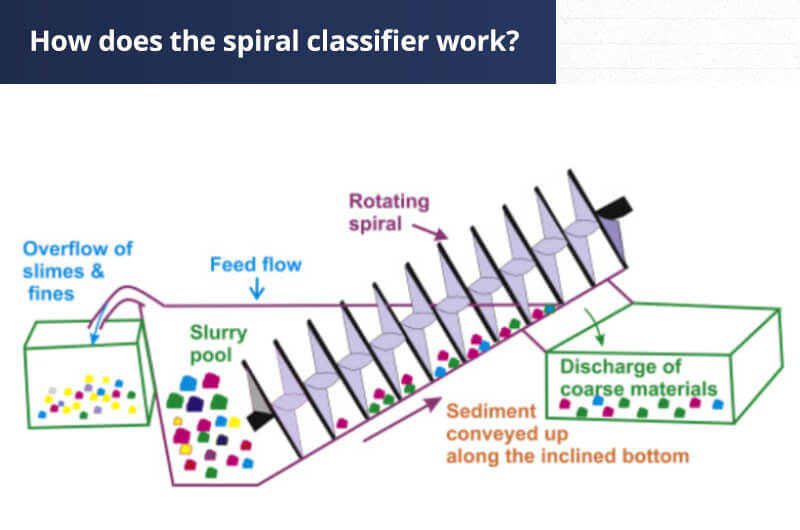
Spiral classifiers achieve classification based on the difference in settling velocities of solid particles in a liquid. The slurry enters an inclined, semi-circular tank from the center of the trough. Coarser, heavier particles settle rapidly to the bottom under gravity and are pushed along the bottom to the upper discharge port by rotating spiral blades, forming "return sand" that is returned to the mill for further grinding. Finer particles remain suspended in the slurry and slowly move with the water flow to the overflow weir at the lower end of the trough, where they are discharged as "overflow" product and enter subsequent beneficiation processes.
This process achieves continuous and stable mechanical classification, making it particularly suitable for inspection and control classification in closed-circuit grinding systems.
Product Structure
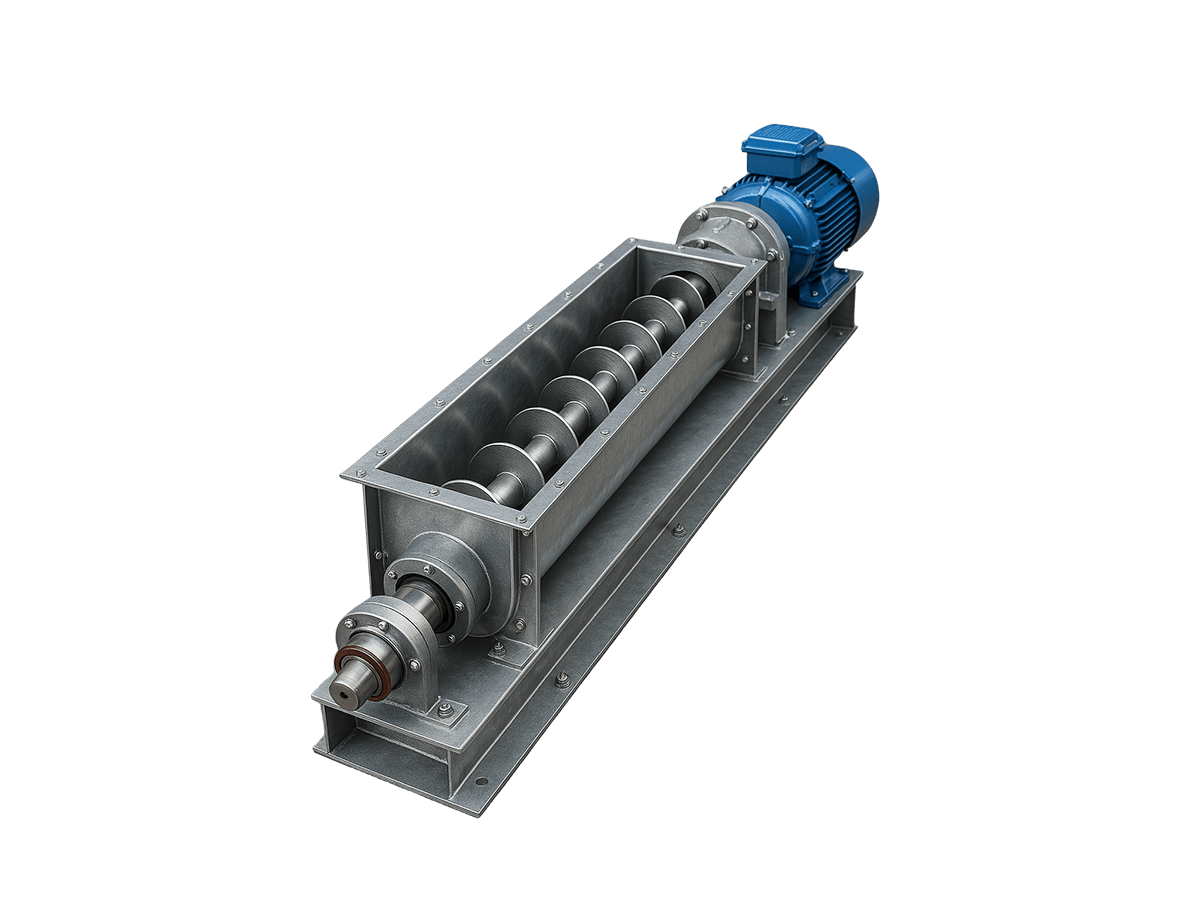
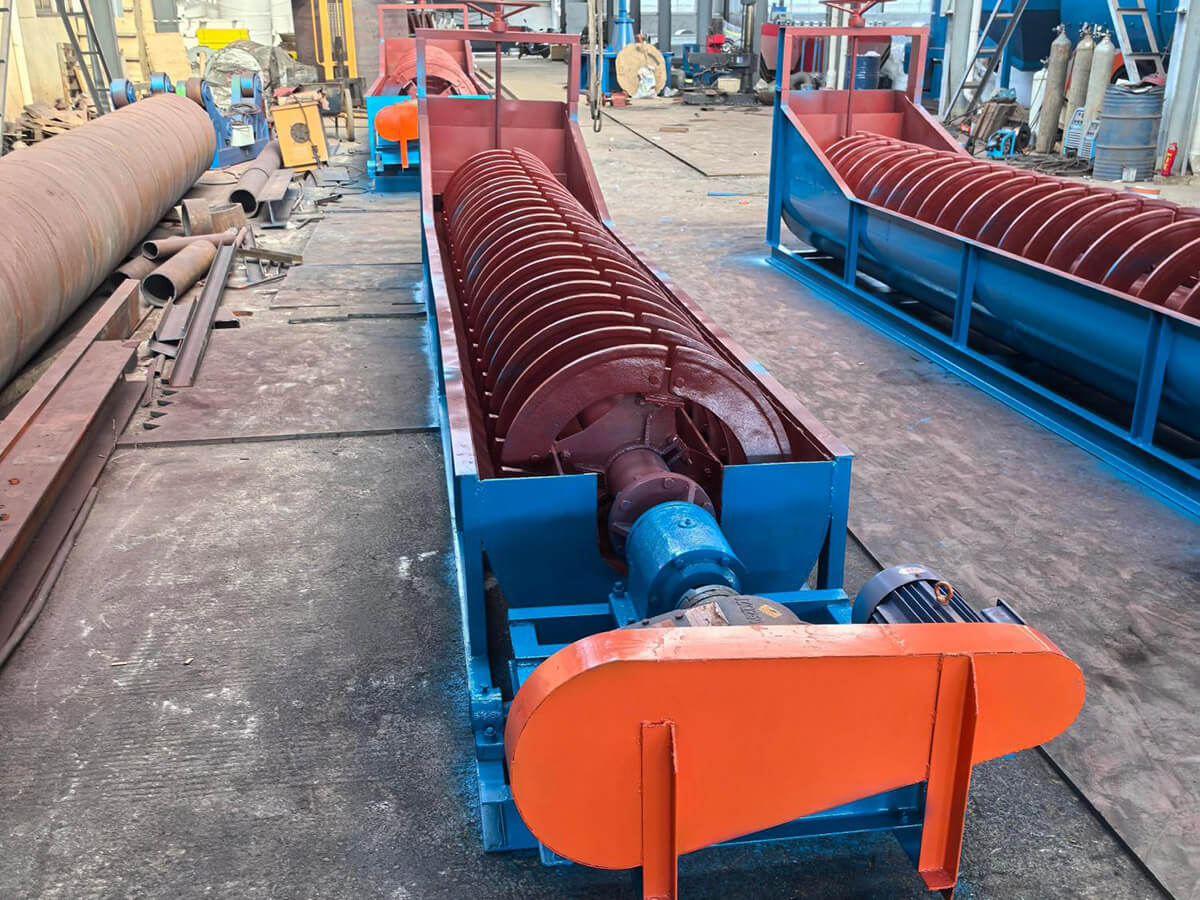
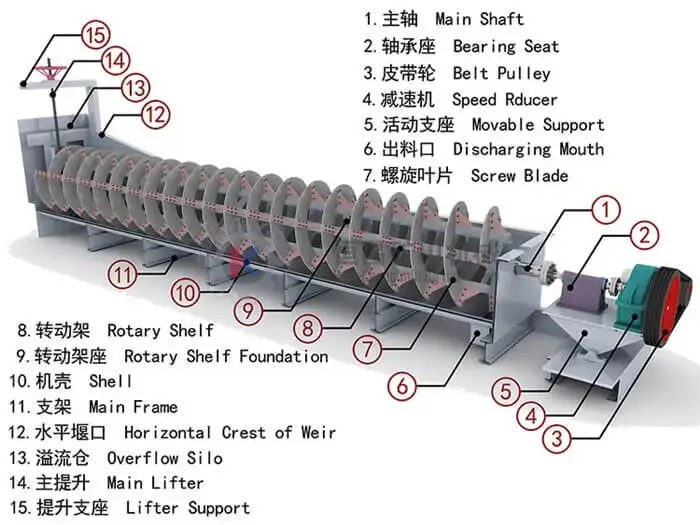
A spiral classifier mainly consists of the following parts:
- Transmission Device: Drives the spiral shaft to rotate, typically composed of a motor, reducer, and gears.
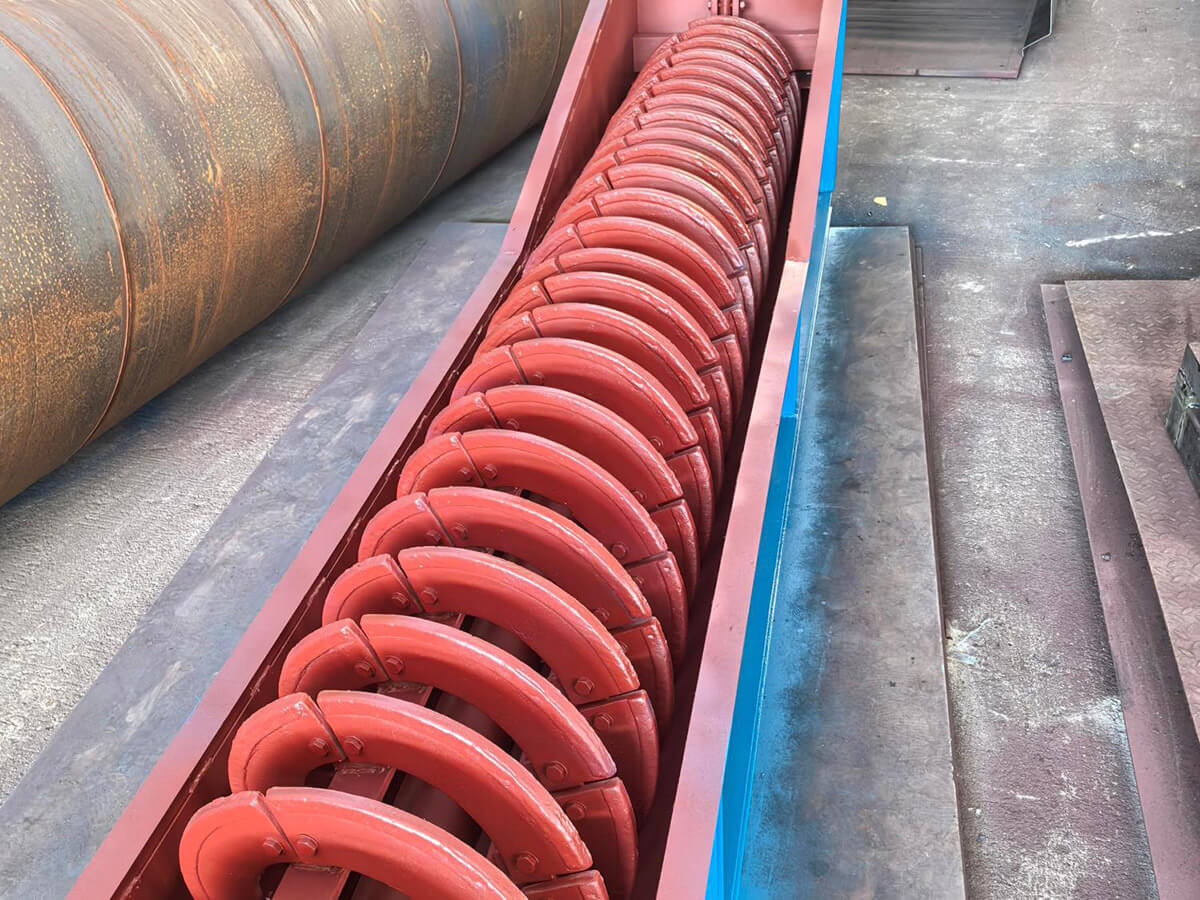
- Spiral Body: Includes the spiral shaft and spiral blades, responsible for agitating the slurry and conveying the underflow.
- Trough: An inclined, semi-circular trough, the main area for slurry classification, with an inclination angle generally between 12° and 18.5°.
- Lifting Mechanism: Used to adjust the height of the spiral within the trough, facilitating start-up, shutdown, and maintenance, and preventing the spiral from being overloaded by the slurry.
- Lower Support (Bearing): Supports the lower end of the spiral shaft; some models are equipped with wear-resistant liners to extend service life.
- Discharge Valve: Controls the discharge of overflow and backflow.
Based on structural form, mills can be divided into single-spiral and double-spiral types. According to overflow weir height, they can be further divided into three types: high-weir, submerged, and low-weir:
- High-weir type: The overflow weir is higher than the centerline of the spiral shaft. Suitable for particle size classification of 0.15–0.5 mm, commonly used in single-stage closed-circuit grinding systems.
- Submerged type: The spiral end is completely immersed below the liquid surface, with a deeper settling zone. Suitable for fine particle (<0.1 mm) classification, mostly used in two-stage grinding.
- Low-weir type: Now rarely used, mainly for washing and desliming operations.
Product Advantages
- Simple structure and reliable operation: The overall design is concise with few components, resulting in a low failure rate and suitability for long-term continuous operation.
- Large processing capacity and strong adaptability: It can be used with large ball mills and is widely applicable to the classification of various metallic ores such as gold, iron, copper, and molybdenum, as well as non-metallic ores such as quartz and limestone.
- Easy operation and low maintenance costs: The systematic design makes operation convenient, with minimal daily maintenance workload. Annual maintenance and electricity costs are approximately 120,000 RMB lower than those of other equipment.
- Low moisture content in returned sand: This facilitates ball mill feeding, improves grinding efficiency, and facilitates self-flow connection.
- Low investment cost: With a 25% reduction in volume for the same specifications, it saves floor space and reduces basic investment by 30,000–100,000 RMB.
- Stable classification effect: The settling zone is stable, resulting in coarser returned sand and finer overflow, meeting various process requirements.
Although its classification efficiency is relatively lower than that of hydrocyclones (approximately 60%–75%), it is still widely used in many mineral processing plants due to its stable operation and ease of use.