
What Roles Do Cone Crushers and Jaw Crushers Play in The Gold Ore Beneficiation Process?
Date: 2026-03-02 Categories: FAQ Views: 167
In gold ore beneficiation, cone crushers and jaw crushers play a crucial role in multi-stage crushing, progressively reducing ore particle size to meet the feeding requirements of subsequent grinding and separation processes. The following analyzes their functions, equipment characteristics, and application scenarios:
I. Functional Stage: Sequential Collaboration in Multi-Stage Crushing
Jaw Crusher: The Core Equipment for Primary Crushing
Functional Positioning: As the first line of defense in ore beneficiation, the jaw crusher reduces large pieces of raw ore (typically 500-1500 mm in diameter) to medium-sized particles (100-300 mm), thereby providing suitable feed for secondary and tertiary crushing.
Typical Application: In open-pit gold mining, jaw crushers crush ore with a maximum particle size of 1200 mm to 150-250 mm, preventing blockages in downstream equipment (such as cone crushers) and ensuring process continuity.
Data Support: A quartz vein-type gold mine beneficiation plant uses jaw crushers, achieving a primary crushing product (particle size ≤ 250 mm) qualification rate of over 95%, and stable secondary crushing operations.
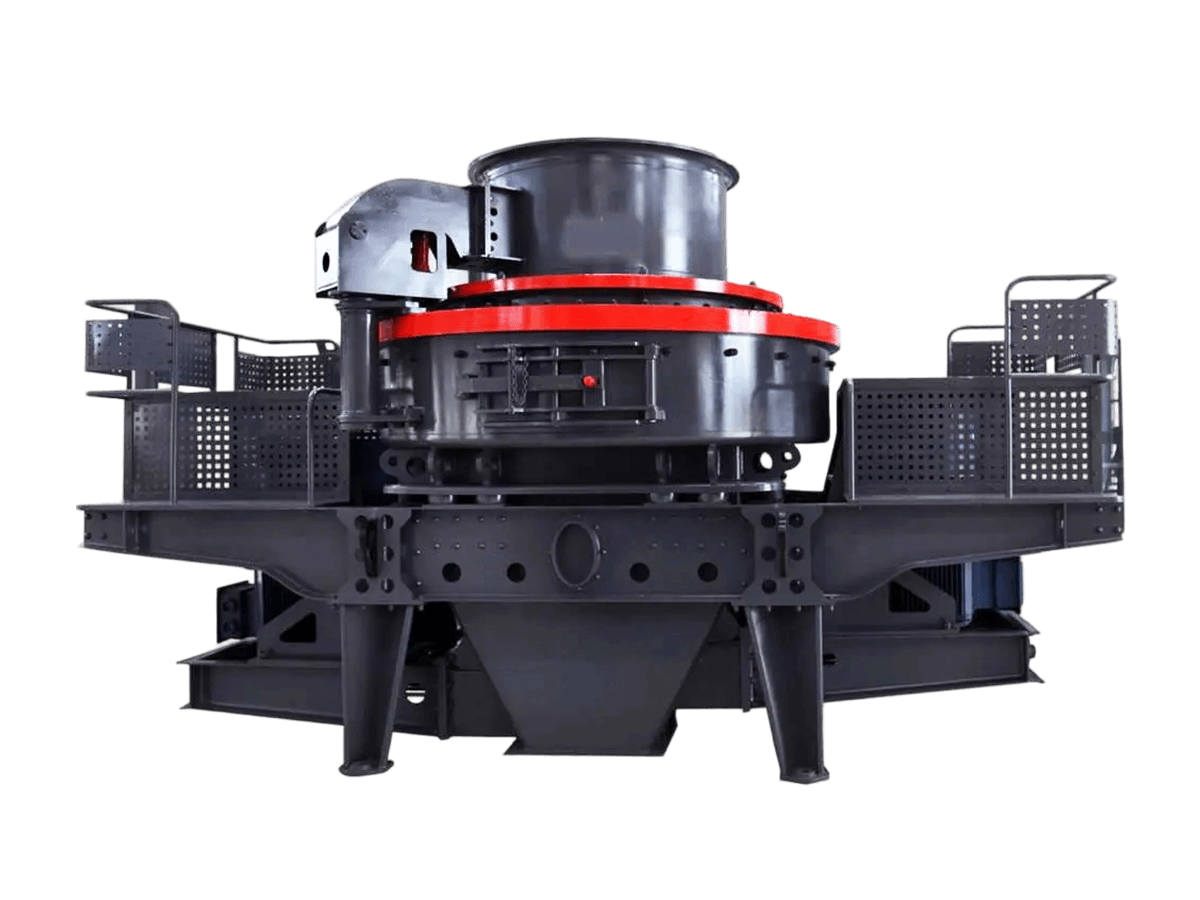
Cone Crusher: The main equipment for secondary and tertiary crushing.
Functional Positioning: Cone crushers are classified as standard (for secondary crushing) and short-head (for tertiary crushing), further reducing ore particle size to 30-40 mm and 5-15 mm, respectively, to meet mill feed requirements.
Typical Application: A copper mine uses a process flow of "jaw crusher (primary) + standard cone crusher (secondary) + short-head cone crusher (tertiary)," achieving a final particle size of less than 10 mm. This reduces ball mill grinding time by 30% and energy consumption by 25%.
Data Support: A gold mine in Luanchuan, Henan Province, uses a GYP-900 cone crusher to produce 80% of its output in the -10 mm range, with a weighted average particle size of 6.4 mm, significantly improving grinding efficiency.
II. Equipment Characteristics: Structural Advantages and Performance Differences
Jaw Crusher: High Adaptability, Low Maintenance Costs
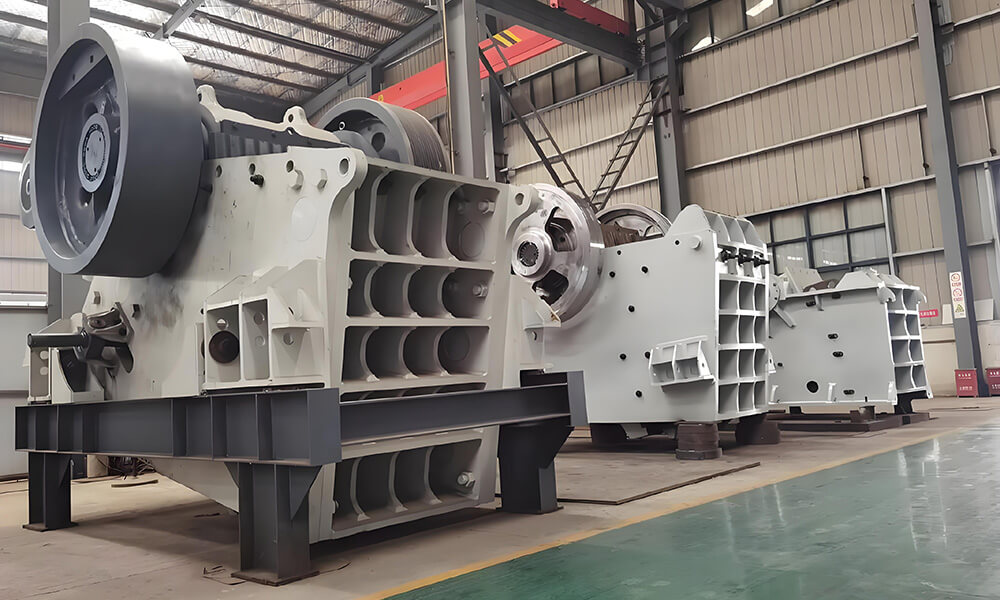
Structural Features: Crushing is achieved through the periodic squeezing and releasing motion of the moving jaw plates. Key components include the fixed jaw plate, the moving jaw plate, and the eccentric shaft. This design ensures the simplicity and durability of wear parts (e.g., jaw plates).
Performance Advantages
High Adaptability: Can handle hard rock gold ores (e.g., granite-type) with compressive strength ≤320MPa. Wear part life is more than 30% longer than that of impact crushers.
Easy Maintenance: Supports single-machine or multi-machine series operation. The discharge port gap can be adjusted via shims to meet different coarse ore particle size requirements.
Case Study: A hard rock gold mine used a jaw crusher to reduce the over-crushing rate (overly fine particles) to below 5% and improve particle size uniformity by 20%.
Cone Crusher: High Energy Efficiency and Precise Particle Size Control
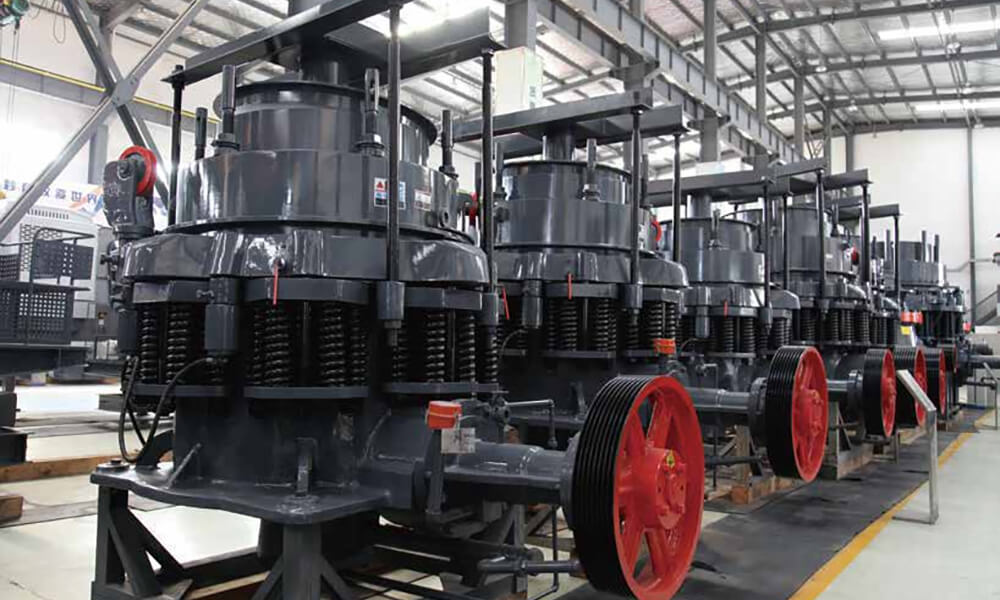
Structural Features: Continuous crushing is achieved through the periodic extrusion motion between the crushing cone and the concave surface. Key components include the wear-resistant crushing wall, the concave surface, and the eccentric sleeve. This design emphasizes the "inter-particle crushing" mechanism.
Performance Advantages
Energy Saving: Reduces grinding energy consumption through "more crushing, less grinding." A tungsten-molybdenum mine using a short-head cone crusher reduced grinding time to 25 minutes and decreased unit energy consumption by 30%.
Precise Particle Size Control: Adjustable parameters (e.g., eccentric static torque, discharge gap) allow for precise control of product particle size. A graphite mine using a GYP-300 cone crusher achieved 98% graphite production with a particle size of -2mm while maintaining a flake structure (optional particle size control less than 1mm).
Case Study: A graphite beneficiation plant using a short-head cone crusher achieved a 98% particle size qualification rate with intact flake morphology.
III. Application Scenarios: Selection Based on Ore Properties and Process Requirements
Jaw Crusher Applications
High-hardness ores: Effective for granite or amphibolite-type gold ores due to their "compression crushing" mechanism, which minimizes equipment wear.
Large-scale production: Suitable for plants with a daily ore processing capacity of 500-10,000 tons, supporting multi-machine tandem operation for high throughput.
Primary crushing pretreatment: Provides a stable feed to secondary/tertiary crushers (e.g., cone crushers) by preventing large ore chunks from clogging.
Cone Crusher Applications
Secondary/tertiary crushing requirements: Standard crushers are used for secondary crushing (e.g., crushing primary ore to 30-40 mm), while short-head crushers are used for tertiary crushing (e.g., crushing secondary ore to 5-15 mm).
Energy-saving goals: Reduce grinding energy costs through "more crushing, less grinding," making it suitable for cost-sensitive concentrators.
High-precision particle control is crucial for applications that require uniform particle size, such as crushing metal concentrates or processing non-metallic minerals.
Their synergistic effect optimizes particle-size distribution, energy efficiency, and cost control, making them indispensable equipment in modern mineral-processing plants aimed at achieving efficient, environmentally friendly production.