
Chromium Ore Processing Technology
Date: 2026-02-27 Categories: Iron Metal Views: 229
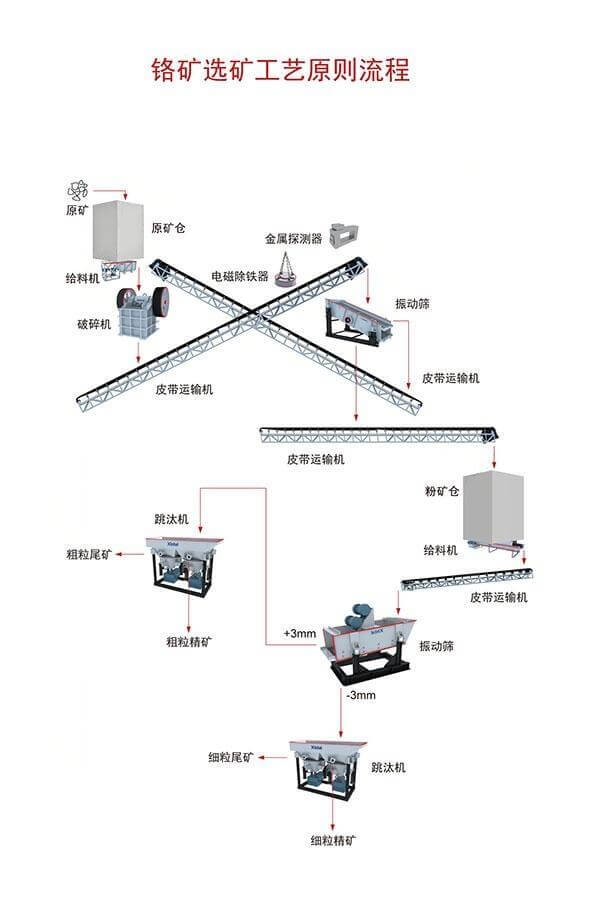
The core objective of chromium ore processing technology is to effectively separate and enrich chromite (FeCr₂O₄) from the raw ore to meet the demand for high-grade chromium concentrate in industries such as metallurgy, refractory materials, and chemicals. The entire process typically includes crushing, grinding, beneficiation (gravity separation, magnetic separation, flotation), and dewatering. The combination of processes can be flexibly adjusted according to the properties and intended use of the ore.
I. Crushing and Grinding: Achieving Mineral Individual Liberation
This is the first step in the processing, the purpose of which is to crush large pieces of raw ore to a suitable particle size and to fully dissociate chromite from gangue minerals through grinding.
- Fragmentation stage
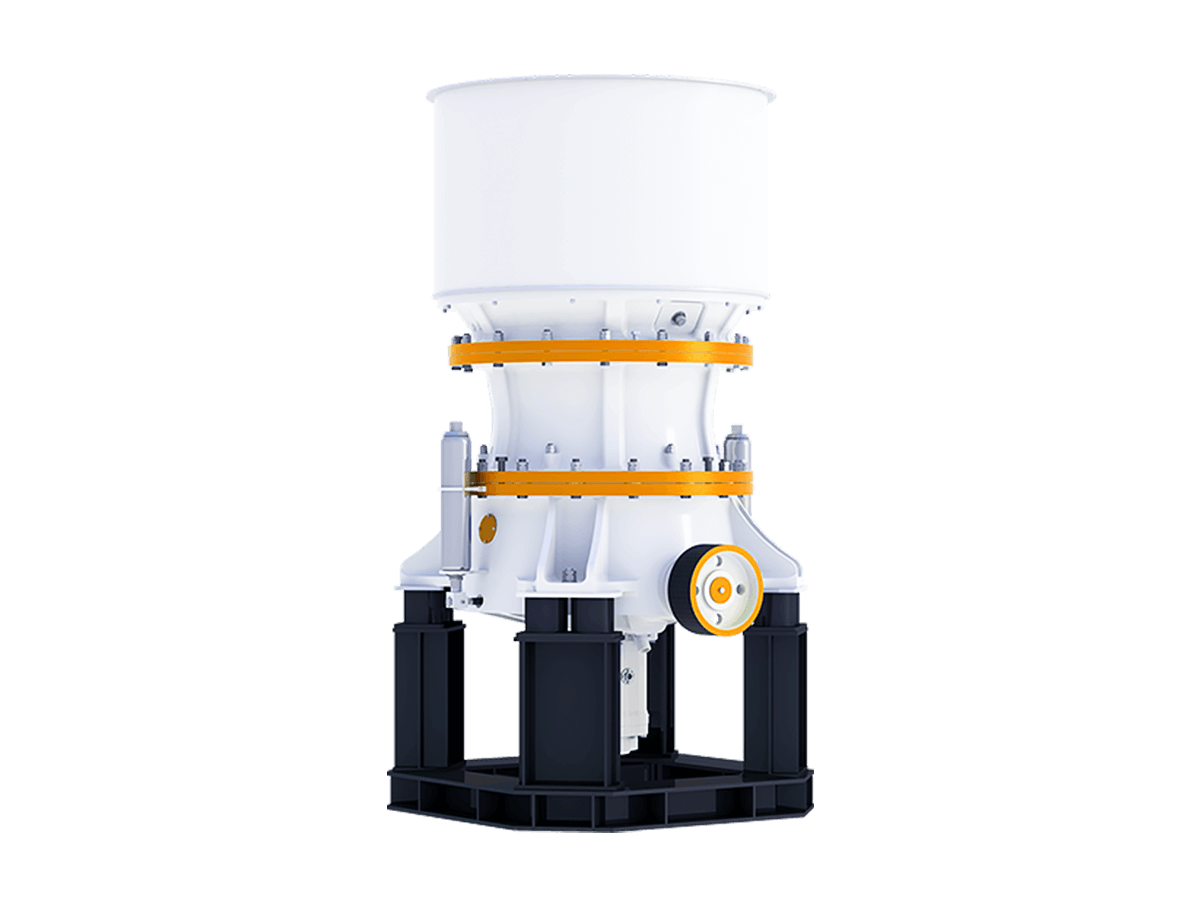
- Use a jaw crusher or cone crusher to crush the raw ore to below 25mm;
- Control the feed rate to avoid blockage, and regularly check the wear of the jaw plates.
- Grinding stage
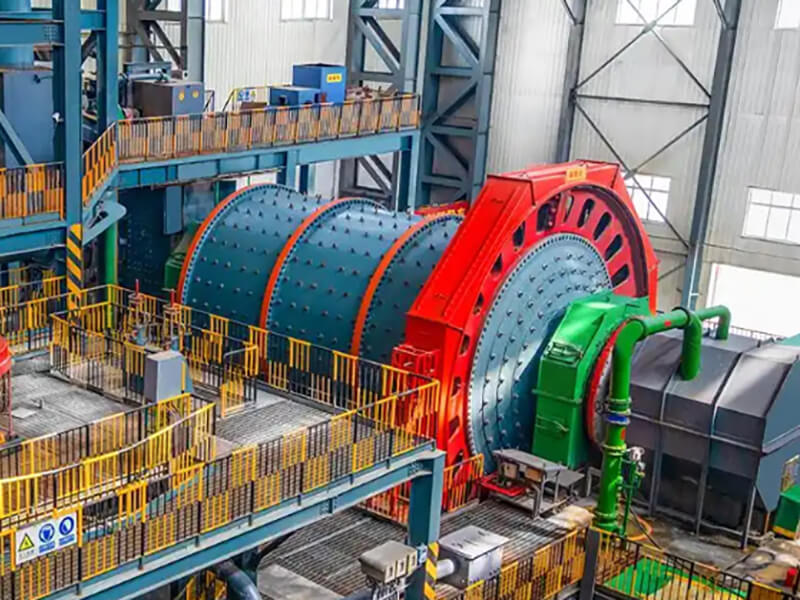
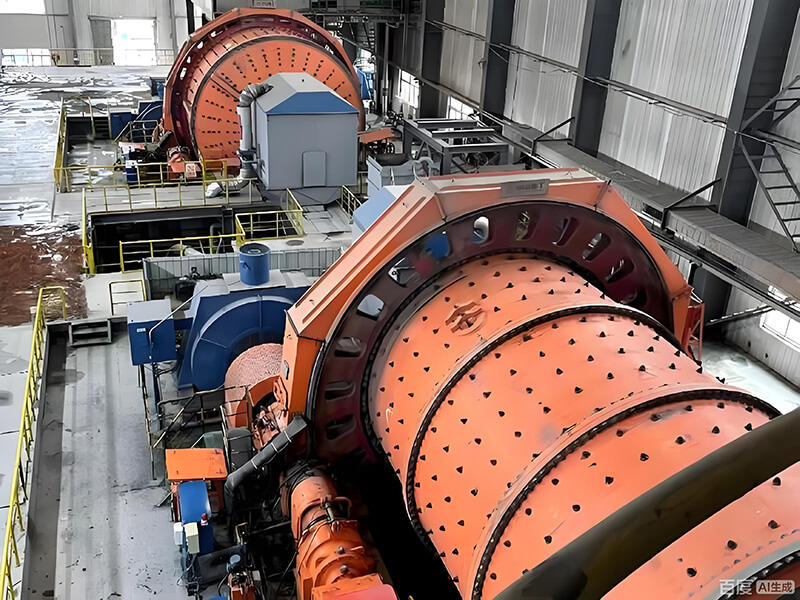
- The crushed ore is further ground using a ball mill to a particle size of 200 mesh (approximately 0.074 mm) or higher, with 80% of the particles being finer, ensuring complete mineral liberation.
- The steel ball ratio, feed rate, and slurry concentration are controlled to prevent bloating or empty milling, which would affect efficiency.
II. Separation Process: Selecting an appropriate method based on mineral characteristics
Separation is a key step in purification, which mainly utilizes the differences between chromite and gangue in terms of density, magnetism, and surface properties.
1. Gravity selection method (preferred process)
- Principle: Chromite has a specific gravity of 4.2 to 4.8, which is much higher than gangue minerals such as serpentine and talc (2.5 to 2.8), making it suitable for gravity separation.
- Commonly used equipment:
- Jigging machine: Suitable for coarse-grained (>0.5mm) ores, for initial enrichment;
- Shaking table: Processes fine-grained materials to obtain high-grade concentrate.
- Spiral chute: Used for middlings re-selection or cleaning to improve the recovery rate.
- Advantages: Low cost, environmentally friendly, no chemical reagents required, suitable for most types of chromite ore.
2. Magnetic separation method (auxiliary means)
- Chromite is weakly magnetic, and strong magnetic impurities (such as magnetite) can be removed by weak magnetic separation.
- For fine-grained disseminated ores, strong magnetic separation can be used to recover fine-grained chromium minerals that are difficult to re-separate.
3. Flotation method (optional for complex ores)
- Suitable for difficult-to-process ores with fine-grained and complex compositions;
- By adding cationic or anionic collectors, the hydrophobicity of the chromium mineral surface is altered, achieving bubble adsorption and separation.
- Pre-sliming is required to avoid the ore slime interfering with the flotation effect.
In actual production, a combined process of "gravity separation as the main method, magnetic separation as the auxiliary method, and flotation as a supplement" is often used to improve the overall recovery rate.
III. Dehydration and Drying: Preparation of Final Product
The chromium concentrate after beneficiation has a high water content and needs to be reduced to below 10% through steps such as concentration, filtration, and drying to facilitate transportation and subsequent smelting.
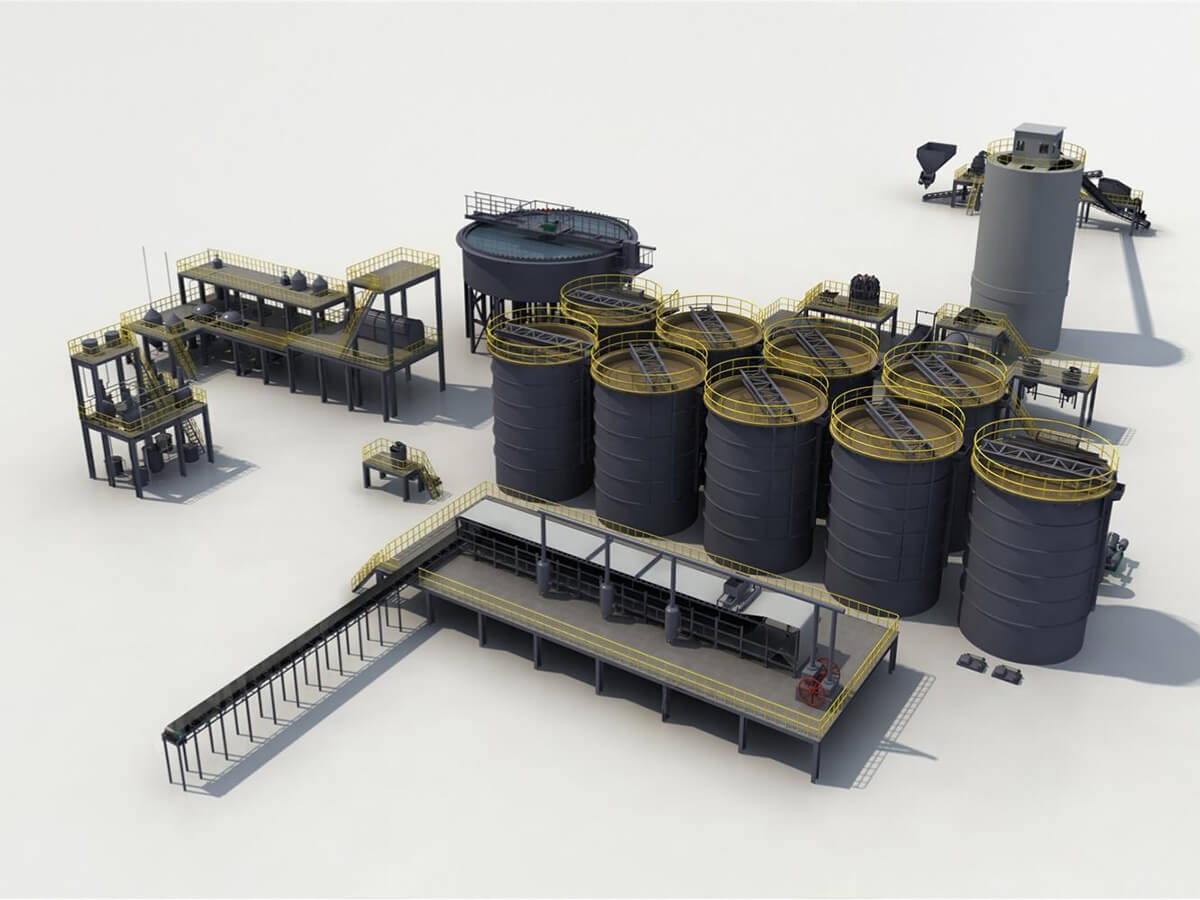
- Concentration: Use a thickener to settle the slurry and increase its concentration.
- Filtration: Use a vacuum filter or filter press for further dewatering.
- Drying: If necessary, dry the slurry with hot air in a rotary kiln.
IV. Special Processes: Pre-reduction and Direct Alloying
To meet specific smelting needs, modern chromium ore processing has also developed new, highly efficient, and energy-saving processes:
-
Chromium ore pre-reduction process (SRC process)
- Partial reduction of chromium ore pellets is performed in a rotary kiln before they are smelted in an electric furnace.
- This method reduces energy consumption, increases chromium recovery rate, and is widely used in the production of high-carbon ferrochrome.
-
Converter smelting reduction method
- Direct injection of chromite powder into the converter enables direct alloying of stainless steel mother liquor.
- This reduces raw material costs and is particularly suitable for using fusible chromite powder from South Africa.