
What Are The Differences Between Dry Ball Mills And Wet Ball Mills?
Date: 2026-03-03 Categories: FAQ Views: 193
Dry and wet ball mills are core equipment in grinding processes. Their main differences lie in the media state (dry or wet) and the application scenario. Selection requires comprehensive consideration of ore properties, process objectives, environmental requirements, and cost. The following is a detailed comparison and selection guide.
I. Core Differences: Media State and Process Principles
1. Media
Dry Ball Mill: Air or inert gas (e.g., nitrogen) as the dispersion medium.
Wet Ball Mill: Water or other liquids are the dispersion medium.
2. Grinding Mechanism
Dry Ball Mill: Direct collision and friction between the material and the grinding media.
Wet Ball Mill: Impact and shear forces on the material in the liquid medium.
3. Product Form
Dry Ball Mill: Dry powder (moisture content <5%).
Wet Ball Mill: Slurry (solid-liquid mixture, concentration typically 30%–70%).
4. Typical Applications
Dry Ball Mill: Dry production processes for refractory materials, cement, fertilizers, etc.
Wet Ball Mill: Wet processing of metallic/non-metallic ores and chemical raw materials.
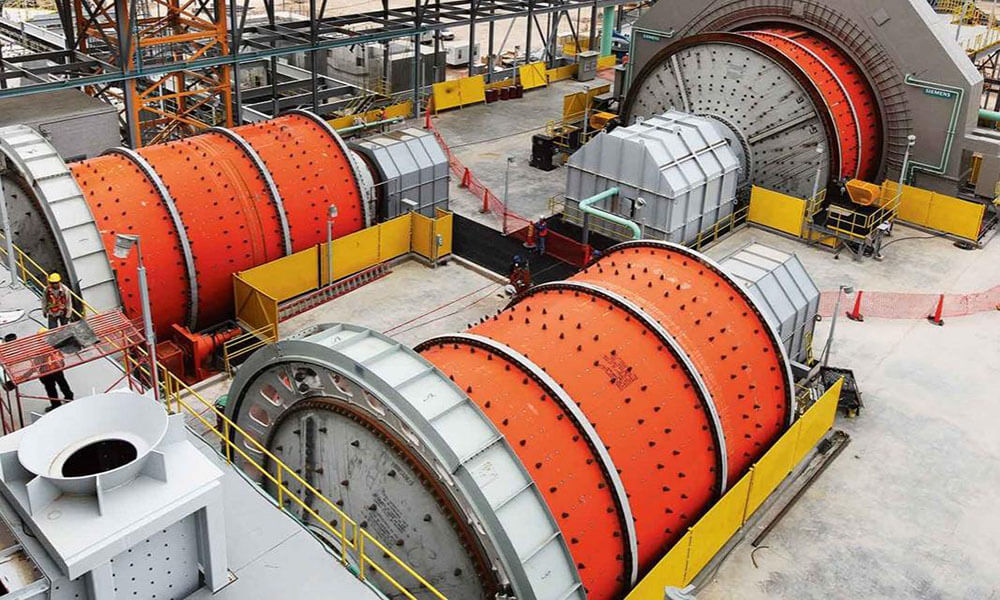
II. Performance Comparison: Efficiency, Energy Consumption, and Environmental Impact
1. Grinding Efficiency
Dry Ball Mill
Advantages: Higher efficiency for hard, brittle ores (such as iron ore and silica sand) due to the reduced "buffering" effect of moisture.
Limitations: Prone to over-grinding (producing excessive fine powder) and dust clogging the gaps in the grinding media, requiring frequent cleaning.
For example, an iron ore processing plant using a dry ball mill achieved a 10% reduction in magnetite grinding time, but the over-grinding rate increased by 15%.
Wet Ball Mill
Advantages: The liquid media lowers the material temperature, minimizing thermal degradation of heat-sensitive materials (such as some non-metallic ores); it extends equipment life by reducing wear on the grinding media.
Limitations: Sticky materials may exhibit "ball sticking," requiring the use of dispersants to improve flowability.
For example, A copper mine processing plant using a wet ball mill to process sulfide ores achieved a 20% increase in grinding efficiency and a 30% extension in grinding media life.
2. Energy Consumption
Dry Ball Mills: Require additional dust collection systems (e.g., bag filters), increasing energy consumption by 10%–15%.
Due to higher friction in dry milling, unit energy consumption is higher (5%–10% higher than wet milling).
Wet Ball Mills: Liquid media lubricates the contact surfaces, reducing friction and lowering unit energy consumption.
Energy is required for subsequent dewatering (e.g., thickeners, filters) to process the slurry.
3. Environmental Performance
Dry Ball Mills: High dust emissions require strict sealing and efficient dust collection systems to prevent air pollution.
Suitable for moisture-sensitive materials (e.g., certain fertilizer raw materials) to avoid agglomeration during wet processing.
Wet Ball Mills: Near-zero dust emissions, offering significant environmental advantages.
Wastewater requires treatment to meet discharge standards, which can increase costs (e.g., sedimentation tanks, treatment equipment).