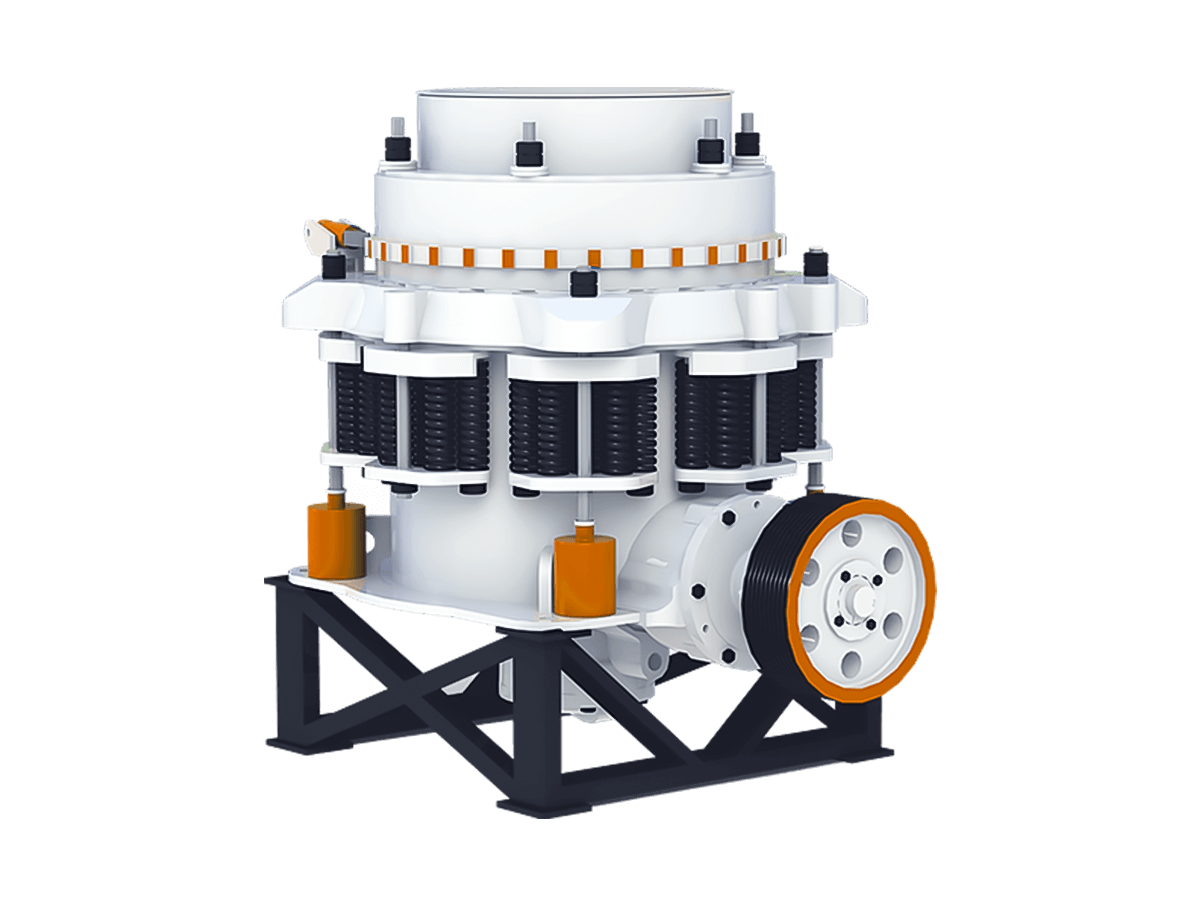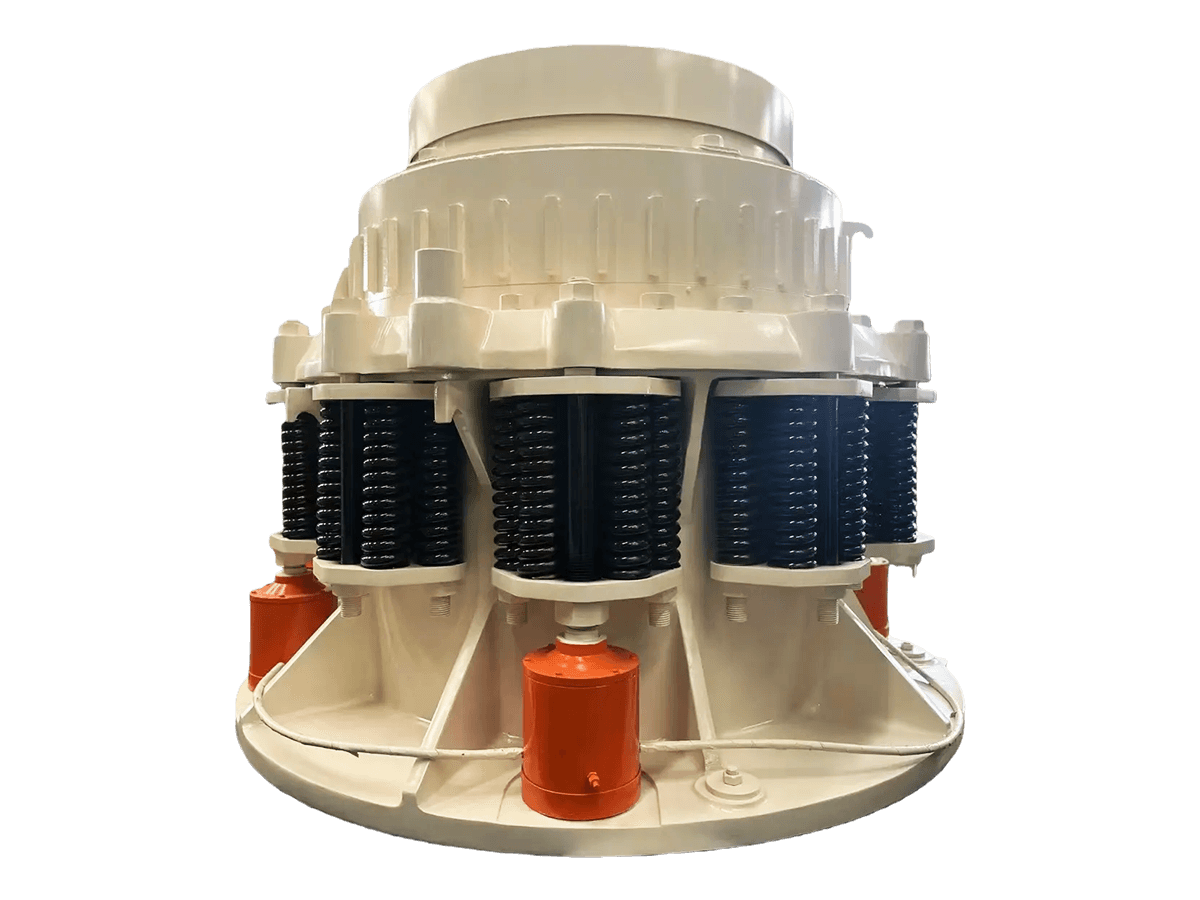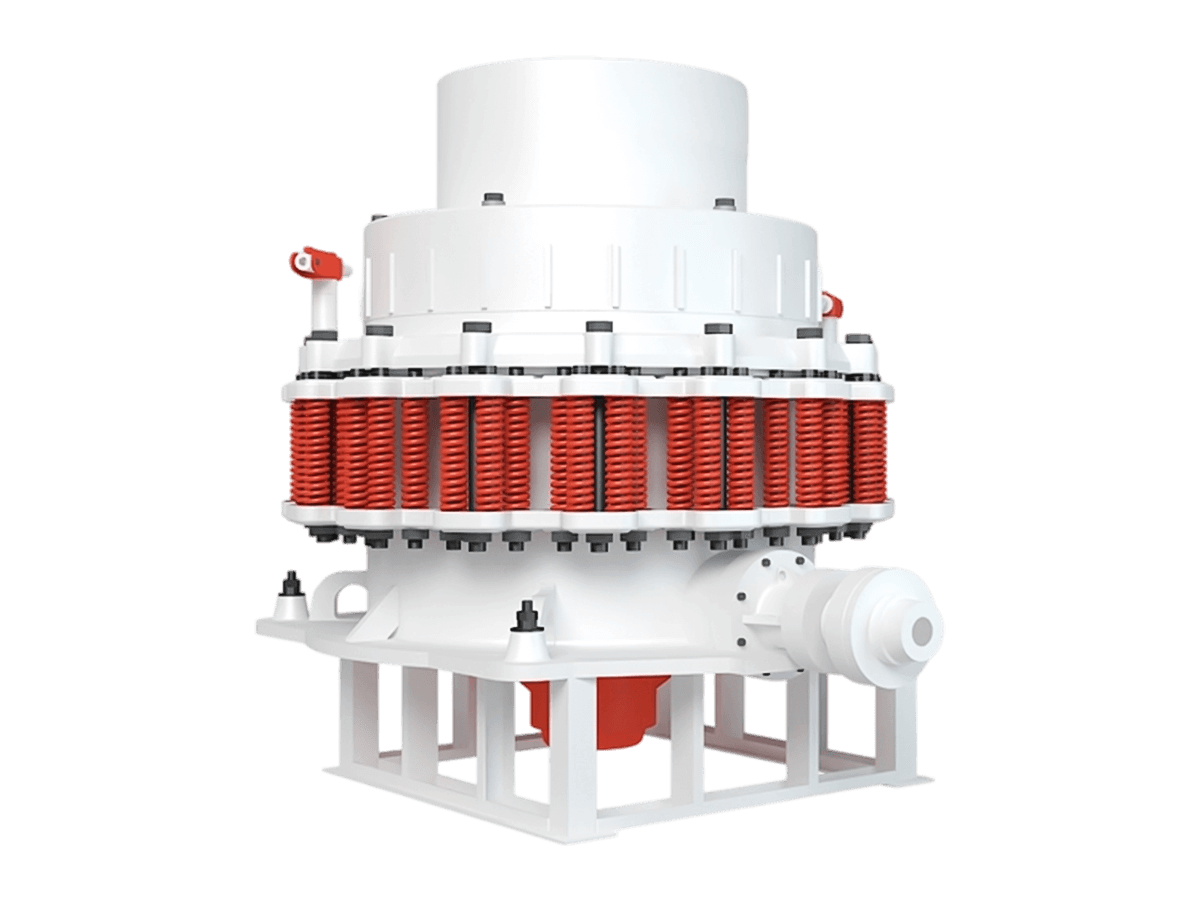
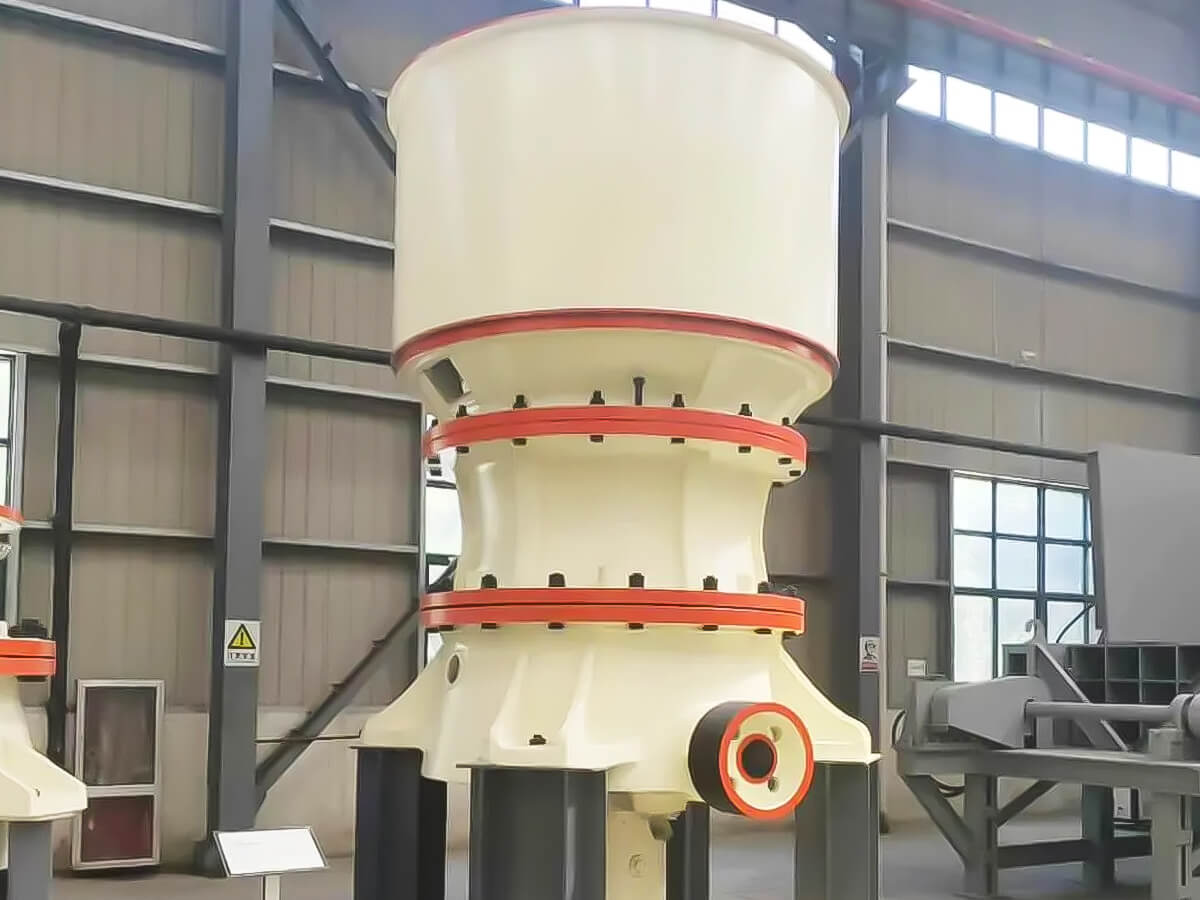
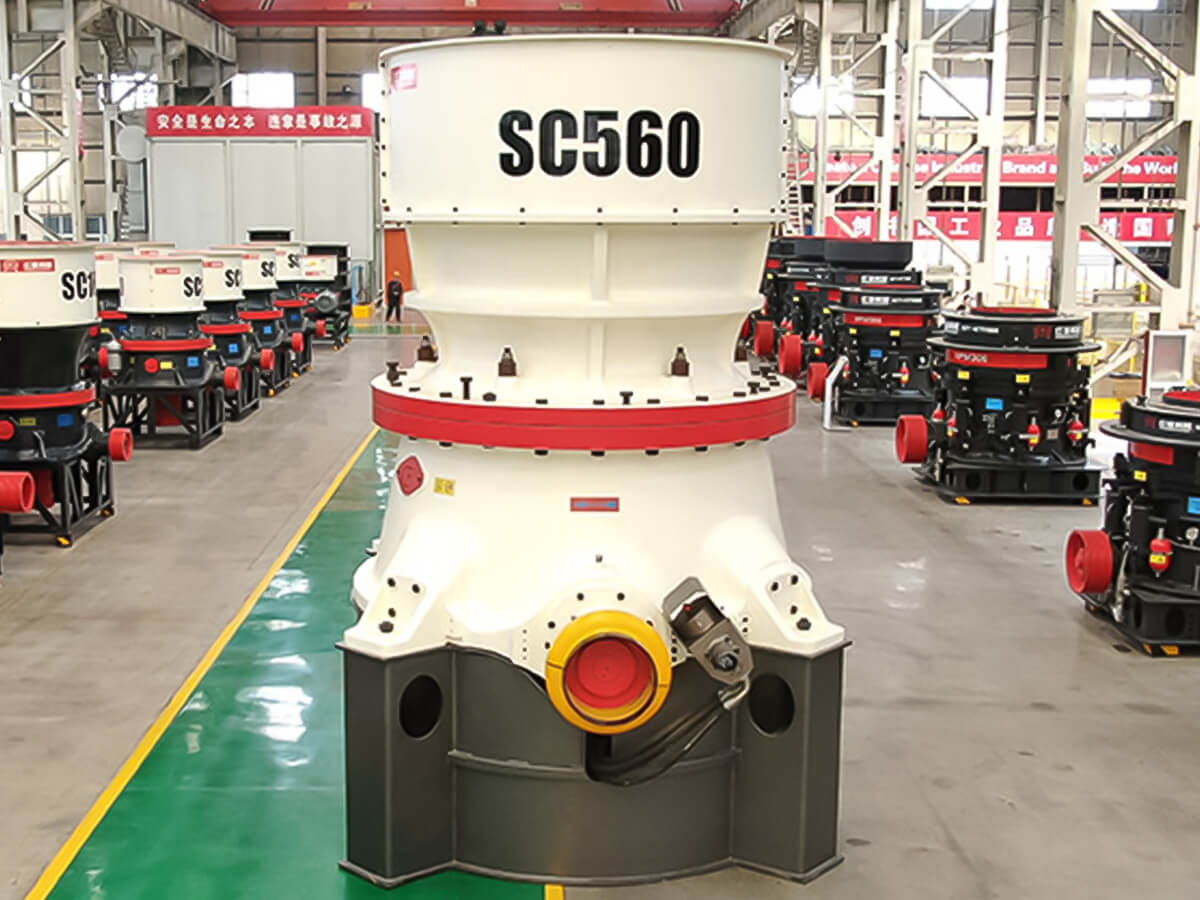
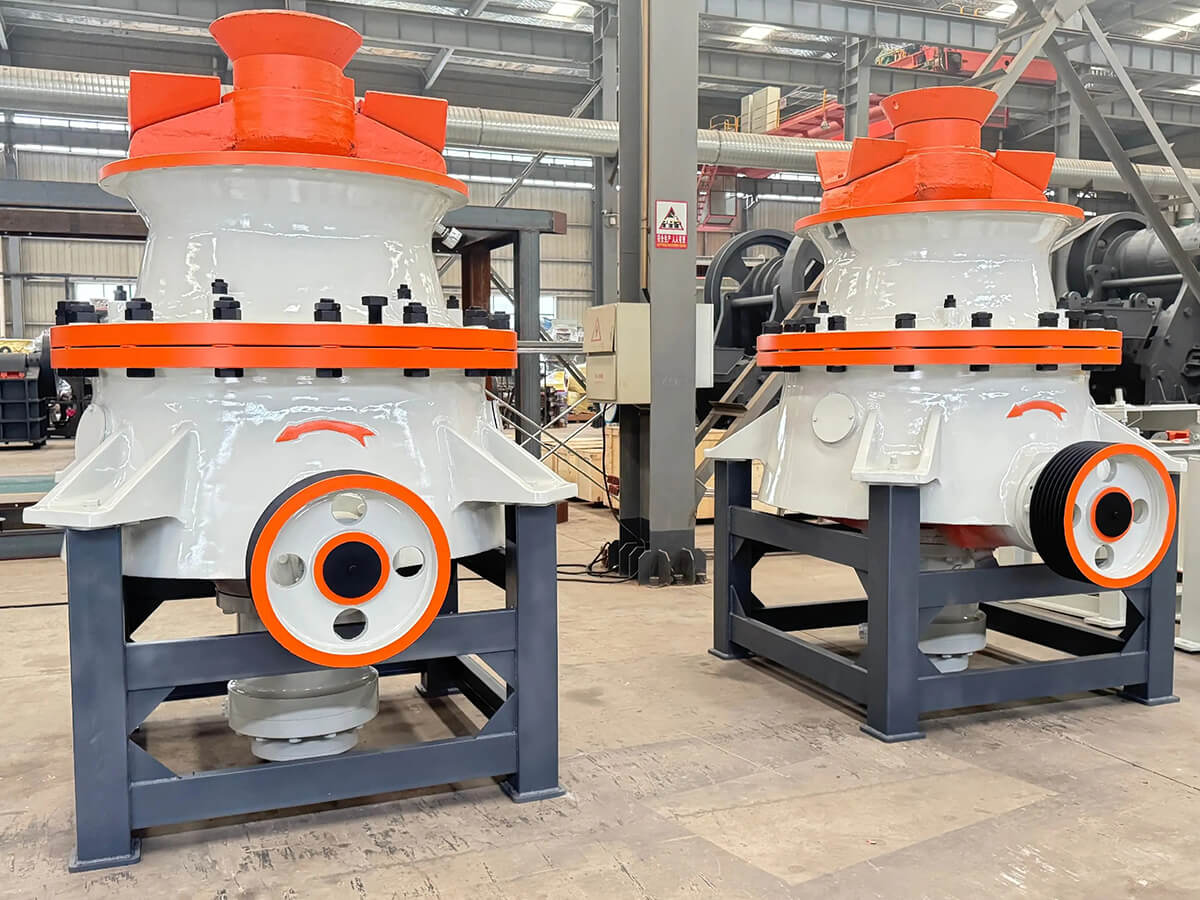
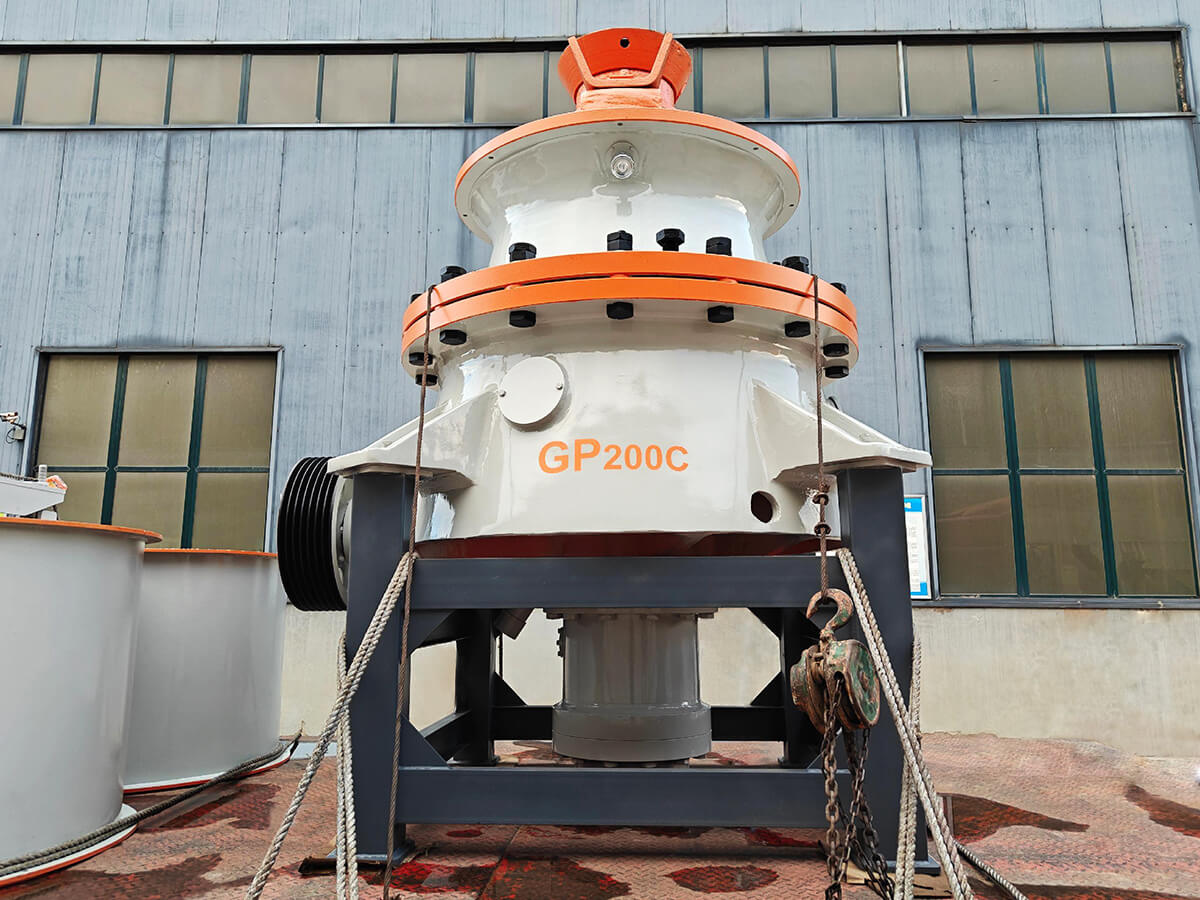
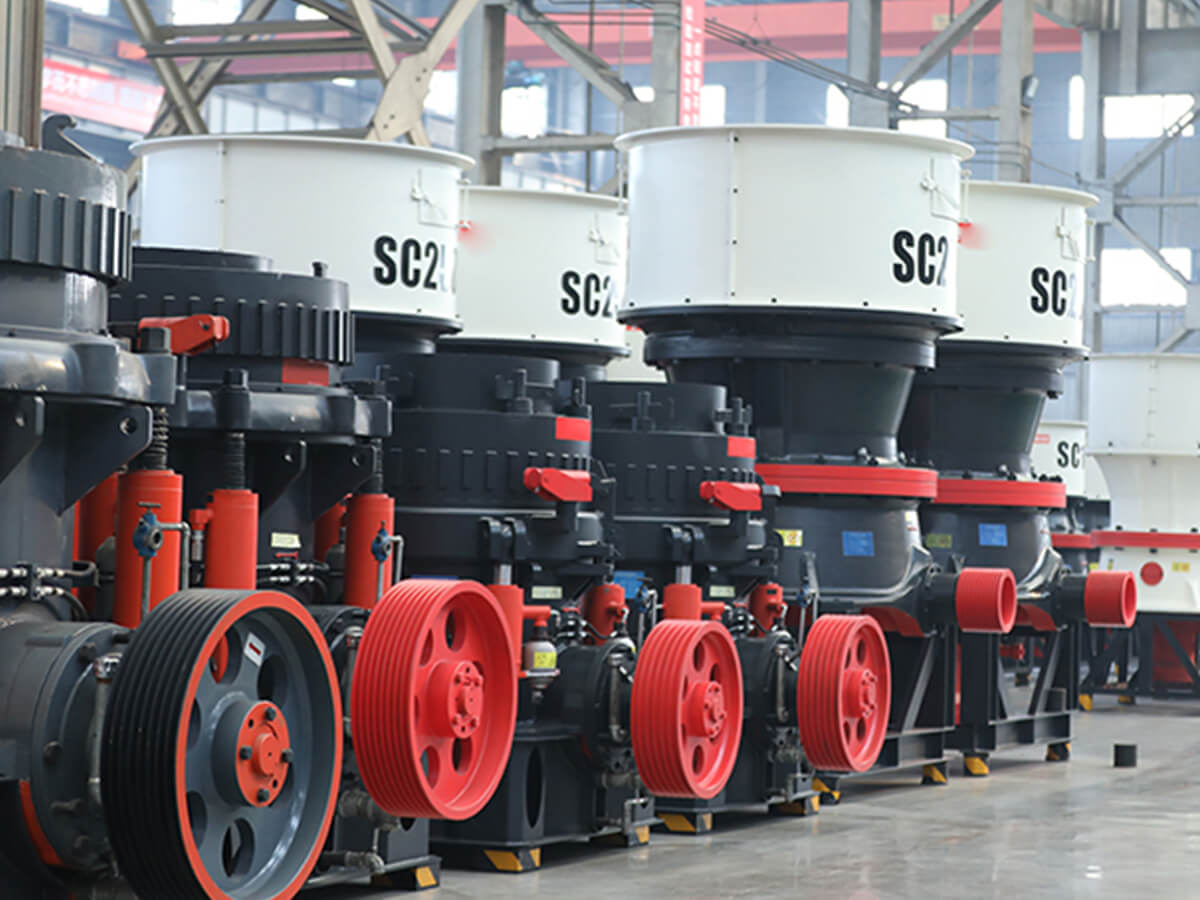

The HD series single-cylinder hydraulic cone crusher adopts advanced technology and offers various chamber types to meet diverse customer needs. This series of cone crushers utilizes hydraulic technology for overload protection, simplifying the structure and reducing weight. All maintenance and inspection work can be performed from the top of the cone crusher, making upkeep extremely convenient.
Working Principle
The crushing process follows a simple principle: material enters the crushing chamber, where the rotating component—the crushing cylinder—moves eccentrically. Unlike perfect rotation, the crushing cylinder's motion is a slight oscillation, constantly changing the gap between itself and the fixed concave surface (the stationary outer ring). As the crushing cylinder oscillates, it squeezes the material against the concave surface at the narrowest point of the gap, causing crushing. Furthermore, intergranular crushing occurs, where rocks are compressed against each other during this process.
Product Structure
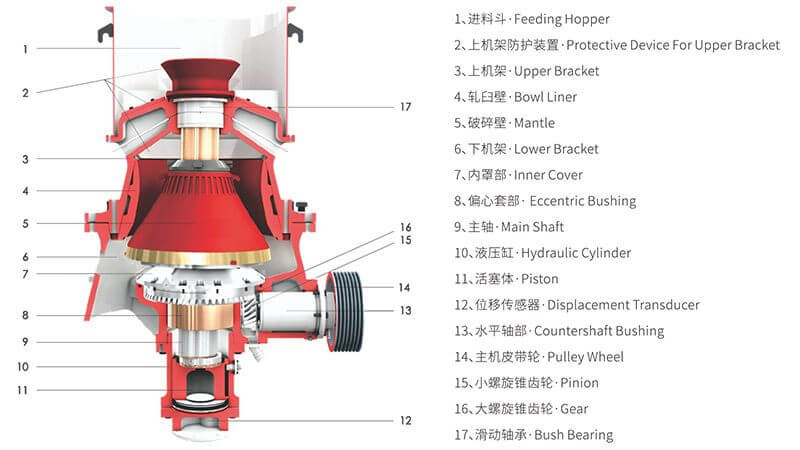
The cone crusher consists of key components such as the main shaft, liners, cup-shaped liners, concave plates, eccentric bushings, and drive mechanism.
Product Advantages
High Efficiency: Combining advanced crushing chamber design and high crushing frequency, it boasts a processing capacity of up to 2181 tons per hour.
Superior Product Shape: Utilizing inter-particle lamination crushing technology, it produces cubic finished products with more regular particle shapes and fewer needle-like particles.
Easy Maintenance: Components can be easily disassembled from the top. The filler-free liner design saves replacement time and costs.
Low Downtime: Equipped with a dual hydraulic and lubrication protection system, it automatically handles overloads, ensuring continuous operation and reducing downtime.
Dust Prevention: The positive pressure system effectively blocks dust and debris, keeping components clean and extending their service life.
Intelligent Automation: Featuring an intuitive interface, it allows for quick adjustment of output and precise size control. Automation can increase productivity by 15%-25% and simplify complex operations.