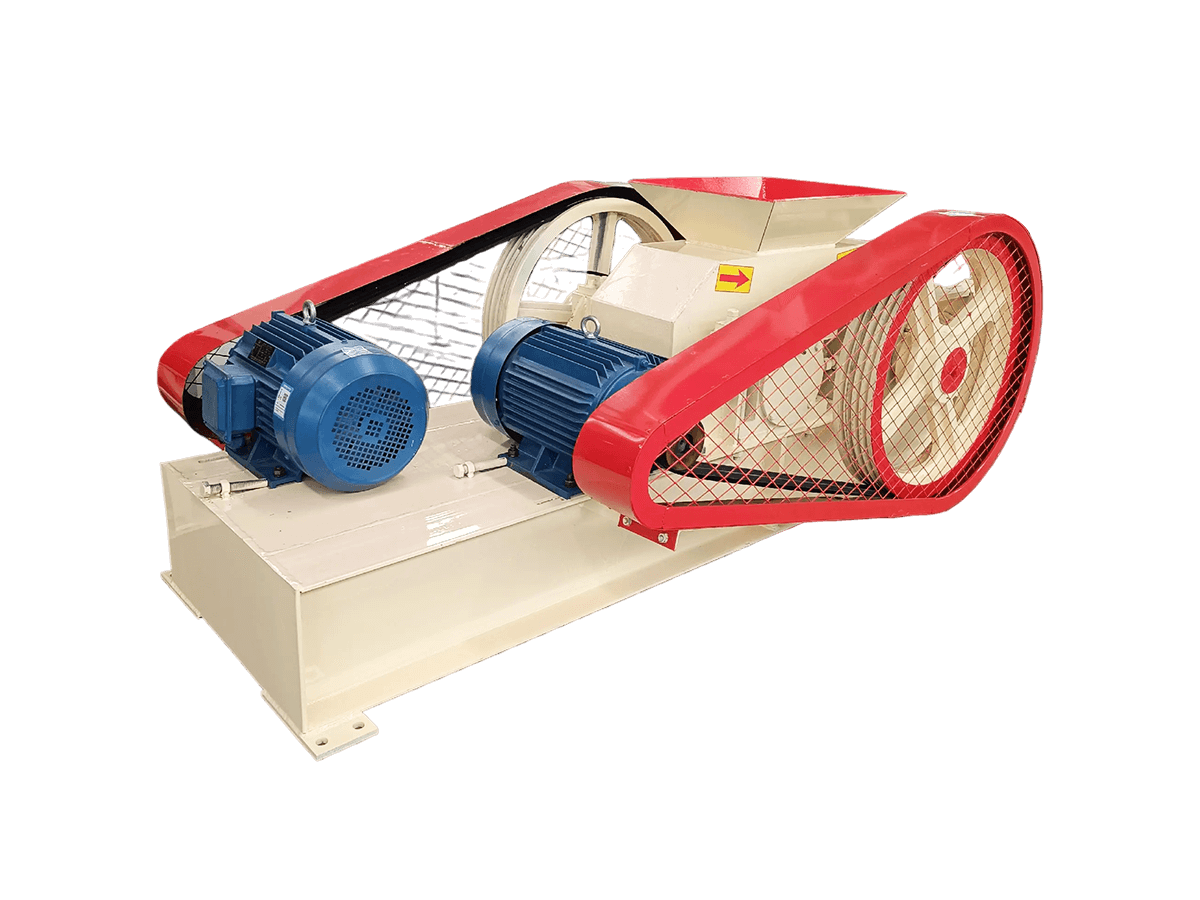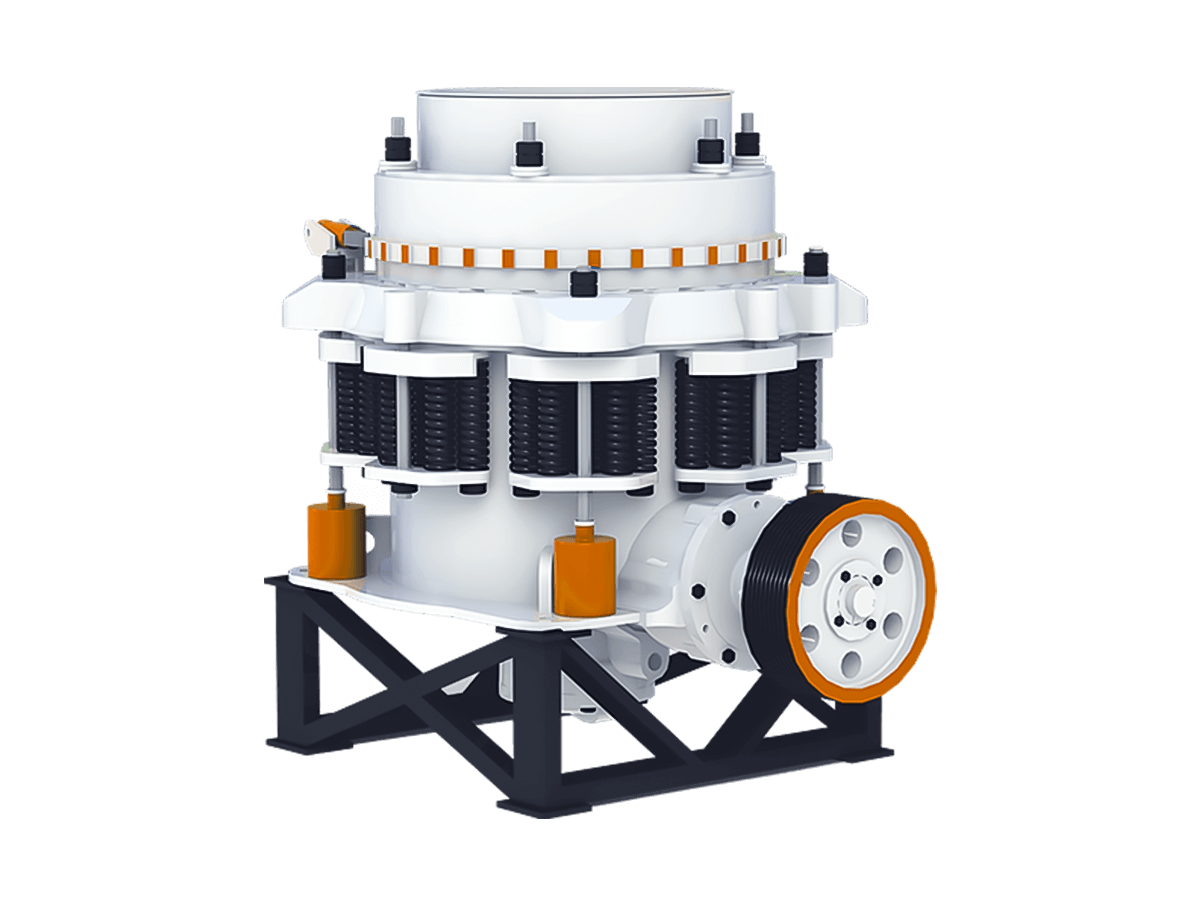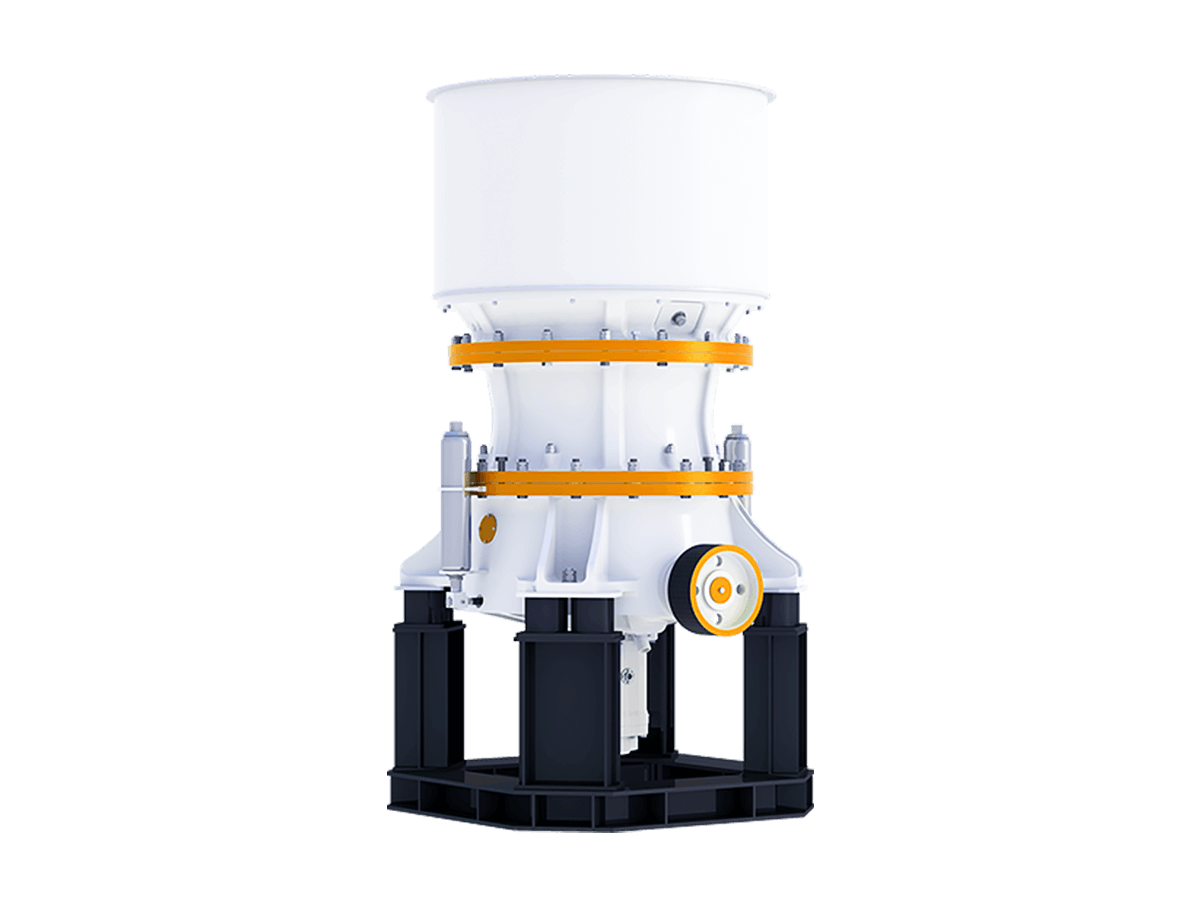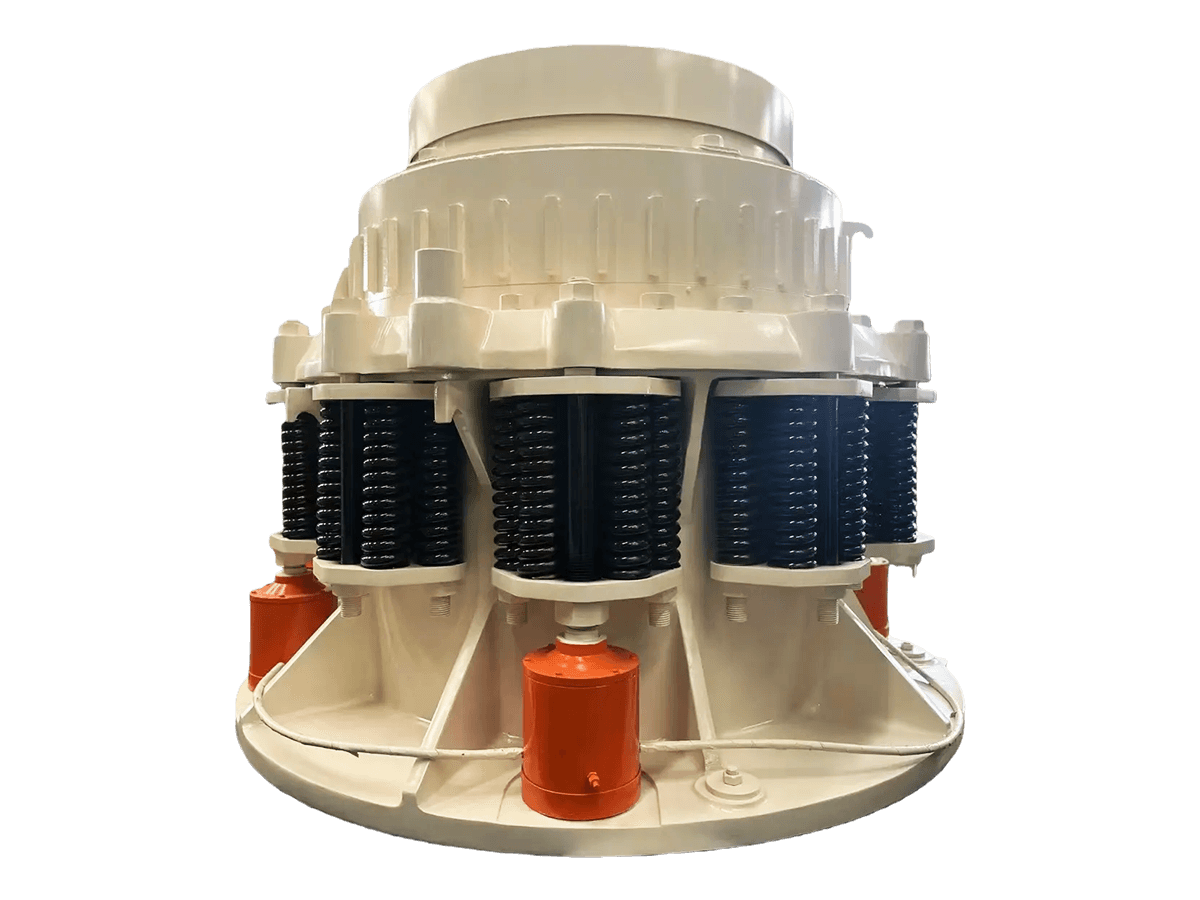
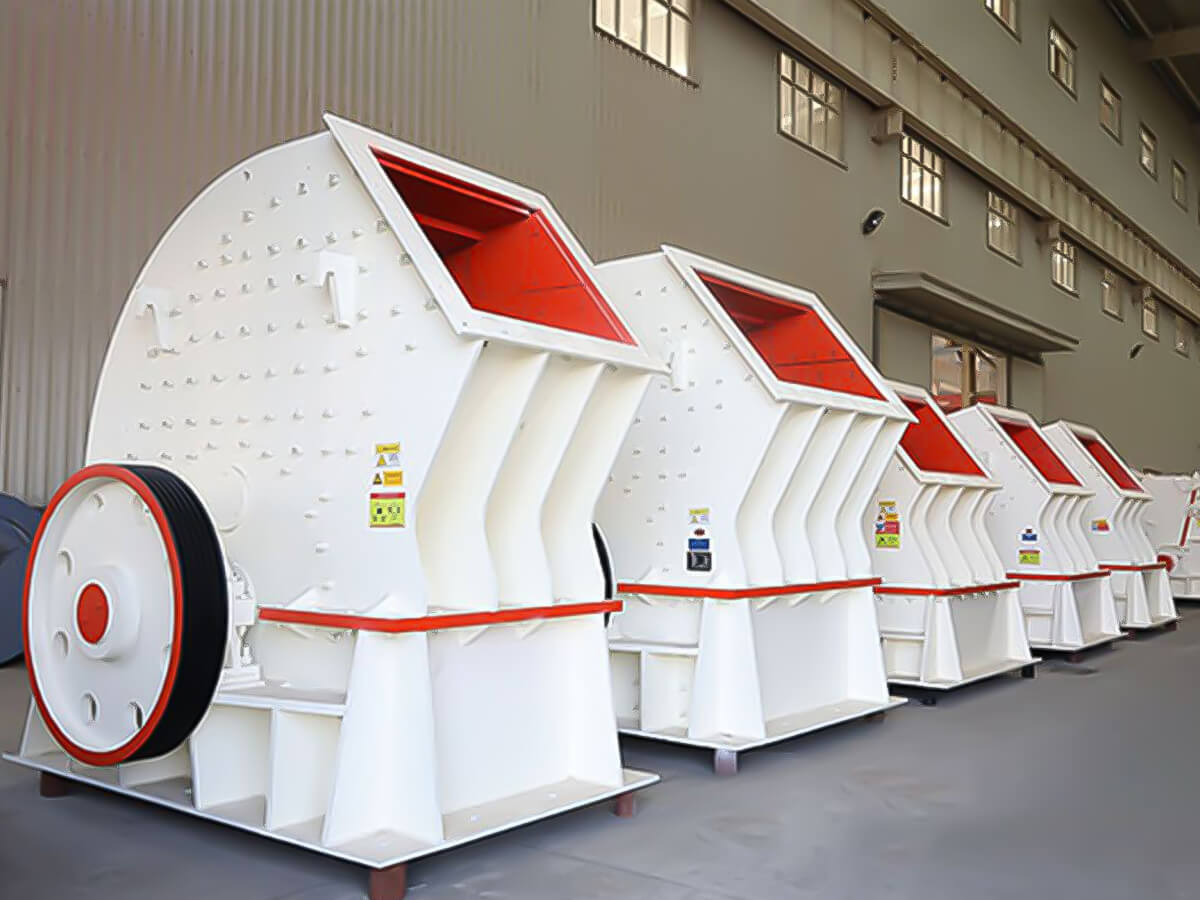
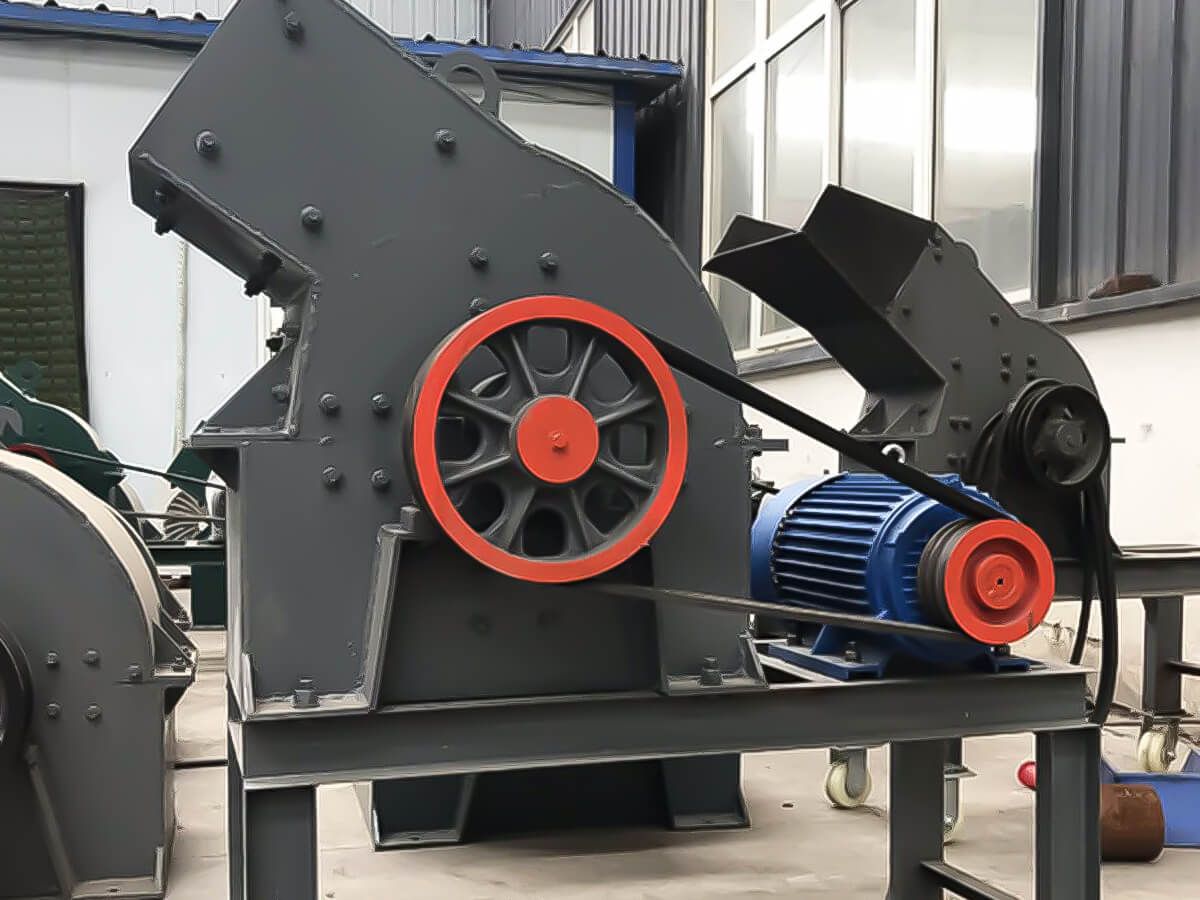
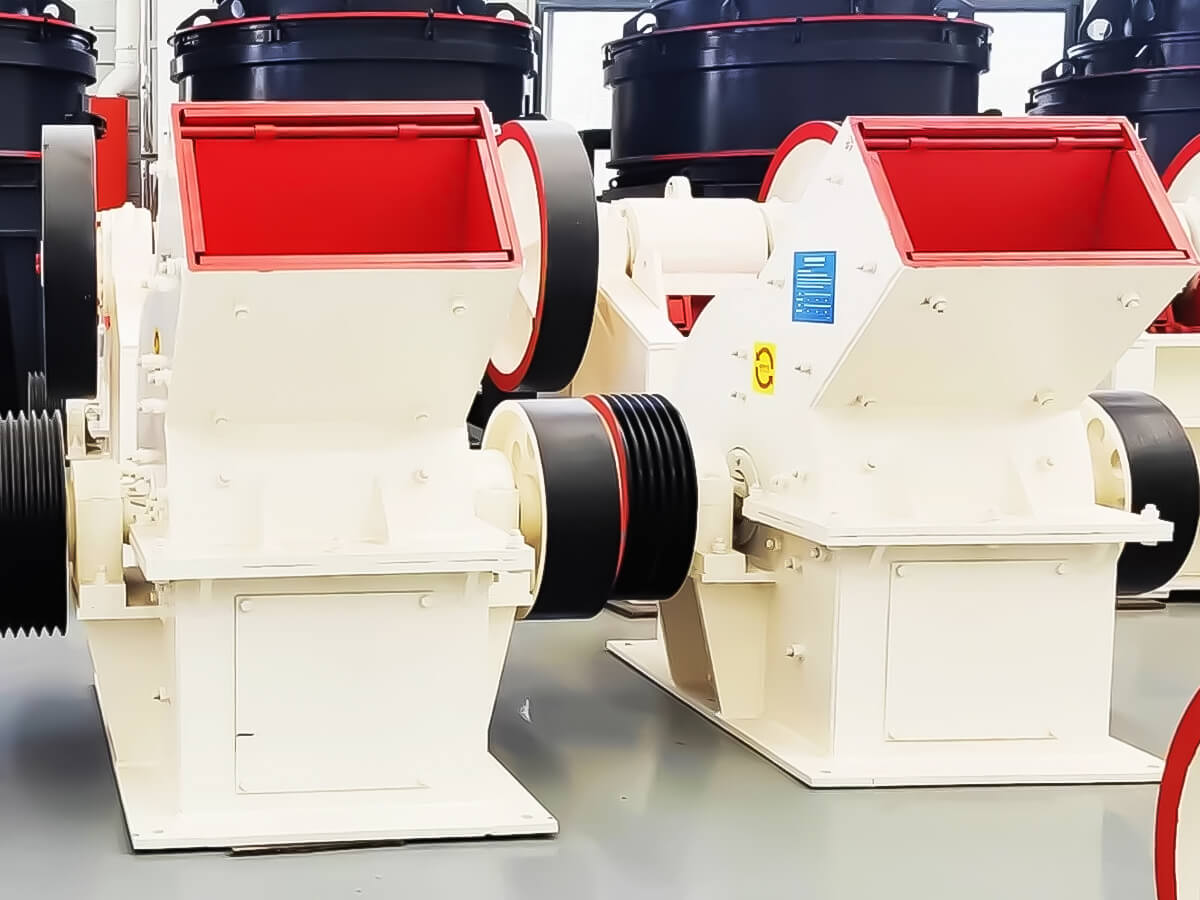
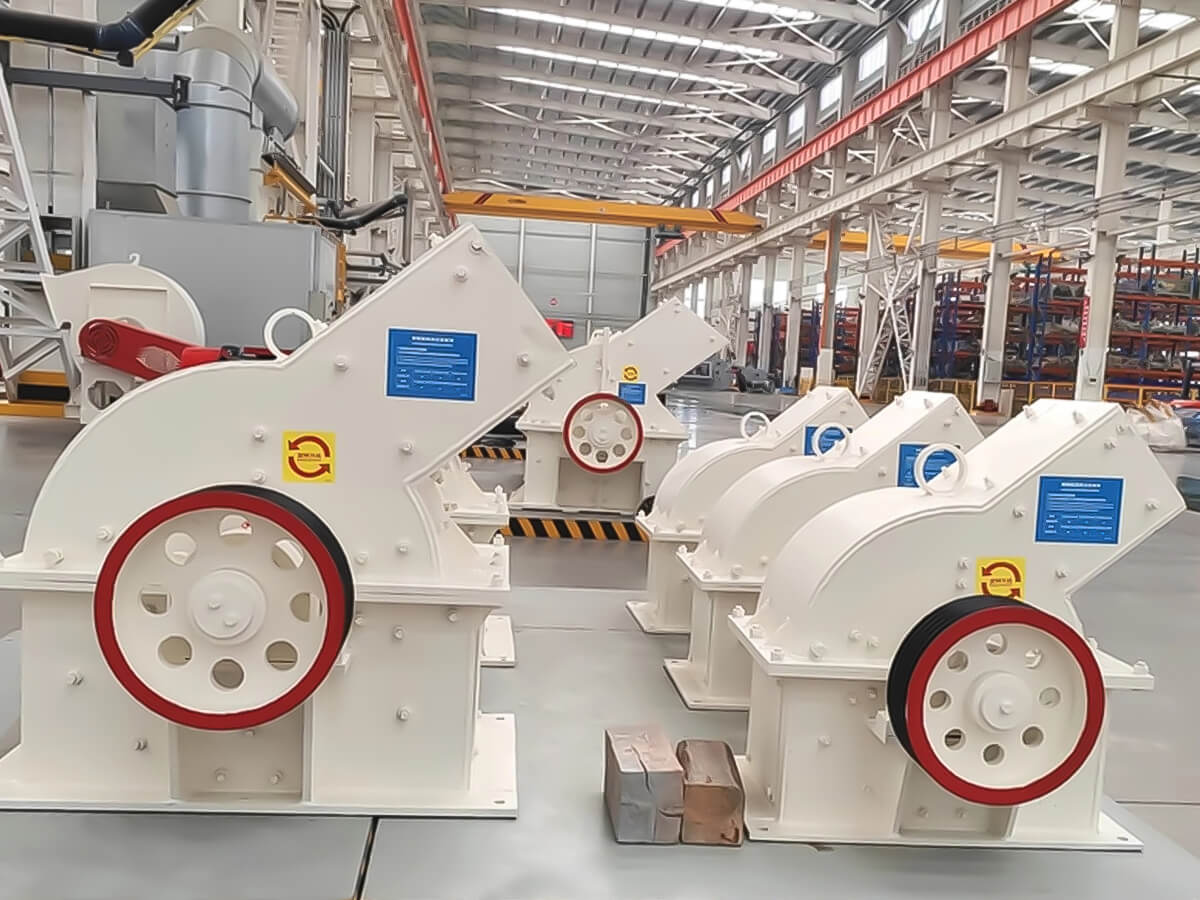
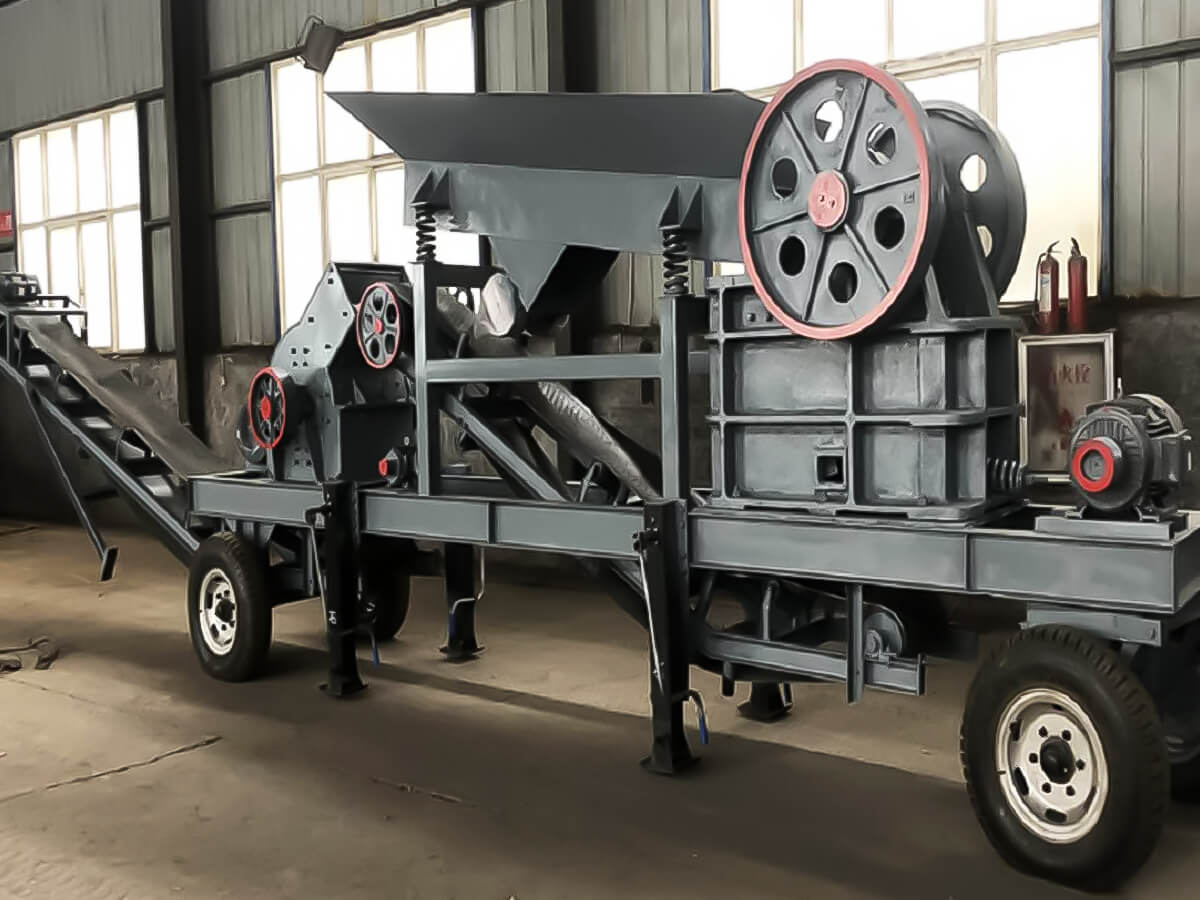

The hammer crusher is a robust, durable, and versatile piece of equipment designed for high-intensity impact crushing of medium-hard and brittle materials. It performs particularly well in processing materials such as limestone, coal, and gypsum. Its core principle utilizes high-speed rotating hammers to crush the feed material against the impact plate. Key advantages include a high crushing ratio, simple structure for easy maintenance, and the ability to adjust the final product particle size by changing the screen plate. These advantages make it a highly efficient and economical crusher, widely used in the mining, cement, and construction industries.
Working Principle
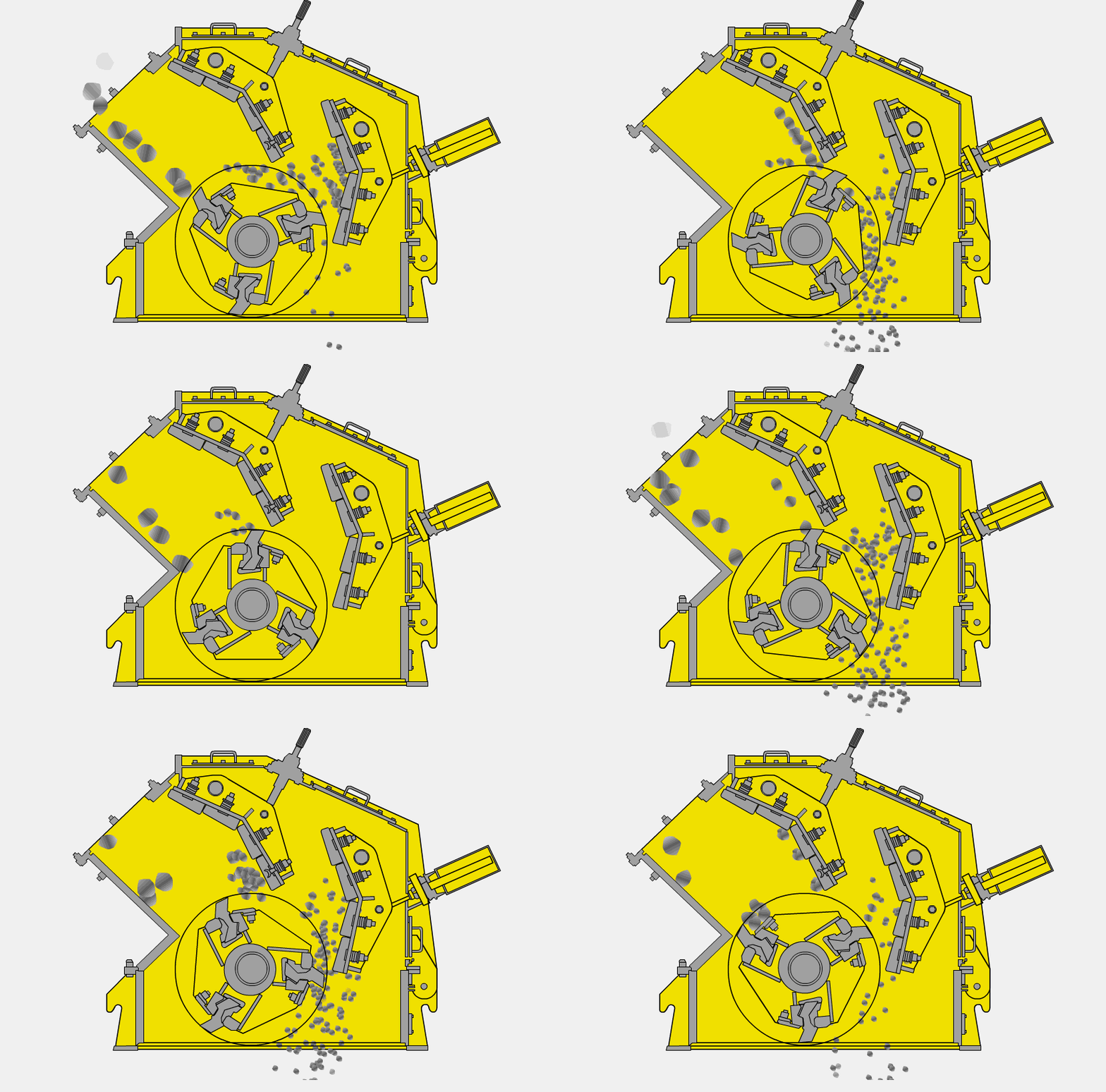
The hammerhead is rigidly connected to the rotor, utilizing the inertia of the entire rotor to impact the material (free crushing, impact crushing, grinding crushing), not only breaking it but also allowing it to gain greater velocity and kinetic energy. The hammer impacts the input material from bottom to top and throws it onto the upper impact plate.
The hammerhead crushes material through a single impact (free crushing, impact crushing), but the material gains limited velocity and kinetic energy. The hammerhead impacts the material along its falling direction, resulting in a smaller crushing effect.
Product Structure
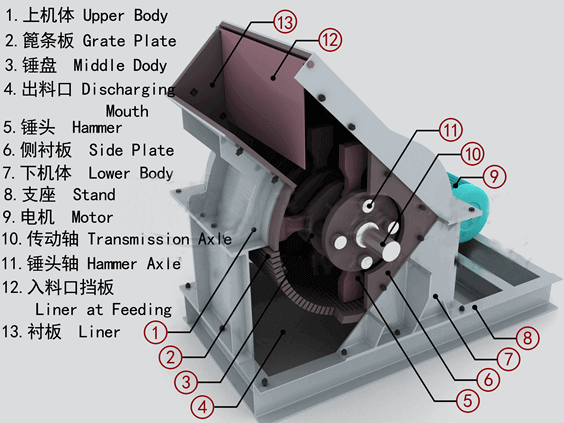
The hammer body consists of a rotor, hammer head, hammer frame, pin, frame, crushing plate, screen plate, transmission components, etc. The hammer head is hinged to the hammer frame.
Product Advantages
1. Large feed opening and high crushing chamber.
2. Low crushing energy consumption.
3. New type of hammerhead with strong impact force.
4. Adjustable hammer shaft mounting position for long hammerhead life.
5. Adjustable screen size for controllable particle size and good particle shape.
6. Tiltable chassis for easier maintenance.
7. Square shank bolts for impact resistance and wear resistance.
8. Compact structure and high machine rigidity.
9. Robust structure for easy handling and installation.