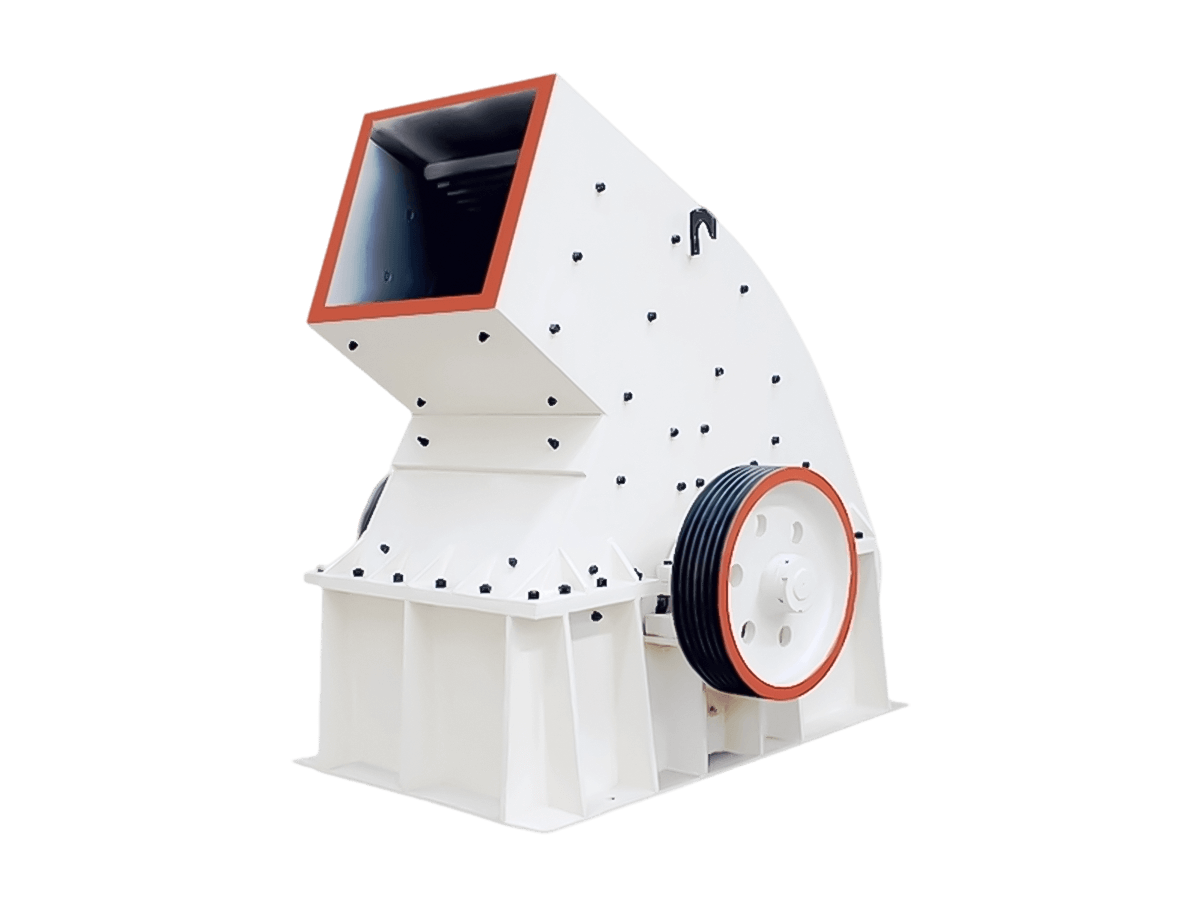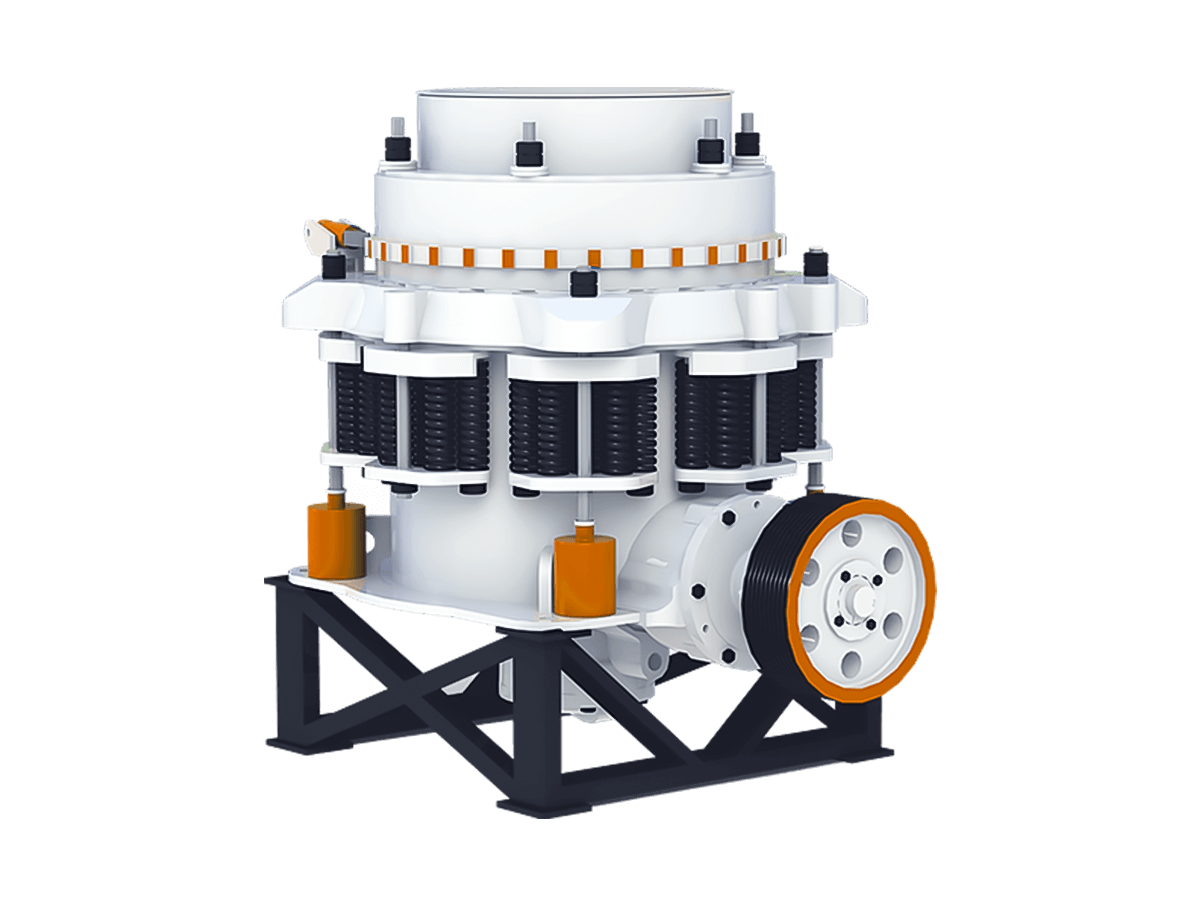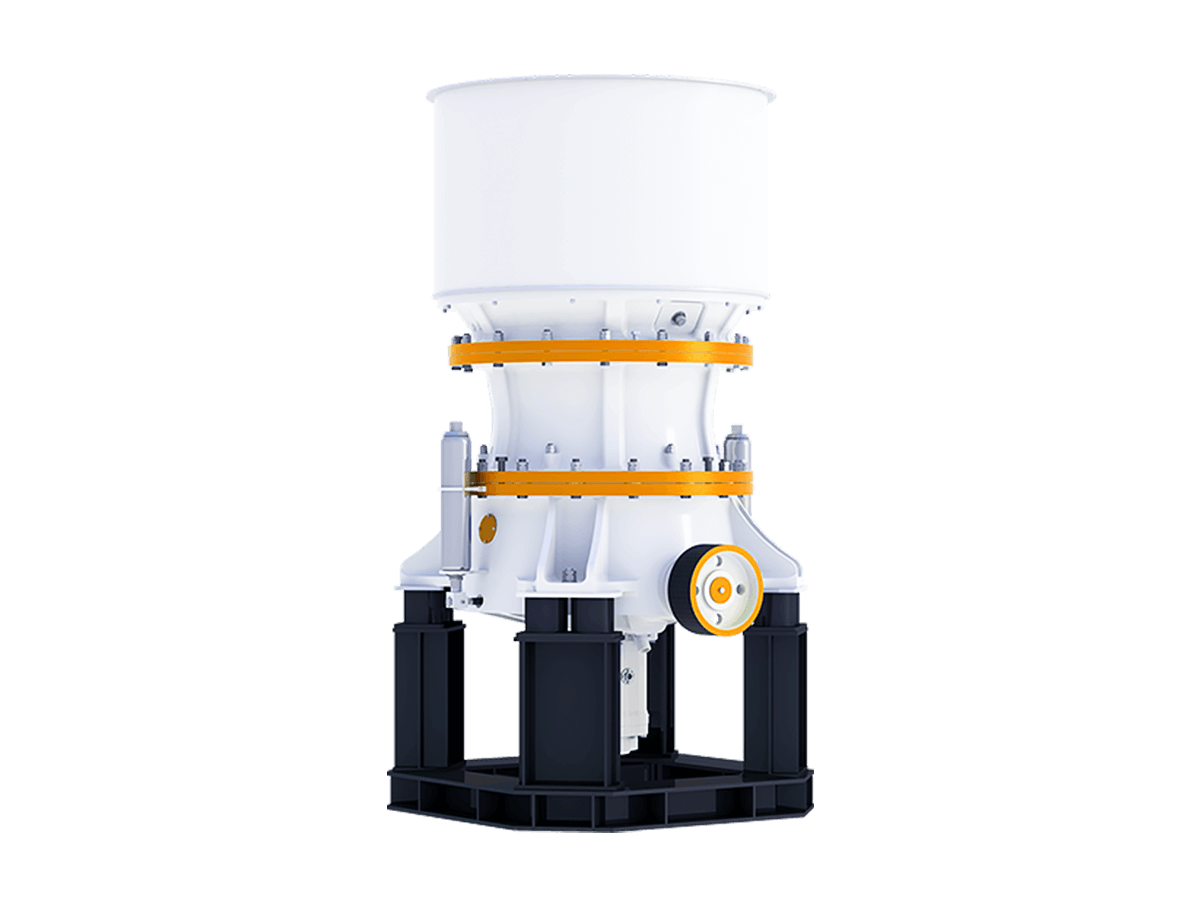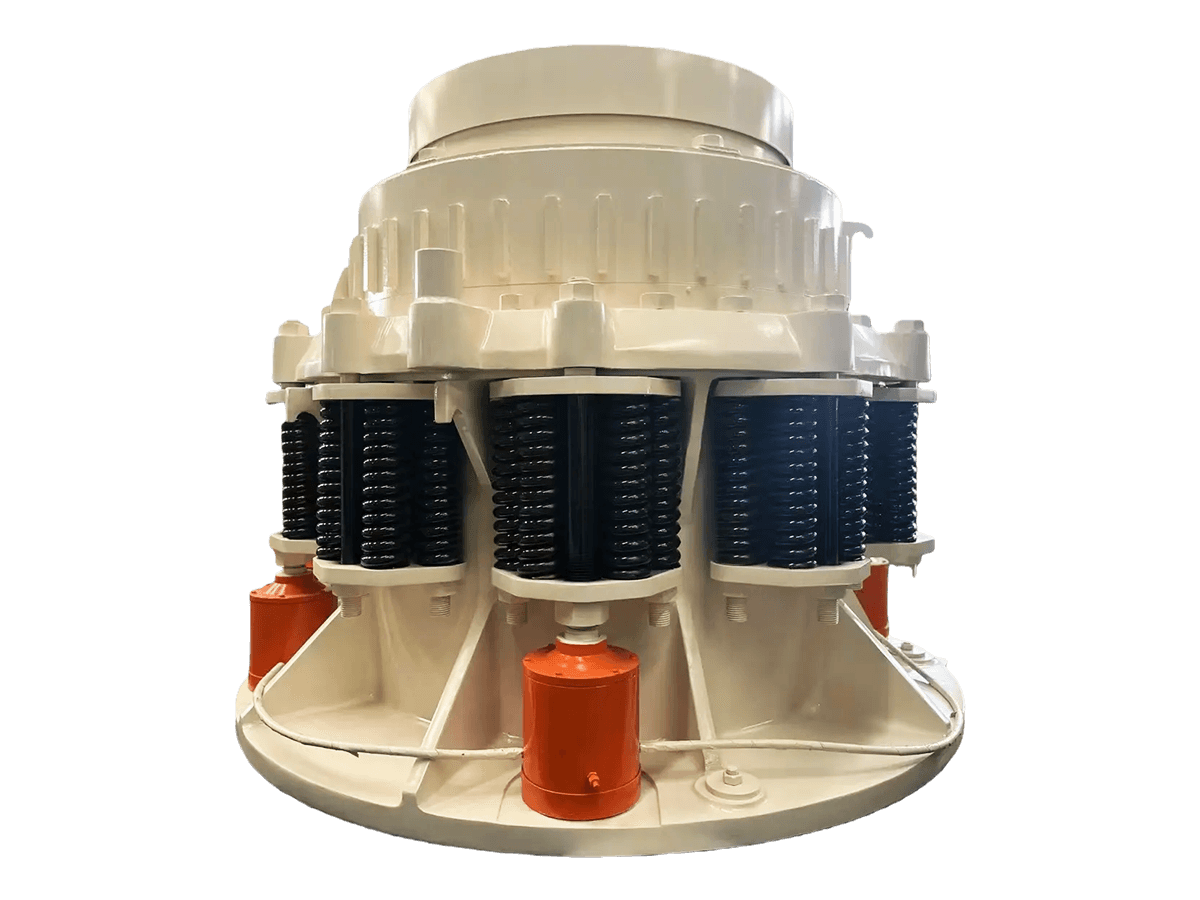
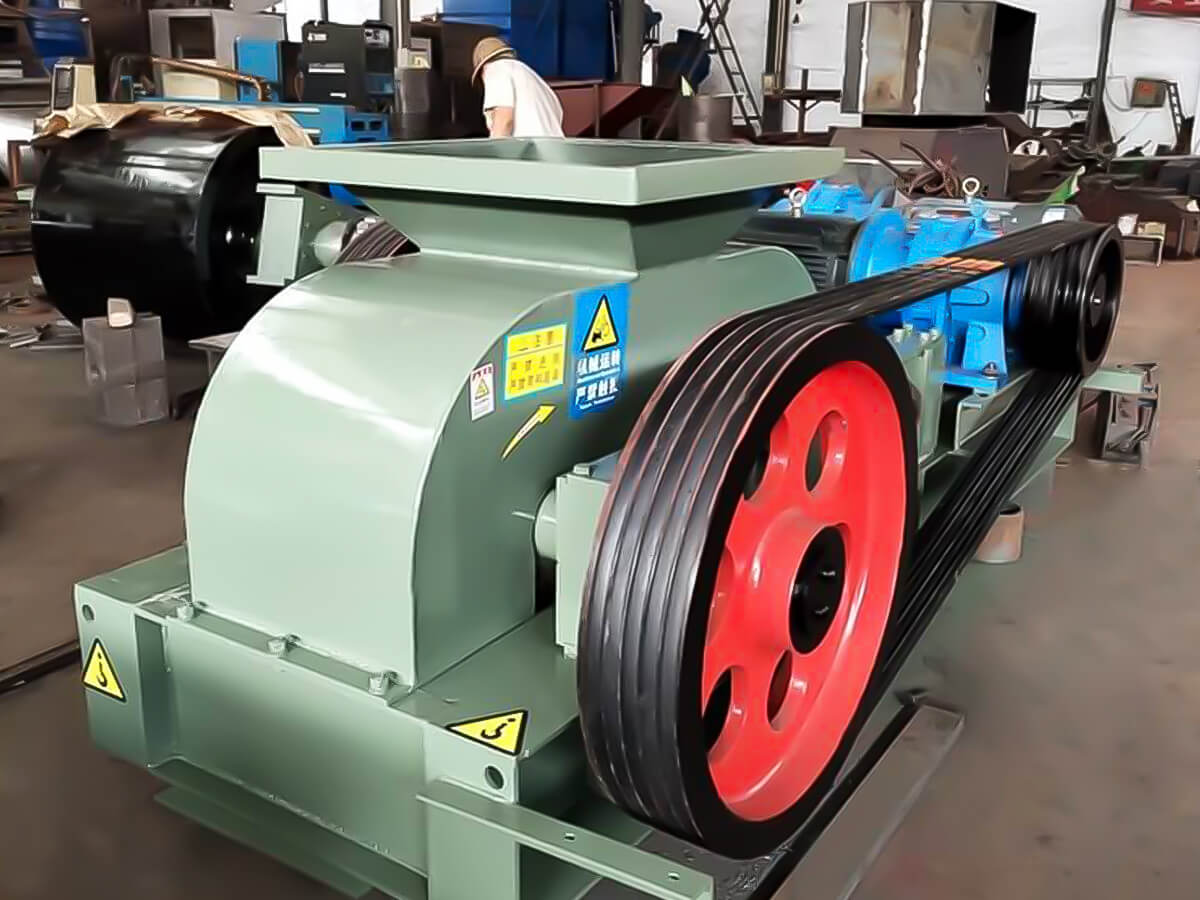
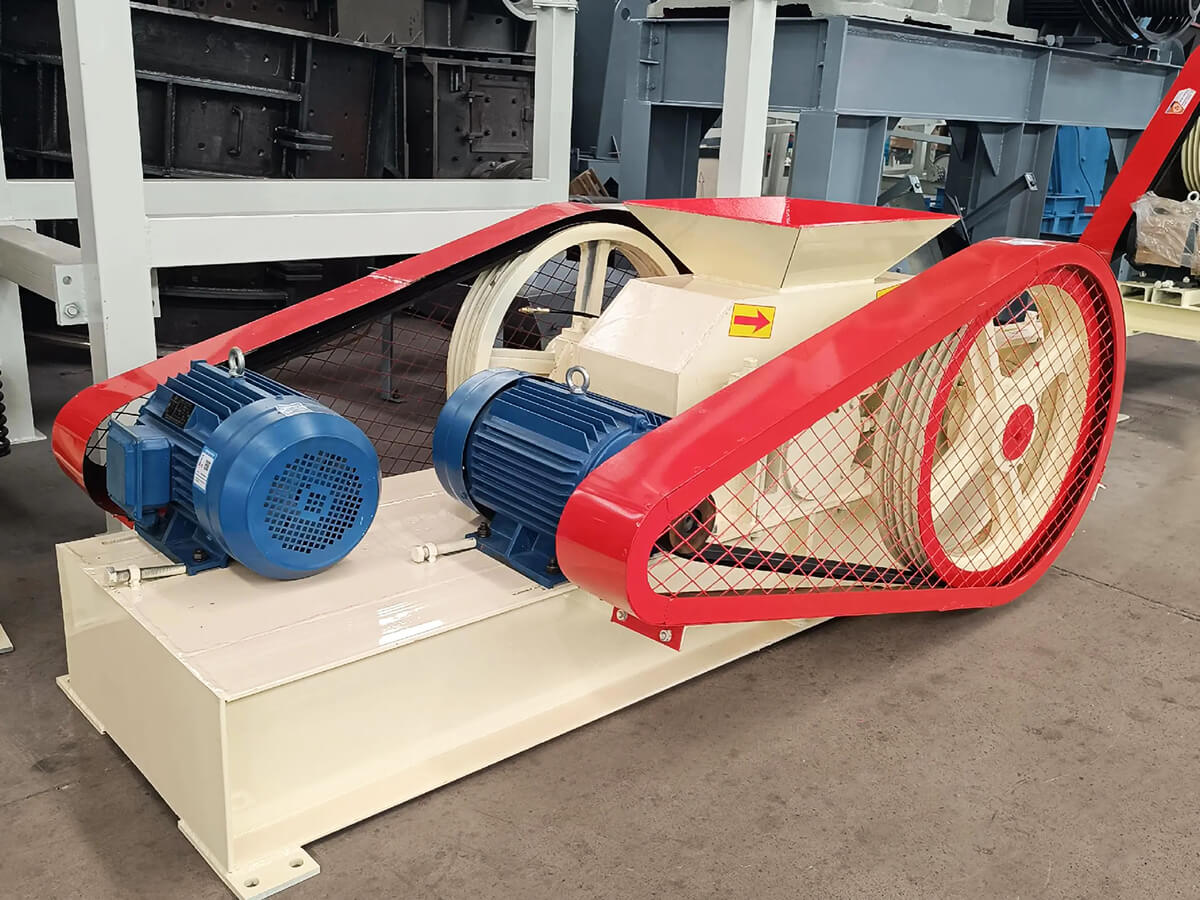
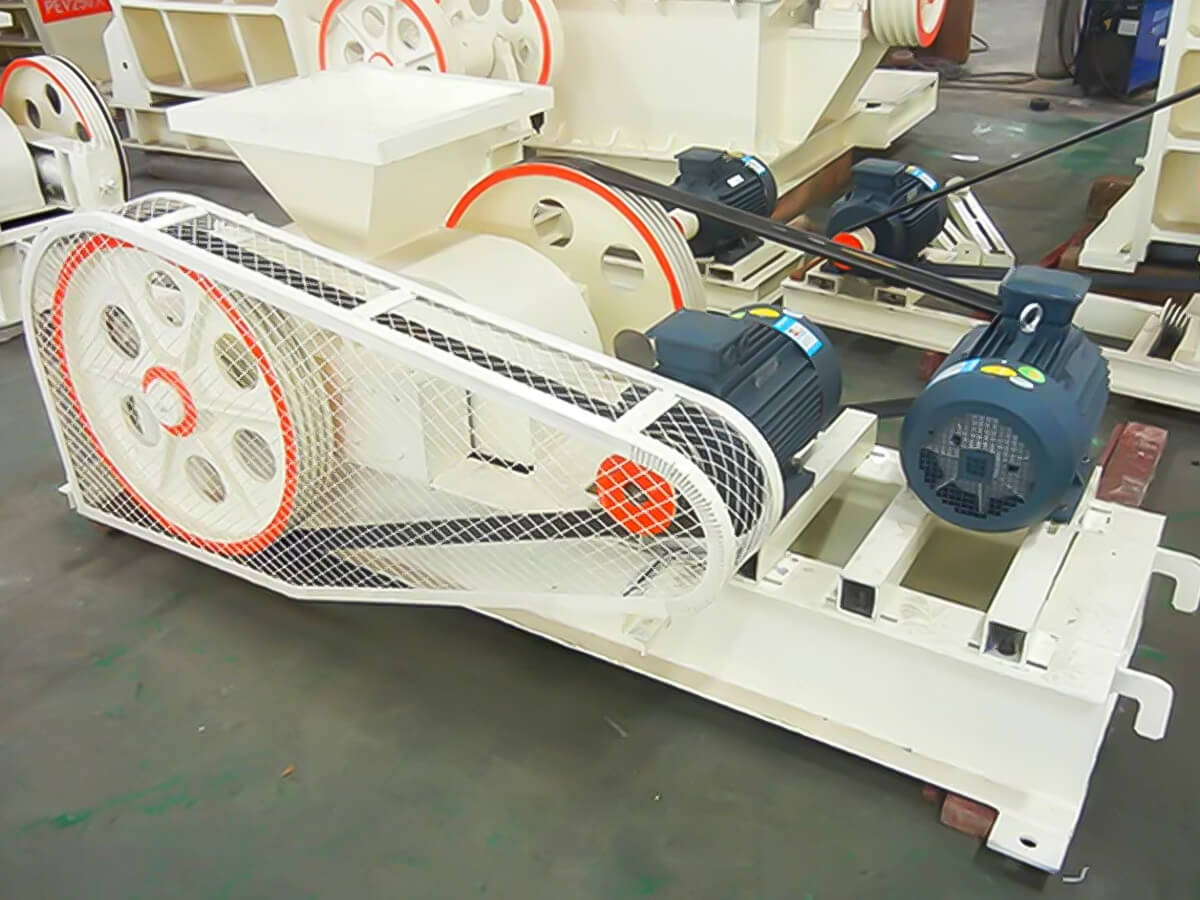
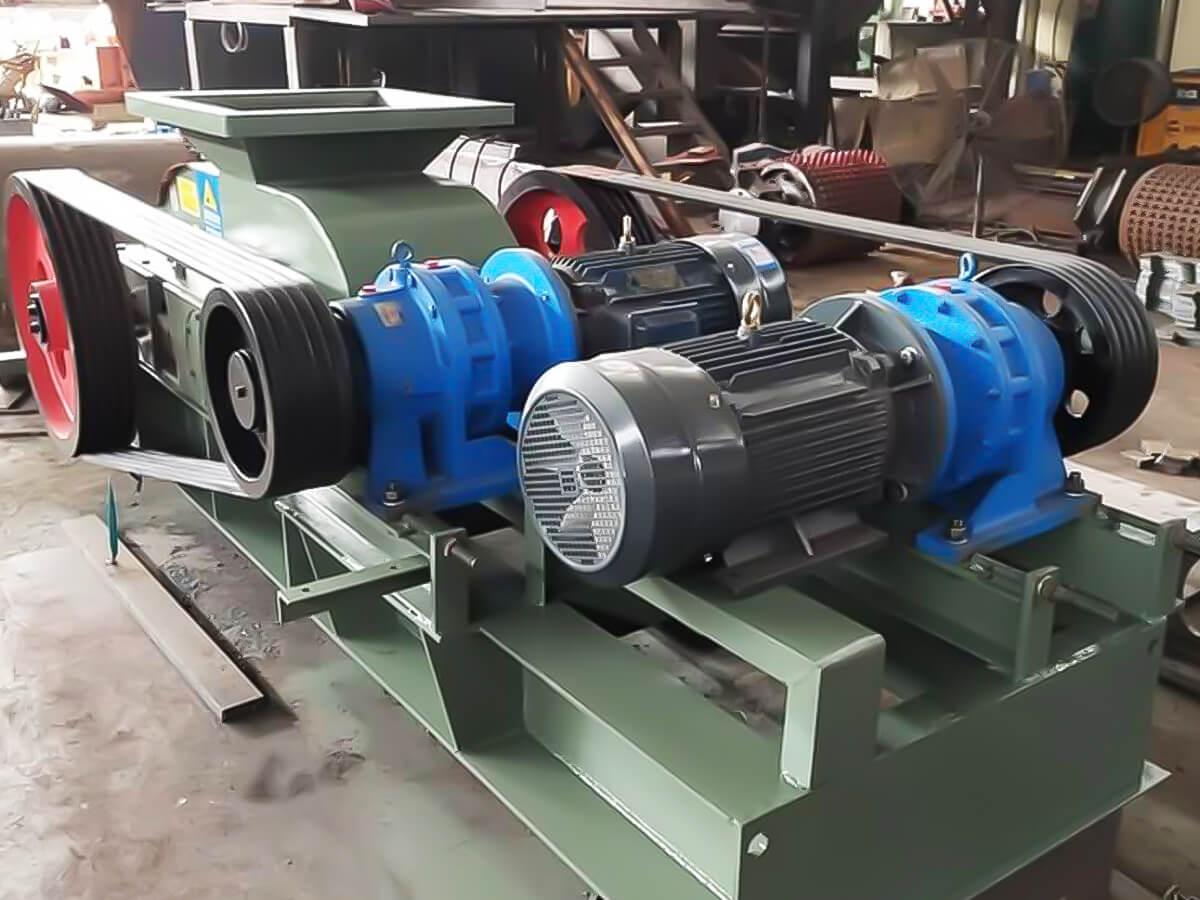

Toothed roll crushers integrate crushing and screening into a single unit, with both operations performed independently. This design simplifies the entire processing flow, eliminating the need for separate screening machines and conveyors. Consequently, it significantly reduces plant footprint, simplifies system layout, and lowers capital investment in equipment and civil engineering, providing a compact and cost-effective solution for material grading.
Working Principle
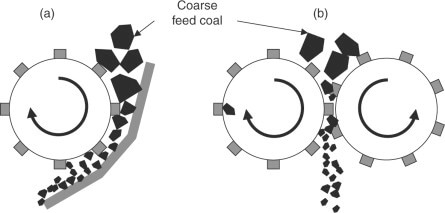
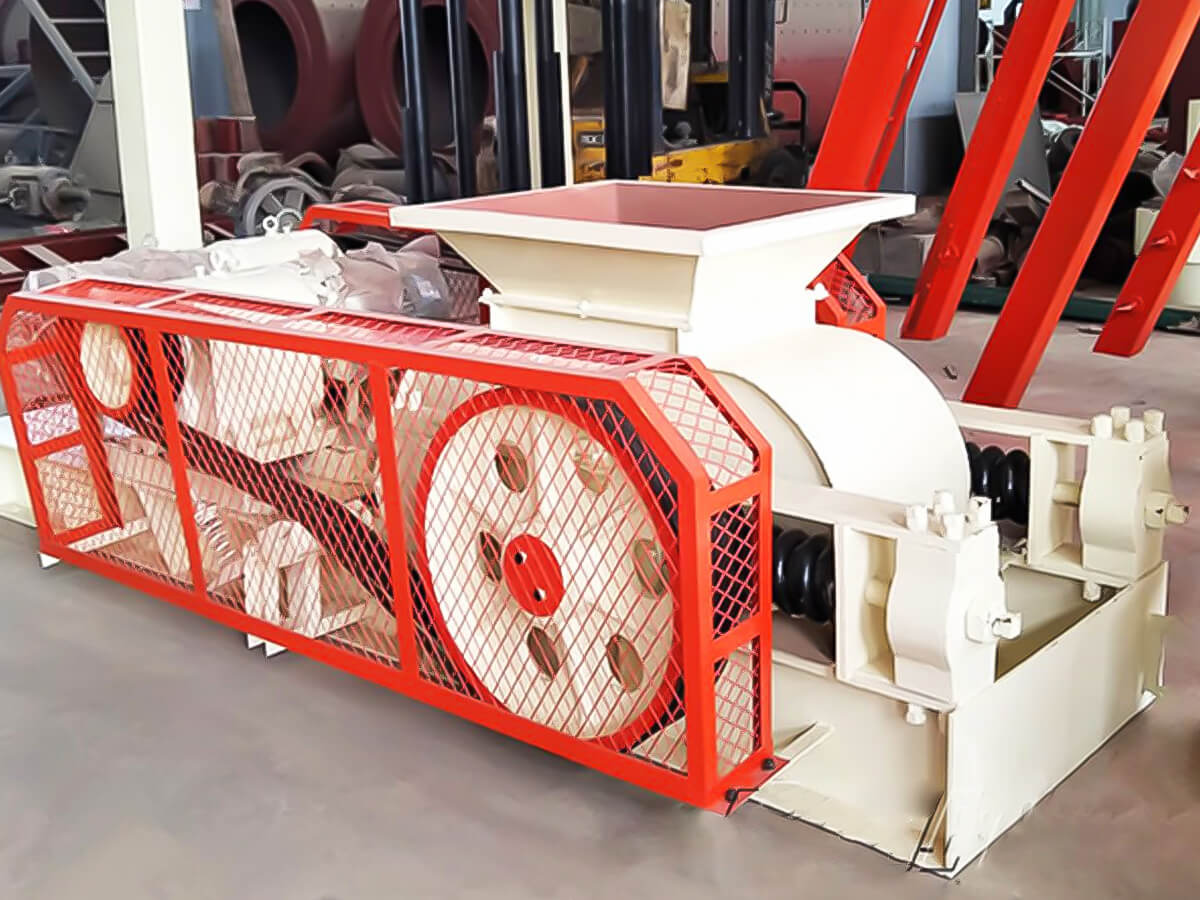
A toothed roll crusher consists of rollers, roller bearings, a pressing device, an adjusting device, and a drive device.
The material is drawn into the gap between the rollers by the rotating motion of the rollers and the friction angle (called the meshing angle) formed between the rollers and the material. As the two rollers rotate, they compress the material into an increasingly smaller gap area, where it is crushed under the compressive force generated by the rotating rollers.
Product Structure
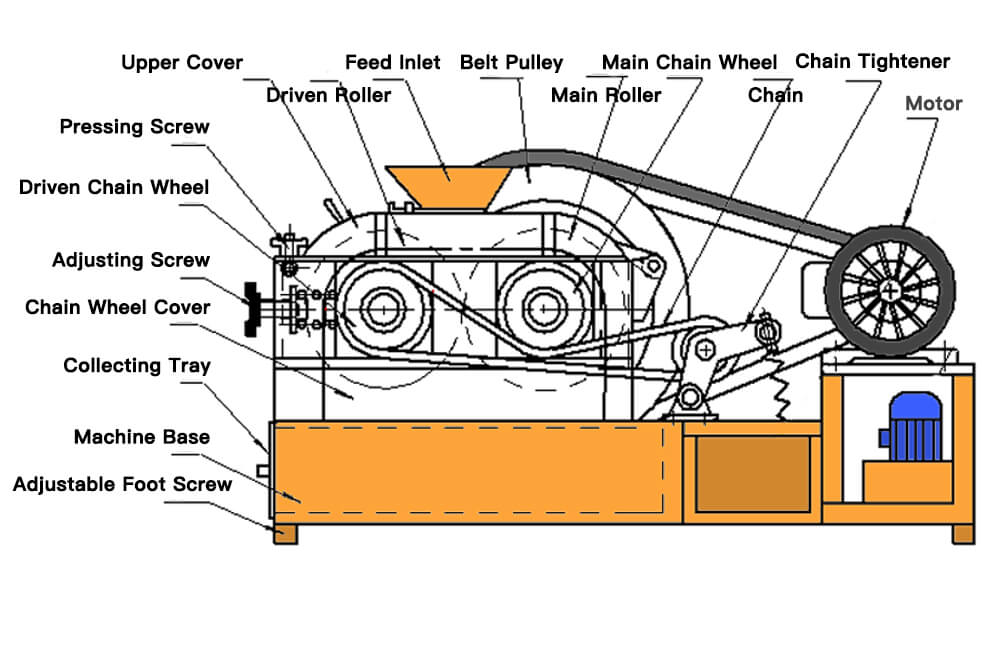
The toothed roll crusher consists of crushing rolls, an adjusting device, a spring safety device, a transmission device, and a frame.
Product Advantages
1. It provides a very fine particle size distribution with minimal dust or fine powder generation.
2. It is effective for mineral crushing, especially for ores with low abrasiveness; it is also suitable for small-scale mining of highly abrasive metal ores, such as gold mines.
3. The coal industry is probably the largest user of toothed roll crushers. Coal-fired power plants use toothed roll crushers, including single-roll and double-roll crushers. Typically, the roll surfaces of these crushers have teeth or protrusions. (The roll surfaces of double-toothed roll crushers used for minerals and metal ores are smooth.)
4. Furthermore, this type of toothed roll crusher is easy to operate, has low energy consumption, stable operation, and a simple structure.
5. It operates stably, is easy to maintain, has low cost, and the output particle size is adjustable.