Types and Main Functions of Ore Grinding Equipment
Date: 2026-03-04 Categories: Equipment Knowledge Views: 190
Grinding equipment is a core piece of machinery in the mineral processing industry, used to crush ore into finer particles to improve mineral liberation and facilitate subsequent separation operations. Below are common types of grinding equipment and their main functions:
Common Grinding Equipment
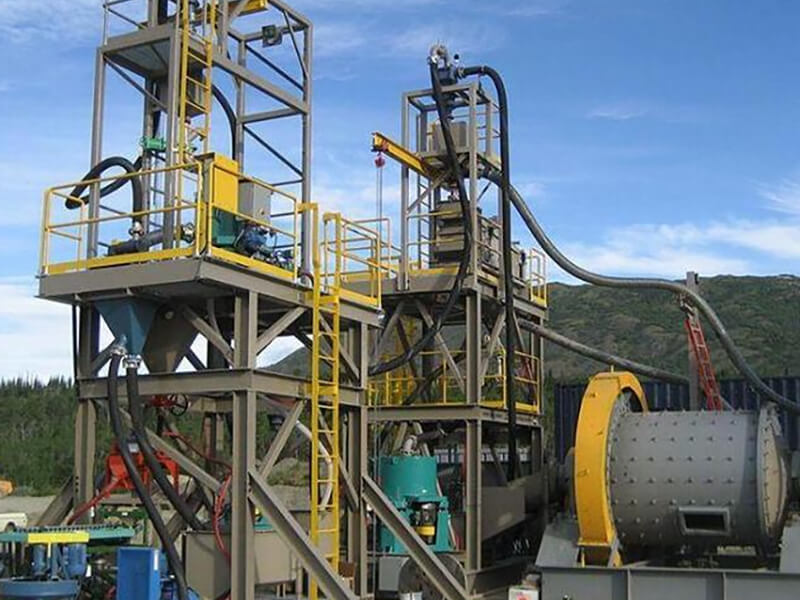
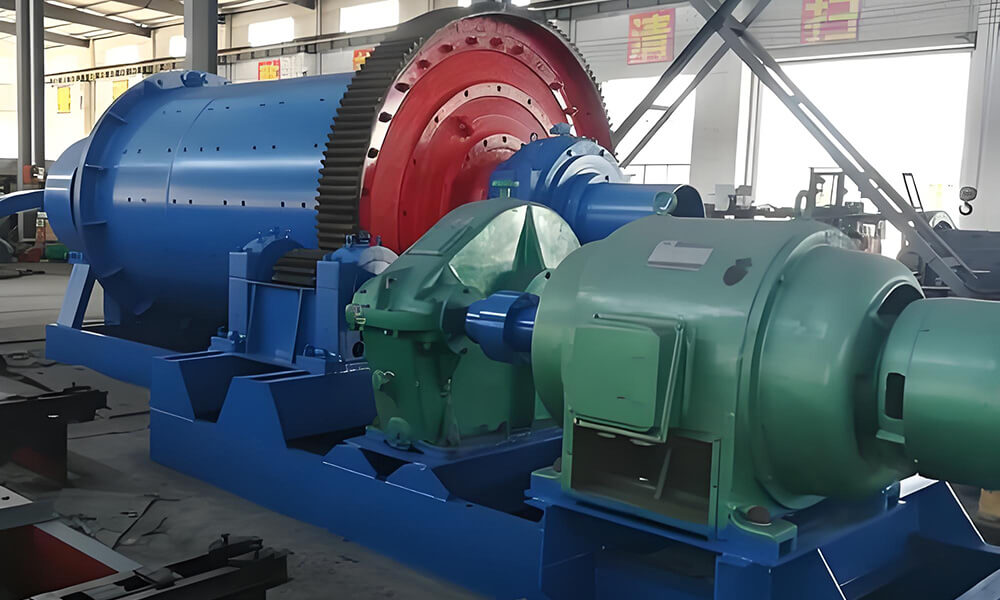
Ball Mill
Types: Classified by discharge method as overflow, grid, and peripheral discharge; classified by cylinder shape as cylindrical, conical, and polygonal; classified by length-to-diameter ratio as short-cylinder, long-cylinder, and tubular mills.
Features: The most widely used type, using steel balls as the grinding media. It crushes materials through the impact and grinding action generated by the rotating cylinder carrying the steel balls.
Applications: Suitable for grinding various ores, especially suitable for grinding both metallic and non-metallic minerals.
Rock Mill
Types: Classified by discharge method as overflow, end-peripheral discharge, and center-peripheral discharge.
Features: Uses steel rods as the grinding media, producing products with uniform size and minimizing over-grinding.
Applications: Commonly used in gravity concentrators for processing brittle materials such as tungsten and tin ores; also used as pretreatment for ball mill feed.
Pebble Mill
Features: Grinds ore without steel media, relying instead on pebbles or hard rock fragments.
Applications: Suitable for grinding specific ores, reducing steel consumption, and grinding costs.
Autogenous Mill
Features: In a short cylindrical crusher, the ore is crushed through its own impact and friction; the ore acts as both the medium and the material. When a small amount of steel balls (2%-8%) is added, it is called a semi-autogenous mill.
Applications: Offers a high crushing ratio, simplifies the process, and is suitable for large-scale mineral processing plants.
Ultrafine Grinding Equipment
Types: Includes centrifugal mills, vibratory mills, stirred mills, jet mills, jet pulverizers, classifying mills, ultrafine grinders, colloid mills, Raymond mills, and ISA mills, etc.
Features: Enables ultrafine grinding of materials to meet specific process requirements.
Applications: Suitable for ores and materials requiring ultrafine grinding, such as coatings, food, chemicals, fillers, and colloids.
Main Functions
Improving Mineral Liberation: Grinding breaks down the bonds between valuable minerals and gangue minerals in the ore, increasing mineral liberation and providing high-quality material for subsequent separation operations.
Meeting the Requirements of Different Separation Equipment: Different separation equipment has varying particle size requirements. Grinding equipment can adjust the crushing ratio and discharge particle size to meet the needs of different separation equipment.
Reducing Energy Consumption and Wear: Optimizing the grinding process and equipment selection can reduce energy consumption and wear during grinding operations, thereby increasing equipment lifespan and operating efficiency.
Improving Crushing Efficiency and Reducing Grinding Stages: By intensifying crushing operations and reducing the grinding feed particle size, crushing and grinding efficiency can be improved, reducing beneficiation costs. This is one of the fundamental principles of beneficiation plant design.