
Granite Crushing Process
Date: 2026-02-26 Categories: Non Metals Views: 225
Granite crushing processes typically employ multi-stage crushing procedures to address the high hardness (compressive strength of 1000~3000 kg/cm²) and wear resistance of granite, ensuring a final product with good particle shape and uniform gradation. The most common process is "three-stage crushing": coarse crushing → medium and fine crushing → shaping and sand making, combined with a closed-loop screening system to achieve efficient and stable continuous production.
The following is a detailed technical analysis of granite crushing processes, covering process flow, equipment selection, parameter optimization, and typical application scenarios, complying with industrial production standards and environmental protection requirements:
I. Characteristics of Granite and Its Crushing Challenges
Physical Properties
High Hardness: Mohs hardness 6-7, compressive strength 100-250 MPa, requiring highly wear-resistant equipment.
High Brittleness: Easily produces needle-like and flaky particles after crushing, requiring shaping treatment.
Low Silica Content: Some granites contain quartz (SiO₂>70%), accelerating equipment wear.
Chasing Challenges
Equipment is prone to wear (especially hammers, liners, and jaw plates).
Needle-like and flaky particles affect concrete strength (must be controlled ≤15%).
Dust control is difficult (free silica content may exceed standards).
II. Typical Crushing Process Flow
Depending on the raw material size and finished product requirements, crushing is divided into three-stage or four-stage crushing. A common process flow is as follows:
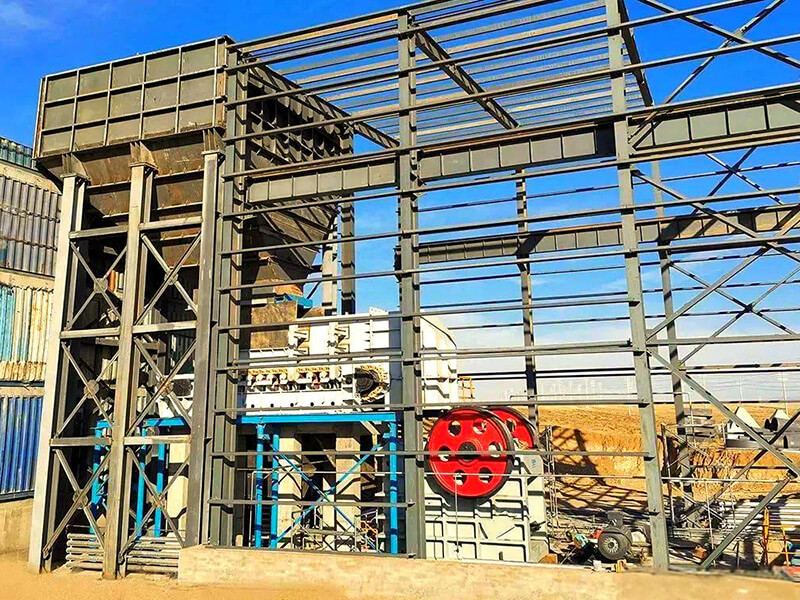
1. Primary Crushing (Grade 1)
Equipment: Jaw crusher (PE series) or gyratory crusher.
Function: Crushes large granite pieces (≤1200mm) to ≤300mm.
Parameter Control
Discharge opening width: 100-250mm (adjusted according to the feed opening of the secondary crushing equipment).
Speed: 200-300 rpm (jaw crusher); 100-200 rpm (gyratory crusher).
Advantages: Simple structure, impact resistant, low maintenance cost.
2. Secondary Crushing (Grade 2)
Equipment: Cone crusher (single-cylinder/multi-cylinder hydraulic) or impact crusher.
Function: Crushes the coarsely crushed product (≤300mm) to ≤50mm.
Parameter Control
Cone Crusher: Closed-side discharge port (CSS) 10-50mm, layered crushing reduces needle-like and flaky particles.
Impact Crusher: Rotor diameter 800-1200mm, linear velocity 25-40 m/s, suitable for medium-hardness granite.
Selection Basis
Cone crushers are preferred for high-hardness granite (due to their superior wear resistance).
Impact crushers can be selected when high particle shape requirements are needed (but the hammers need to be replaced regularly).
3. Fine Crushing/Shaping (Tertiary Crushing)
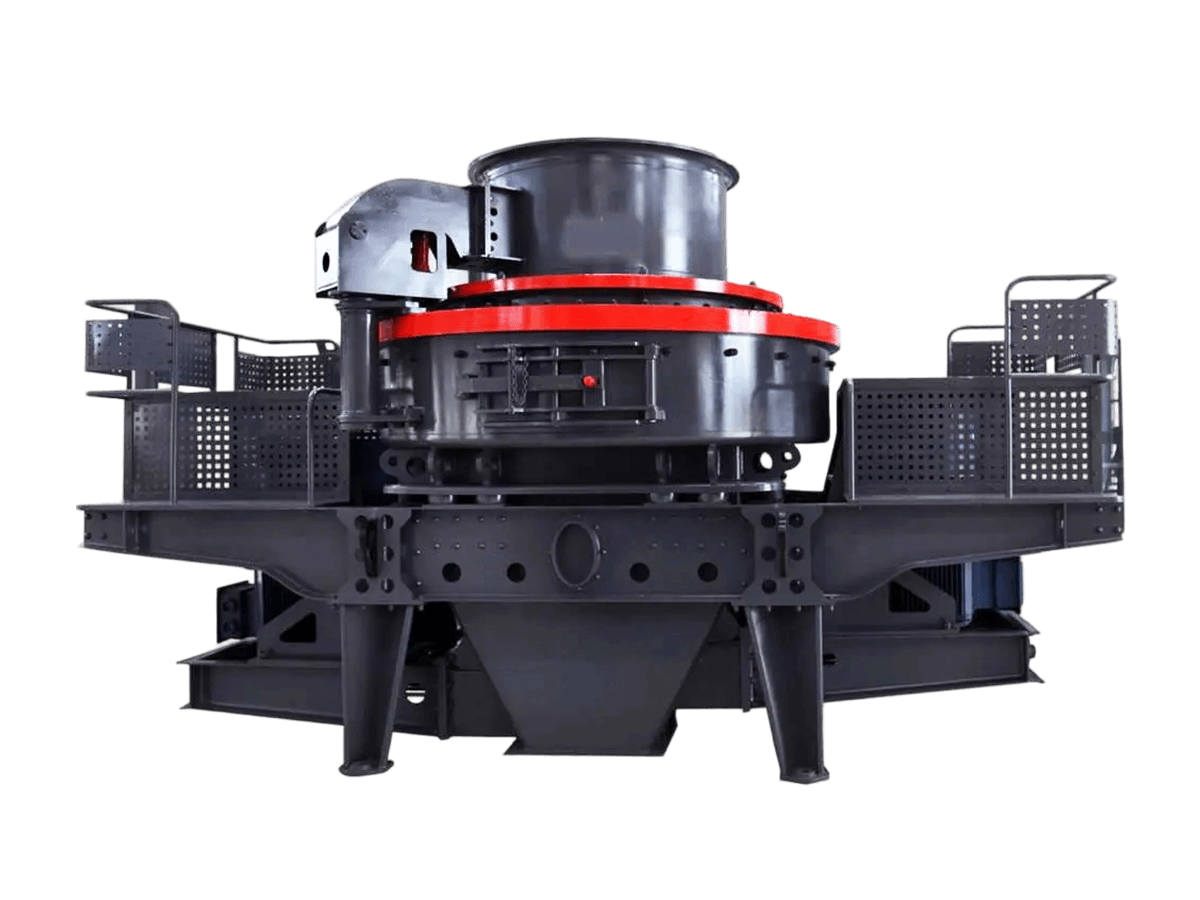
Equipment: Vertical shaft impact crusher (VSI) or shaper.
Function: Crushes medium-sized products (≤50mm) to ≤25mm and improves particle shape.
Parameter Control
VSI speed: 1500-2000 rpm, using the "stone-on-stone" principle to reduce wear.
Feed size: ≤50mm (VSI); ≤25mm (shaper).
Results: The content of needle-like and flaky particles decreased from 30% to ≤10%, meeting the requirements for high-standard aggregates.
4. Screening and Grading
Equipment: Circular vibrating screen or multi-layer linear screen.
Function: Separates qualified particle sizes (e.g., 5-10mm, 10-20mm, 20-31.5mm), and returns unqualified materials to fine crushing.
Screen Size: Selected according to finished product requirements (e.g., 3mm, 5mm, 10mm, etc.).
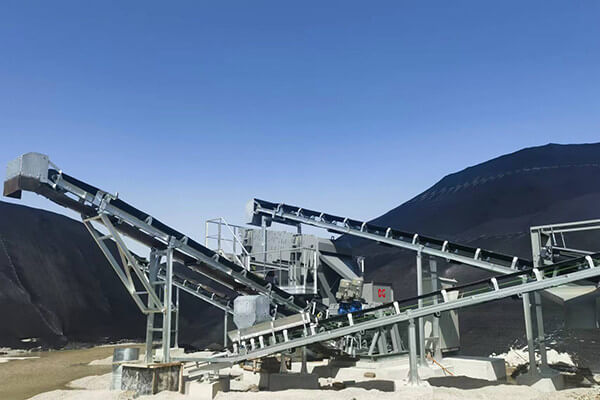
III. Optimization of Key Process Parameters
Crushing Ratio Distribution
Total crushing ratio = maximum raw material particle size / maximum finished product particle size, typically achieved in 3-4 stages (each stage crushing ratio 3-5).
Avoid excessively high single-stage crushing ratios, which can lead to equipment overload or uneven particle size distribution.
Feeding Control
Uniform feeding can improve crushing efficiency by over 20% and reduce equipment impact.
Use a vibrating feeder or belt conveyor with variable frequency speed control.
Load Monitoring
Monitor equipment load in real time using current, power, or vibration sensors to prevent material blockage or overload.
An intelligent control system automatically adjusts the discharge port or feeding speed.
Dust Control
Seal the crusher's inlet/outlet and equip it with a pulse bag filter (emission concentration ≤10 mg/m³).
Wet operation (spray dust suppression) is suitable for arid areas, but wastewater treatment is required.
IV. Typical Application Scenarios and Equipment Configurations
Application Scenarios, Raw Material Sizes, Finished Product Requirements, Recommended Process Flow
Construction Aggregate Production: ≤1000mm, 5-20mm, 20-40mm; Jaw Crusher + Cone Crusher + VSI + Screening (Closed-Circuit Flow)
Highway Pavement Stone: ≤800mm, 10-30mm (cubic particles); Jaw Crusher + Impact Crusher + Shaping Machine + Screening
Railway Ballast: ≤600mm, 25-63mm (compressive strength ≥100 MPa); Jaw Crusher + Cone Crusher + Screening (needle-shaped and flaky content needs to be tested)
Decorative Stone Waste Recycling: ≤300mm, 0-5mm, 5-10mm (filler); Jaw Crusher + Hammer Crusher (or Roller Crusher) + Screening (Open-Circuit Flow)
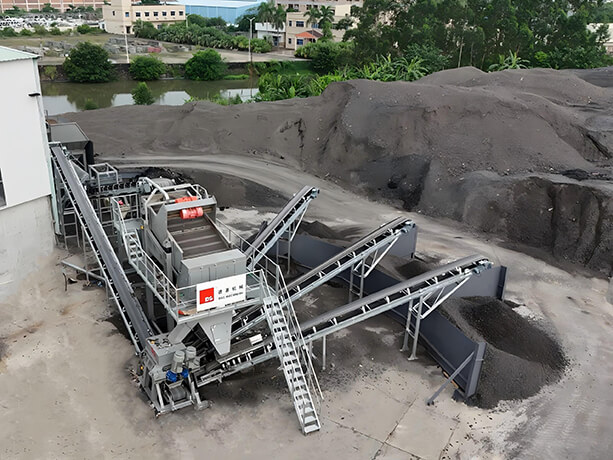
V. Technological Development Trends
Intelligent Upgrade
Integration of the Internet of Things (IoT) enables remote equipment monitoring and fault early warning.
AI algorithms optimize crushing parameters, reducing energy consumption by 10%-15%.
Green and Energy-Saving Technology
Hydraulically driven cone crushers are 20%-30% more energy-efficient than traditional spring-driven crushers.
Waste heat recovery systems utilize the frictional heat of the crusher to preheat raw materials.
Modular Design
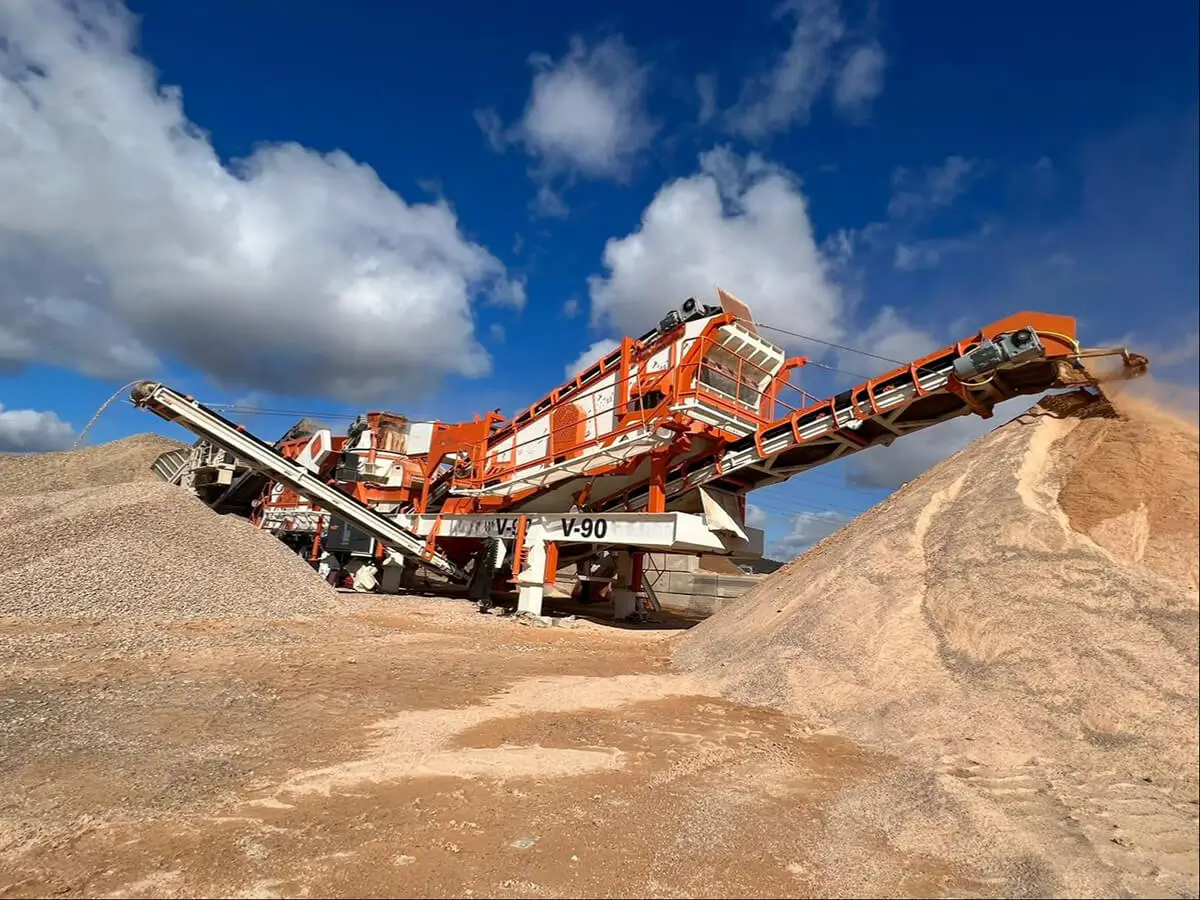
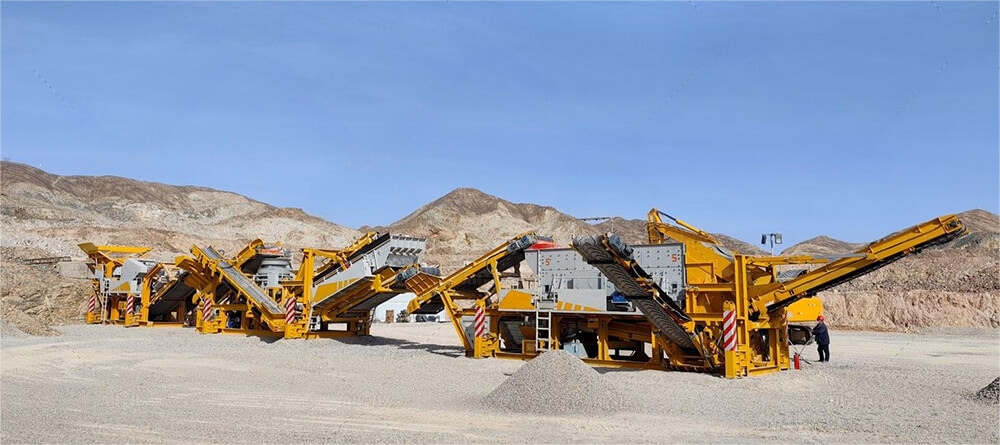
Mobile crushing stations (tracked/wheeled) are suitable for decentralized mines or temporary projects.
Containerized modules enable rapid deployment and relocation.
VI. Case Study: Upgrading of a Granite Mine Crushing Line
Original Process: Jaw crusher + hammer crusher (open circuit), with issues including excessive needle-like and flaky particles (25%) and short hammer life (7 days/set).
Modification Plan
Replace the hammer crusher with a multi-cylinder cone crusher (CSS=25mm), using layered crushing to reduce over-grinding.
Add a VSI shaping machine (1800 rpm) to optimize particle shape.
Seal equipment interfaces and install a dust collector, reducing dust emissions to 8 mg/m³.
Results
Needle-like and flaky particle content reduced to 8%, meeting GB/T 14685 "Construction Gravel and Crushed Stone" standard.
Hammer life extended to 3 months/set, energy consumption reduced by 18%.
Granite crushing processes need to be flexibly designed based on raw material characteristics, finished product requirements, and environmental standards. Future development will focus on intelligent, energy-saving, and modular approaches to improve production efficiency and resource utilization.