
Limestone Crushing Process
Date: 2026-02-26 Categories: Non Metals Views: 214
The following is a detailed technical analysis of limestone crushing technology, covering the process flow, core equipment, key parameters, and optimization directions. It is applicable to industries such as mining, building materials, and chemicals:
I. Overview of Limestone Crushing Technology
The limestone crushing process involves processing natural limestone (mainly composed of CaCO₃) into aggregates or raw materials of different particle sizes through mechanical crushing and screening. These aggregates are used in cement production, building aggregates, desulfurizing agents, and chemical fillers. Its core objectives are:
Particle size control: Meeting the feed requirements of downstream processes (such as grinding and calcination);
Efficiency and cost balance: Optimizing the crushing ratio, energy consumption, and equipment wear;
Environmental compliance: Controlling dust, noise, and wastewater emissions.
II. Typical Crushing Process Flow
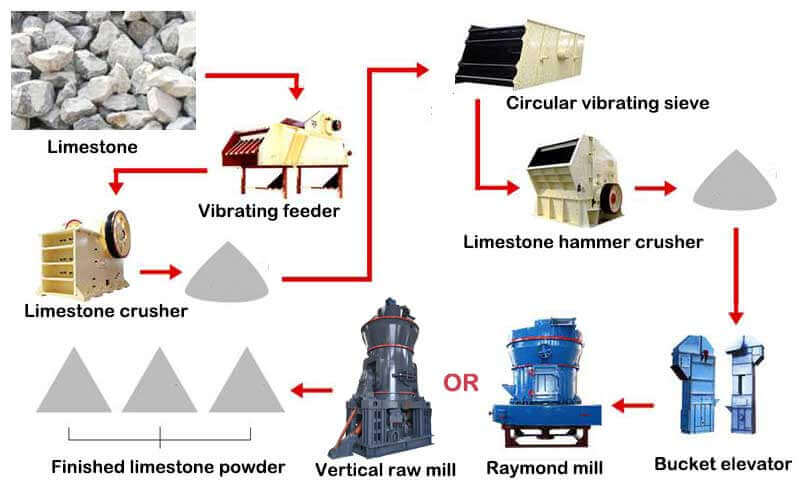
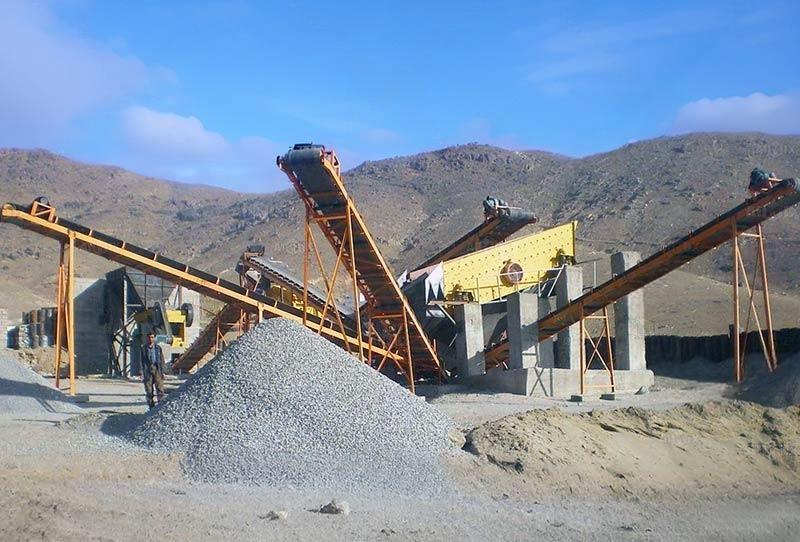
Limestone crushing typically employs a multi-stage crushing + screening combination process. Based on the raw material particle size and finished product requirements, the process can be divided into the following flows:
1. Primary Crushing (Coarse Crushing)
Suitable for: Raw materials with relatively large particle sizes (e.g., quarried ore, with a maximum particle size of 1-2 μm).
Core Equipment
Jaw Crusher: Large processing capacity (50-2000 t/h), large crushing ratio (4-6), suitable for coarse crushing;
Gyratory Crusher: Suitable for ultra-large mines, with a processing capacity of over 5000 t/h.
Parameter Control
Discharge opening width: Adjusted according to the feeding requirements of subsequent equipment (usually 100-300 mm);
Speed: Jaw crusher 200-300 r/min, gyratory crusher 100-200 r/min.
2. Secondary Crushing (Medium Crushing)
Suitable for: Further crushing of coarsely crushed materials (particle size ≤300 mm) to medium-fine particle size (≤50 mm).
Core Equipment
Cone Crusher (Single/Multi-cylinder Hydraulic): Suitable for hard materials, high crushing ratio (5-8), low energy consumption;
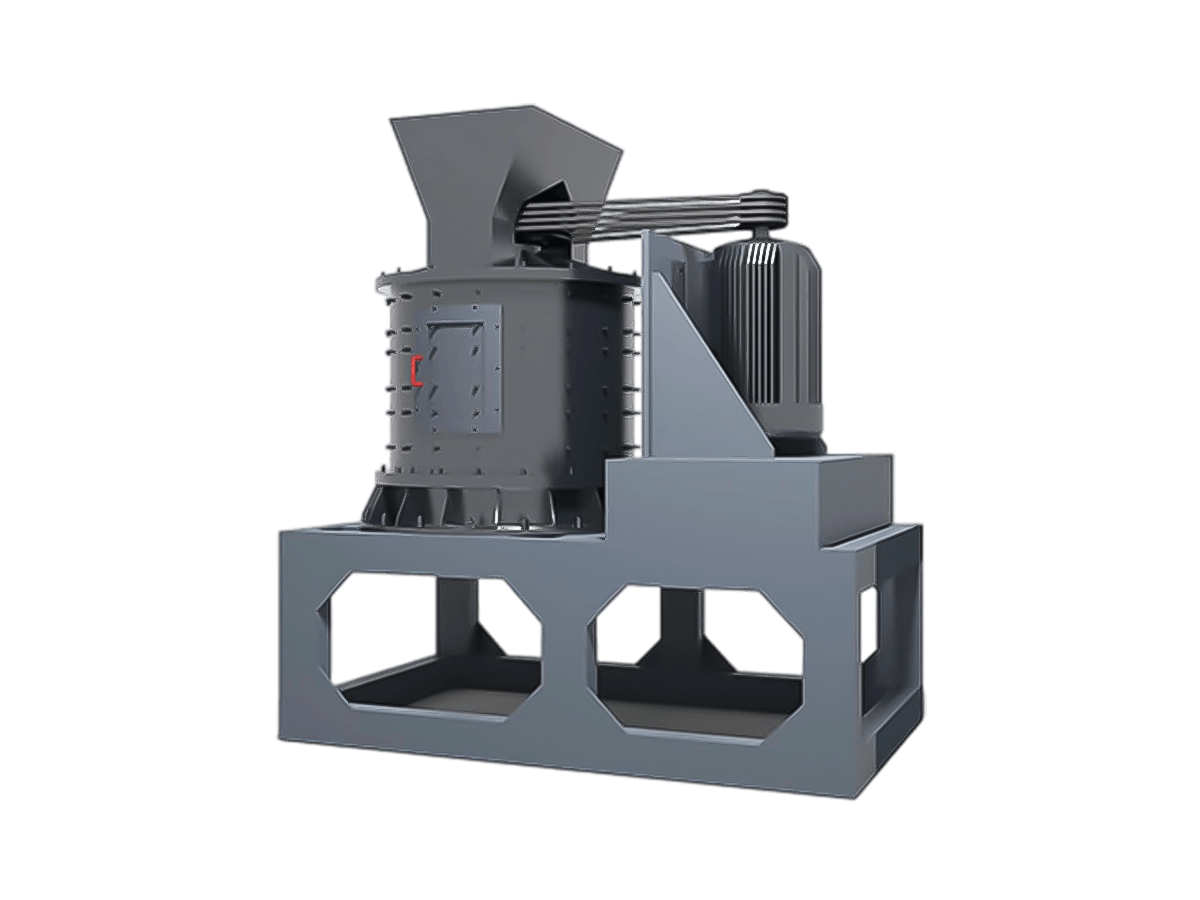
Impact Crusher: Suitable for materials with medium to low hardness, good product particle shape (high cubic content), but wear parts wear out faster.
Parameter Control:
Closed-Side Discharge Port (CSS): Cone crusher 10-50 mm, impact crusher 20-80 mm;
Cavity Selection: Cone crushers are available in standard and short-head types, matched according to the finished product particle size requirements.
3. Three-Stage Crushing (Fine Crushing/Shaping)
Applicable Scenarios: Production of high-quality building aggregates or cement raw materials (particle size ≤25 mm).
Core Equipment:
Impact Crusher (Sand Making Machine): Achieves fine crushing and shaping through the "stone-on-stone" or "stone-on-iron" principle, producing excellent product particle shape;
Double Roll Crusher: Suitable for low-hardness materials, adjustable discharge particle size (0.5-10 mm), but lower capacity.
Parameter Control
Impact crusher speed: 1500-2000 r/min;
Feed size: ≤50 mm (≤25 mm for sand making machine).
4. Screening and Grading
Purpose: To separate products of qualified particle size; materials that do not meet the standards are returned to the next stage of crushing (closed-loop circulation).
Equipment
Vibrating screen: Circular vibrating screen (large capacity) or linear vibrating screen (high precision);
Screen size: Selected according to finished product requirements (e.g., 3-5 mm, 5-10 mm, 10-20 mm, etc.).
III. Key Process Parameter Optimization
Crushing Ratio Distribution
Total crushing ratio = maximum particle size of raw ore / maximum particle size of finished product, typically achieved in 3-4 stages (each stage crushing ratio 3-5);
Avoid excessively high single-stage crushing ratios that could lead to equipment overload or uneven product particle size.
Feeding Control
Uniform feeding improves crushing efficiency and reduces equipment wear.
Use vibrating feeders or belt conveyors equipped with variable frequency speed control.
Load Monitoring
Monitor equipment load in real time using current, power, or vibration sensors to prevent material blockage or overload;
The intelligent control system can automatically adjust the discharge port or feeding speed.
Dust Control
Sealed design for the crusher's inlet, outlet, and screening equipment;
Equipped with a pulse bag filter, the dust emission concentration is ≤10 mg/m³.
IV. Typical Application Scenarios and Equipment Selection
Application Scenarios | Raw Material Particle Size | Finished Product Requirements | Recommended Process Flow
Cement Raw Material Crushing | ≤1000 mm | ≤25 mm (feed size) | Jaw crusher + Cone crusher + Screening (closed-circuit)
Building Aggregate Production | ≤800 mm | 5-20 mm, 20-40 mm | Jaw crusher + Impact crusher/Cone crusher + Sand making machine + Screening
Desulfurizing Agent Preparation | ≤500 mm | ≤2 mm (90% passing rate) | Jaw crusher + Hammer crusher + Grinding mill (optional)
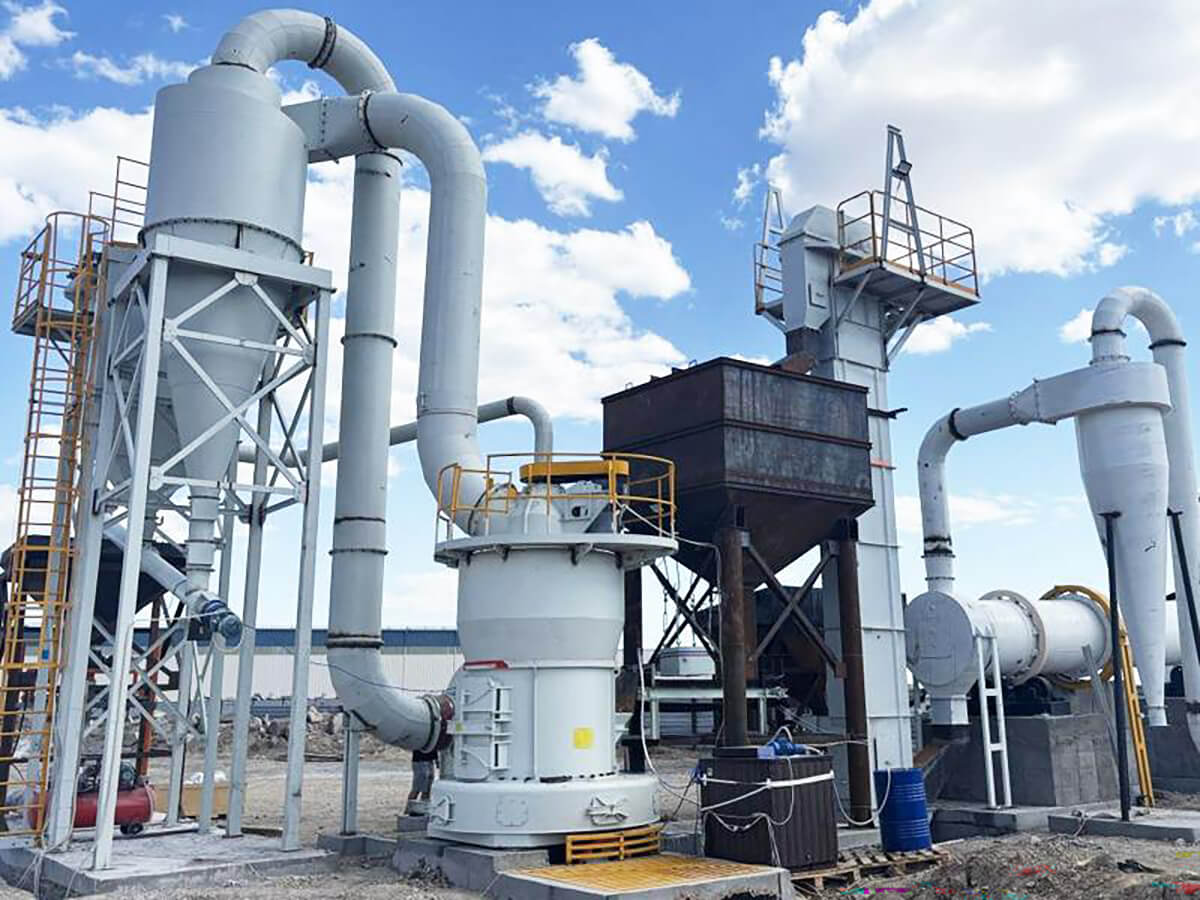
Chemical Filler (Light Calcium Carbonate) | ≤200 mm | ≤0.074 mm (powder) | Jaw crusher + Raymond mill/Vertical mill (requires pre-crushing to ≤25 mm)
V. Technological Development Trends
Intelligent Control
Integrating IoT technology enables equipment status monitoring, fault early warning, and remote operation and maintenance.
Optimizing crushing parameters through AI algorithms reduces energy consumption by 10%-15%.
Green and Energy-Saving Technologies
Developing hydraulically driven crushers reduces energy consumption by 20%-30% compared to traditional equipment.
Waste heat recovery systems utilize the frictional heat of the crusher to preheat the feed.
Modular Design
Mobile crushing stations (tracked/wheeled) are suitable for dispersed mining sites or temporary projects.
Containerized crushing modules facilitate rapid deployment and relocation.
VI. Case Study: Upgrading of a Limestone Crushing Line in a Cement Plant
Original Process: Jaw crusher + hammer crusher (open circuit), resulting in uneven particle size, rapid hammer wear, and excessive dust.
Upgrade Plan
Replace the hammer crusher with a multi-cylinder cone crusher (CSS=25 mm), increasing the crushing ratio from 5 to 8;
Add a circular vibrating screen (3 layers, aperture 10/20/40 mm) to create a closed-loop circulation system;
Seal the crusher feed inlet and install a dust collector, reducing dust emissions to 8 mg/m³.
Results
The finished product particle size qualification rate increased from 75% to 92%.
Unit energy consumption decreased by 18%, and hammer life was extended by 3 times.
Limestone crushing processes need to be flexibly designed based on raw material characteristics, finished product requirements, and environmental standards. In the future, intelligent, energy-saving, and modular designs will become the mainstream development direction, helping the industry achieve efficient and green production.