
Iron Ore Tailings Dry Discharge Process Project
Date: 2026-02-28 Categories: Client Cases Views: 209
In the 1,000-ton/day iron ore beneficiation project in Shanxi, the dry tailings discharge process is a key component of the current green mine construction. It not only effectively addresses safety and environmental hazards related to tailings ponds but also improves resource utilization and overall enterprise benefits. Based on the actual situation of iron ore development in Shanxi, dry tailings discharge has gradually changed from an "optional" to a "mandatory" approach.
I. Core Process Flow of Dry Tailings Discharge
Tailings dry stacking achieves solid-liquid separation through three steps: concentration, dewatering, and conveying, ultimately forming dry slag with a moisture content of 10%–15%, which is convenient for storage or comprehensive utilization. A typical process is as follows:
-
Tailings Concentration
- High-efficiency thickeners (such as deep cone thickeners) are used to perform preliminary sedimentation of tailings slurry, and flocculants such as polyacrylamide (PAM) are added to accelerate particle aggregation, with underflow concentrations reaching 40% to 60%.
- The supernatant after concentration has a reuse rate of over 90%, which significantly saves water resources.
-
Deep Dehydration
- Coarse tailings: Processed using high-frequency dewatering screens or vacuum belt filters, suitable for iron ore tailings with relatively coarse particle size.
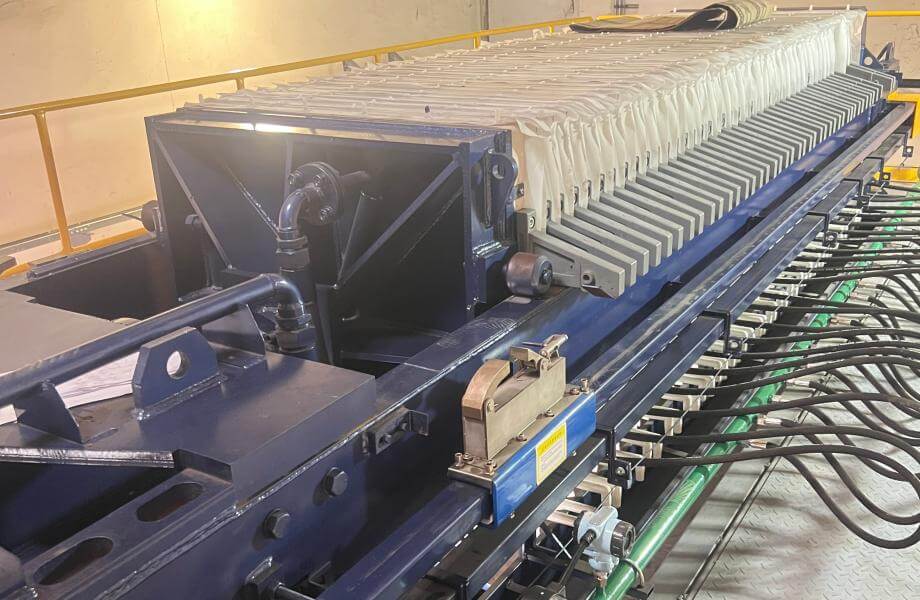
- Fine tailings: After being classified by hydrocyclones, the fine particles enter a chamber filter press or ceramic filter press for high-pressure dewatering, and the moisture content of the filter cake can be reduced to below 10%.
- Typical combined process: hydrocyclone + thickener + filter press, achieving fully automated control of the entire process.
-
Dry Slag Conveying and Storage
- The dehydrated slag is transported to the dry storage area by belt conveyor, where it is compacted in layers and covered with dustproof netting to prevent dust and rainwater erosion.
- The storage yard should be equipped with drainage ditches and a leachate collection system to avoid secondary pollution.
II. Implementation Suggestions and Precautions
- Process Selection Matching Ore Characteristics: Iron ore tailings exhibit uneven particle size; a combined process of hydrocyclone classification + coarse screening + fine filter press is recommended to ensure dewatering efficiency.
- Equipment Selection Emphasizing Stability: Mature equipment, such as chamber filter presses and ceramic filters, is recommended to avoid disruptions to continuous production due to malfunctions.
- Scientific and Rational Stockpile Location: The stockpile should avoid ecologically sensitive areas and possess good seepage prevention and drainage conditions, ensuring long-term safety and controllability.
- Proactive Planning for Comprehensive Utilization: Collaboration with building materials companies can transform dry-discharged tailings into raw materials for mortar and bricks, increasing added value.